Add
AddAir quality in San Francisco
Air quality index (AQI⁺) and PM2.5 air pollution in San Francisco • 1.1M Followers • 03:00, Oct 26 Local time
24
US AQI⁺Good

Main pollutant:
O₃
52 µg/m³

13°

15 km/h

93 %
Hourly forecast
San Francisco air quality index (AQI⁺) forecast


Daily forecast
San Francisco air quality index (AQI⁺) forecast
| Today | 19 |  | 16° 12° |  23 km/h | 88% |
| Tue | 21 | | 17° 11° | 19 km/h | 82% |
| Wed | 28 |  | 18° 13° | 12 km/h | 61% |
Air pollutants
What is the current air quality in San Francisco?

PM2.5 concentration currently meets the WHO annual PM2.5 guideline.
Health recommendations
 Enjoy outdoor activities |
 Open your windows to bring clean, fresh air indoors Get a monitor |
Protect yourself from air pollution in San Francisco

Air Purifiers

Face Masks

Air Quality Monitors
Pollen
What is the pollen count in San Francisco today?
Index

Low
 Tree None | 0% |
 Grass None | 0% |
 Weed Low | 25% |
Source:
wetter.comHealth recommendations
Enjoy outdoor activities |
Open your windows to bring clean, fresh air indoors Get a monitor |
Pollen
What is the pollen count in San Francisco today?
Index
Low
Tree None | 0% |
Grass None | 0% |
Weed Low | 25% |
Source:
wetter.comProtect yourself from air pollution in San Francisco
Air Purifiers
Face Masks
Air Quality Monitors
Most polluted locations near San Francisco
Worldwide AQI⁺ ranking
Station ranking
Real-time AQI⁺ station ranking for stations in San Francisco
Historic air quality near San Francisco
History
Historic air quality graph for San Francisco
Historic air quality near San Francisco
History
Historic air quality graph for San Francisco
Most polluted locations near San Francisco
Worldwide AQI⁺ rankingStation ranking
Real-time AQI⁺ station ranking for stations in San Francisco
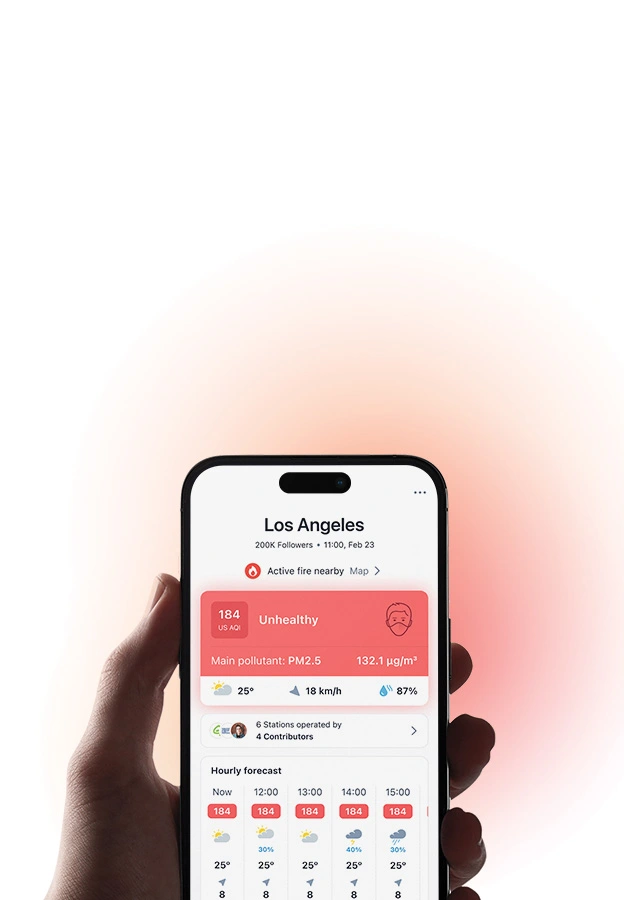


Measure your own air quality
Get a monitor and contribute air quality data in your city.
Learn more about global air quality


Learn more about air pollution in San Francisco
What is the current air quality in San Francisco?
The current air quality in San Francisco is considered good. Air pollution levels are low and there are no expected health risks, making it a good time to enjoy normal outdoor activities.
How good is the quality of air in San Francisco?
The air quality of San Francisco is rated on average as falling into the “good” bracket of the United States Air Quality Index (US AQI), which describes a level of fine particulate matter (PM2.5) between 0 to 12 μg/m3. In 2019, San Francisco averaged an annual PM2.5 concentration of 7.1 μg/m3, also achieving the World Health Organization’s (WHO) target for annual PM2.5, which is any annual reading below 10 μg/m3. For context, this compares to a similar rating in New York during 2019 (7 μg/m3), and represents a healthier level of air quality than other cities such as Los Angeles (12.7 μg/m3), London (11.4 μg/m3) and Paris in France (14.7 μg/m3).
The good air quality rating in San Francisco can be attributed to the city’s coastal location, as well as its natural topography and having a sparse level of factories and other industrial production plants around the city limits. Air pollution in San Francisco comes primarily from transportation emissions, namely vehicles such as cars, motorbikes and trucks, as well as planes, and ships all contributing to the ambient levels of air pollution.1 Wildfires, which are becoming increasingly common in the Bay Area, give rise to drastic spikes of air pollution, usually occurring during summer and fall.
Without taking into account the effects of potential wildfires, winter months are commonly much more polluted than the summer season, often as a result of increased heating and wood burning taking place. Additionally, cold weather conditions can affect the behavior of air pollution particles. During cold conditions, occasionally a layer of warmer air can become held above a cooler of ground-level air, when usually the opposite arrangement is true. This reversal, known as a thermal inversion, leads the warm layer of air to act like a “cap” or a lid, trapping the air beneath for long periods of time, usually until a weather change such as winds arrives to disperse it. These inversions can therefore prolong and exacerbate existing air pollution and smog in San Francisco and the Bay Area during wintertime.
In the last three years, five of the most destructive California wildfires were in relatively close proximity to San Francisco, greatly impacting the quality of air across the Bay Area.2 In November 2018, the Camp fire burned 153,336 acres of land and drove San Francisco’s AQI for the month up to 137, putting it into the “unhealthy for sensitive groups” bracket, which poses concern for young children, the elderly and those with a predisposition to respiratory ailments. Air pollution levels in other Bay Area cities, such as San Jose and Oakland, experienced a similar rise.
A number of other fires occurred over the course of 2018, including the Kincade, Carr, and Mendocino Complex Fires, further elevating San Francisco’s air pollution levels. The city’s yearly PM2.5 average for 2018 was 12.6 μg/m3, causing it to break into the ‘moderate’ US AQI bracket, although only by a fine margin. This indicates that whilst the smoke given off by the large number of fires occurring across the Bay Area region increased air pollution levels dramatically for short periods of time, the air quality on average throughout the year remained at a relatively low level, despite experiencing noxious smoke and fumes emitted from the burning areas of forestland.
Wildfires in the Bay Area have been growing in size and frequency over the last two decades. The shift has coincided with rising temperatures and changing weather patterns, as a result of anthropogenic (human-influenced) climate change. Environmental scientists expect the number of burnt acres per year to continue to rise over the coming years, presenting a growing challenge for the Bay Area and its air quality.3
When is air quality at its best in San Francisco?
Generally, air quality in San Francisco is at its best in the spring, as temperatures gradually warm and the forest undergrowth is still wet from the frequent rains of the winter months. March is one of the months that experiences some of the cleanest air quality of the year, as was observed in 2019, coming in with a PM2.5 reading of 4.8 μg/m3, one out of three months during the year which averaged below 5 μg/m3. The month with the cleanest quality of air during 2019 was February, averaging a very low PM2.5 reading of 3.4 μg/m3.
By contrast, in regards to when air quality is at its worst, the months of January, November and December in 2019 emerged as the most polluted in terms PM2.5 levels, with readings of 10.7 μg/m3, 14.5 μg/m3, and 8.2 μg/m3 respectively. November’s high average reading can be partly attributed to the Ranch fire, which burned more than 2,534 acres of forestland, releasing high amounts of noxious fumes and particulate pollution into the air.4
Has air quality improved in San Francisco?
In recent years, air quality in the Bay Area has been subject to high amounts of change in regards to the wildfire season. In 2019, for example, San Francisco experienced a 43.7% decrease in PM2.5 levels from the year prior, though this reduction is attributed largely to the reduction in severe wildfires and not from emission reductions from other sources. 2018 experienced severe wildfires, and thus experienced a 26% increase in PM2.5 over the course of a year from 2017.
On a larger scale, despite a growing population and economy, air pollution in the Bay Area has improved significantly in the last 30 years since the 1990 amendments to the Clean Air Act. Increasingly tight regulations against industrial activity and related emission sources are to credit. The Hunters Point and Potrero Hill power plants were closed in 2006 and 2010 respectively, while other industrial businesses have since moved out of the city. The consequences of this has been a reduction in amount of days with an “unhealthy” rating of air quality. However, despite this there has not been a significant increase in days classified as having good ratings (US AQI 0-50).5
This is because whilst pollution levels on average have decreased, peaks into “moderate” air quality levels are still common. In recent years, roughly 20-25% of calendar days averaged “moderate” or worse air quality within San Franscisco. In order to further reduce San Francisco’s air quality index, a shift from fossil fuel dependence, such as gas-powered transport, to cleaner, more sustainable energy is needed. San Francisco currently aims to transition to 100% renewable electrical power by 2030, while shifting to 100% greenhouse gas-free transportation by 2040.6,7
Wildfires are a significantly more difficult emission source to regulate, particularly in a warming climate. Prevention methods, such as creating fire lines and removing volatile forest undergrowth through low-intensity “prescribed fires,” offer effective ways to reduce the size and ecological impact of wildfires in the Bay Area. The California Department of Forestry and Fire Prevention (CAL FIRE) estimates that 8-10 million acres urgently require thinning and prescribed burning in order to prevent mega-fires from occurring, or future disastrous wildfires.8 In coordination with the U.S. Forest Service, they aim to thin a million acres a year, which represents an extremely ambitious yet achievable target.
What are the main causes of San Francisco's pollution levels?
Despite fewer power plants and industrial businesses as well as a growing mix of cleaner energy, San Francisco still experiences periods of unhealthy air quality. Primary factors for elevated pollution levels in the Bay Area include transportation emissions from cars, trucks, planes, and ships as well as seasonal wildfires. While transportation emissions are a constant source of air pollution, wildfires are generally the reason for extreme air quality events, and as such it is often during these time periods that the air quality becomes labelled as unhealthy or hazardous to breathe.
City-wide emissions are frequently trapped near the ground as a result of a weather event described as marine inversion. Marine inversions are temperature inversions created by a city’s proximity to an ocean or large body of water. In the case of San Francisco, waters from the Pacific Ocean are cold and reduce ground temperatures in surrounding areas. These temperatures are often significantly colder than the winds moving over the region from inland locations.
By viewing an air pollution map of San Francisco and present wind directions, it becomes possible to get a sense of where this polluted air is coming from, whether from inland emission sources, such as wildfires, regular or ambient emissions as a result of transport and other human activities, or trapped air pollution due to a marine inversion.
When will San Francisco air quality improve?
San Francisco has achieved improving air quality over the last 30 years. These improvements have largely been driven by cleaner transportation options (such as a gradual transition towards electric and hybrid vehicles), tighter regulatory controls on industry, and increasingly stringent local and state regulations on emissions ranging from domestic wood burning to port activity, with governing bodies such as the Bay area air quality management district contributing with its own initiatives and protocols.
Despite significant improvements, air quality in the San Francisco Bay Area has breached federal standards over its 24-hour readings of PM2.5 since 2017. This represents a negative change after meeting this standard for almost a decade from 2008 to 2017.
The recent increase in the number of unhealthy PM2.5 days in San Francisco is primarily attributable to a surge in wildfires. 2017 was a record-breaking year for burned acreage in California, quickly superseded by 2018 and then 2020.
A growing population, congested roads, and new construction sites have also contributed to heightened ambient particle pollution in the Bay Area, with construction sites in particular being somewhat of a ‘silent’ pollution source, responsible for releasing into the air matter such as micro plastics, super finely ground dusts such as concrete and silica, as well as releasing metals such as lead into the atmosphere, particularly when they are poorly maintained or covered during the construction process. The City and County of San Francisco developed the Air Quality Element of the General Plan in order to improve air quality and achieve state and federal standards. The plan targets:
- Adherence to air quality standards
- Improvements related to mobile sources
- Land use planning
- Public awareness
- Reduction of dust
- Energy conservation
The Plan’s multi-pronged approach includes initiatives such as improving the accessibility and attractiveness of pedestrian/bike lanes, incentivizing the use and subsidization of electric vehicles, city planning for reduced traffic, and enforcement of over-polluting industries, among others. Separately, the Bay Area and CAL FIRE are engaged in pre-emptive firefighting to reduce the severity of future wildfires, San Francisco’s leading cause for unhealthy PM2.5 days. Preemptive firefighting includes clearing fire lines and thinning forest underbrush that can act as a volatile tinder particularly during the drier months, and as such has an increased tendency to catch fire and create conditions for a mega fire to occur.
What are the health effects of living in the Bay Area?
Whilst the quality of air in the Bay Area is of relatively good quality in comparison to global locations, and San Francisco’s annual (2019) PM2.5 level of 7.1 μg/m3 achieves the World Health Organisation’s target level of 10 μg/m3, the WHO emphasizes that even at low levels, there is no known “safe” limit for particle pollution below which no negative health impacts may be observed. Therefore, it is in the interests of San Francisco and Bay Area residents to minimize both air pollution emissions, and human exposure to the the present air pollution, as much as possible.
Furthermore, during instances of higher pollution levels, either due to vehicular activity or the occurrence of a forest fire (or a combination of both), pollution levels can quickly climb to the point where they become to have the potential to cause several negative effects upon inhalation. These health effects can include increased risks of lung cancer, chronic obstructive pulmonary diseases, an umbrella term that refers to a variety of respiratory ailments such as emphysema and bronchitis, as well as the aggravation of existing conditions such as asthma.
Other issues related to the breathing of burnt organic matter can include permanent reduction in lung capacity, which has the ability to stunt growth in young children as well as causing cognitive defects. Pregnant women can risk their baby’s health when breathing such air, with incidences of miscarriage, low birth weight and birth defects all being possible, with their chances of occurring rising in correlation with pollution levels going up.
With a wide variety of health issues possible during months of higher pollution, preventative measures become much more important in nature, with the wearing of high-quality particle filtering masks and avoiding outdoor activities and exercise during days of heightened pollution all being good practices that can help in reducing the health consequences to the citizens of the Bay area.
When will the levels of smoke and pollution start to clear in Bay Area?
California wildfires have become more frequent and severe in recent years. According to a study conducted by the Lamont Doherty Earth Observatory at Columbia University, climate change has doubled the risk of extreme fire conditions in California since 1970. During the same period, the amount of annual acreage burned has increased eight-fold. As wildfires rise in frequency and severity, so too does the threat of wildfire smoke. 2020 represented a historic year for both wildfires and unhealthy air pollution days. The 2020 August Complex fire burned for more than 55 days, surpassing a million scorched acres and becoming the largest fire in California history.9 During this period, San Francisco air quality levels reached “unhealthy” or worse levels for more than 10 combined days.
When wildfires are burning, air quality can be fast changing, changing from “good” to “unhealthy” based on wind and weather conditions. Follow San Francisco’s forecast air quality data at the top of this page to discover when wildfire smoke will clear. The IQAir forecast model employs machine learning to analyze millions of air quality data points along with current and forecast weather conditions to provide the most accurate and up to date air quality predictions.
+ Article Resources
[1] San Francisco Planning Department - air quality element. (2020).
[2] Top 20 most destructive California wildfires. (2020).
[3] Ray S, Miller B, and Jones J. (2020, August 25). California’s new normal: How the climate crisis is fueling wildfires and changing life in the Golden State.
[4] Cal-Fire - Ranch Fire. (2020).
[5] Days with an EPA Air Quality Index Rating of "Good". (2020).
[6] SF Environment - Clean Fuels and Vehicles. (2020).
[7] SF Environment - Clean Fuels and Vehicles. (2020).
[8] Helvarg D. (2019, December 20). How will California prevent more mega-wildfire disasters?.
[9] Kaur H. (2020, October 6). California fire is now a 'gigafire,' a rare designation for a blaze that burns at least a million acres. CNN.


Where is the cleanest air quality in San Francisco?
- Delano Avenue0
- Greenwich Street0
- LH Webster0
- 4000-4098 21st St1
- 5235 Diamond Heights Boulevard1
- 540 Victoria Street1
- Baker1
- Balboa Park Pool1
- Edgehill Open Space Park1
- McAllister Street1
- Pacific Heights-GEOHealth_VMT_Basadre1
- Pine Street & California Street1
- Potomac Street1
- Potrero Hill1
- San Francisco - Mission Rock1
- San Jose Ave and Ocean Ave1
- 23rd Street & 3rd Street2
- 4010 Eureka Valley2
- 4256 22nd Street2
- Espirit Park Roof2
- Isis Street2
- Joost Avenue 12
- Lakeview near Margaret2
- Noe Valley2
- San Francisco - Inner Mission2
- Stanyan Street2
- Upper Shrader Cole Valley2
- West of Twin Peaks2
- Yosemite Ave2
- 2949B-B Pacific Ave3
- Baker St3
- Cow Hollow3
- Golden Gate3
- Mojave Street3
- Pacific Primary3
- States Street3
- Wright Street 23
- 15th and Castro St.4
- Duboce Triangle4
- Natoma Street4
- House Guerrero5
- Tompkins Avenue5
- Capp Street Garden6
- Hickory Street6
- Portola Street6
- Quintara Street 26
- 116 Marietta Drive7
- 200-298 Carl St7
- 313 Shotwell Street7
- 35 Keyes Ave7
- 662 Cayuga Ave7
- Anza Vista-the_balbs7
- Diamond Street & Conrad Street7
- Duncan Castro Open Space7
- Mid Liberty Street7
- Page Street Station7
- Staples Avenue7
- 1501-1599 8th Ave8
- 300 Laidley Street8
- 4299-4201 26th St8
- Bernal Heights8
- Cole Valley8
- Golden Gate Height8
- Pacheco Street8
- Precita Valley8
- 1333 Jones St.9
- 19 St Charles Avenue9
- 351 Magellan Ave9
- 4739-4737 California St9
- Brannan St9
- Buena Vista Heights9
- Churchill Park9
- Gladys Street9
- Hazelwood at Mangels9
- Oakdale Avenue9
- 100-200 Colby St10
- 215 Connecticut St10
- 600-698 Panorama Dr10
- De Haro Blvd10
- Eureka Valley10
- Laguna Street10
- Miraloma Park O'Shaughnessy10
- Parkmerced-SFSU Bay Conference Center10
- 100 Block Andover11
- 12th Ave11
- 6th and Hugo Street11
- 915 Cayuga Ave11
- Santa Rosa Avenue11
- Valley Street11
- Walter Street11
- 100-200 Maynard St12
- 1108-1126 Cabrillo St12
- 427 Kirkham Street12
- California Street12
- Lake & 21st Avenue12
- Mission District & Osage Street12
- Outer Sunset-2340 42nd Ave12
- Sunnyside St12
- 18thAve/TaravalUlloa13
- 2799-2701 Green St13
- 6th Ave Backyard13
- Buchanan and Broadway13
- Filbert Street13
- Jackson & Walnut13
- Mt. Davidson13
- SF Hamerton Ave13
- 1034-1064 14th St14
- 1377 29th Ave14
- 327-203 Marietta Dr14
- 476-498 Innes Ave14
- 541 Presidio Blvd14
- 99-1 Dolores Terrace14
- Broadway between Hyde and Larkin14
- Illinois Street14
- Noe Valley 214
- Outer Sunset 414
- Hays Street15
- Outdoor16
- 144 Funston Avenue17
- 2-76 Amethyst Way17
- 460 29th street17
- Kensington Way17
- Rincon Hill17
- Outer Richmond, San Francisco18
- Ripley Street18
- Mission District19
- UCSF Parnassus19
- UCSF Mission Bay20
- Potrero Hill 221
- UCSF Mount Zion21
- 491 Corbett Avenue22
- Bay Street22
- 382 7th St23
- Inner Sunset23
- ATB Jerrold Ave. San Francisco, Ca 9412424
- ATB Westbrook Ct. San Francisco, Ca 9412426
- ATB Hawkins Lane. San Francisco, Ca 9412427
- Mendell & La Salle Ave27
- Griffith & Ingerson St28
- Quesada & Jennings28
- 3398 Baker Street29
- IFR Mission St & 25th St29
- Ingerson & Ingalls Street29
- Newcomb Ave & Newhall St29
- Palou Ave & 3rd St29
- Safer Together/Bernal29
- Van Dyke and Lane street29
- BGC Tenderloin31
- Mother Brown’s31
- The Nabe31
- Bocana & Cortland32
- Crocker Amazon32
- Pier 80 Terminal32
- Presidio32
- YMCA Bayview Hunters Point32
- 188 S Park St35
- Donahue st35
- 3rd Street Youth Innes Location37
- Downey Street38