Accra air quality map
Live air pollution map of Accra • 27.5K Followers • 20:00, Oct 08 Local time


Stations
Clean Air Facilities
Contributors

Government
0
Diplomatic
0
Non-profit
1
Education
1
Corporate
1
Healthcare
0
Hospitality
0
Individual
26Top contributors in Accra
Who is sharing outdoor air quality data in Accra?
Featured station
Discover some of the best station installation in Accra
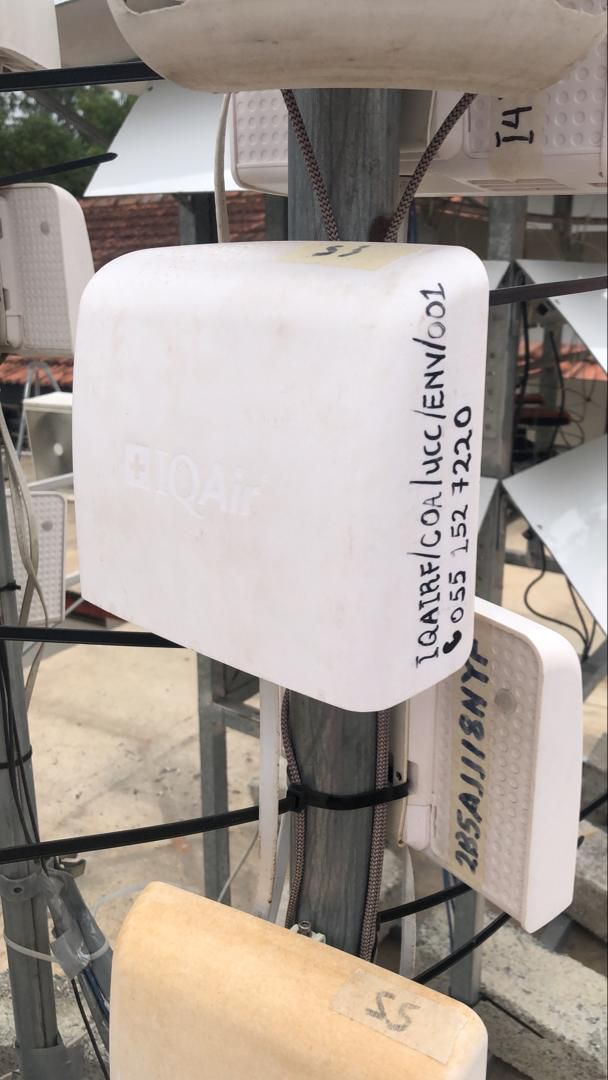
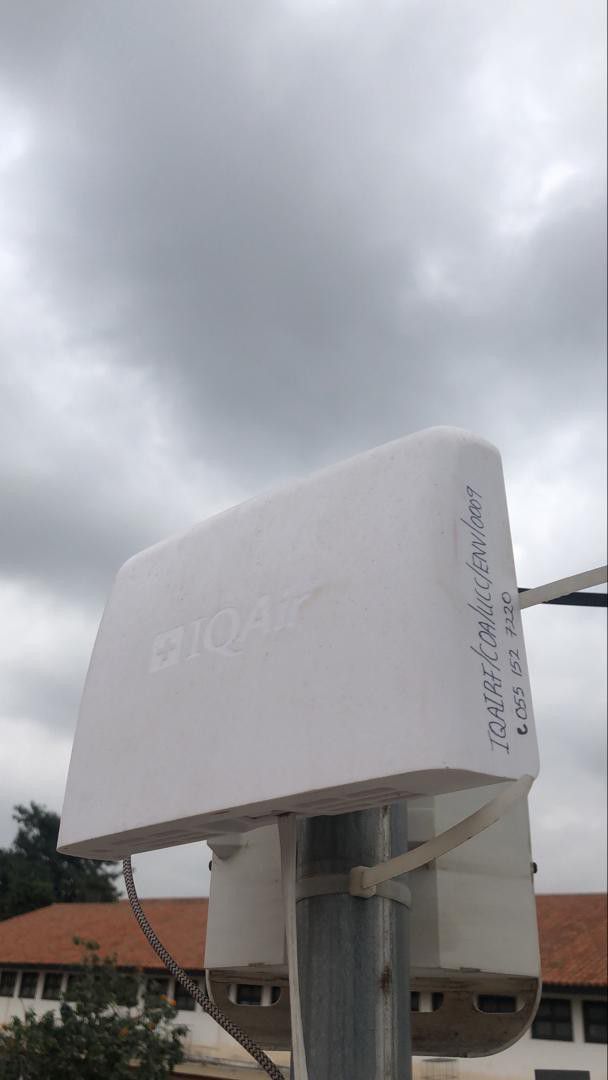
Station gallery

University of Ghana, Accra
22
Newest stations deployed in Accra
AQI⁺ station ranking
Newest stations



Learn more about global air quality


Learn more about air pollution in Accra
Is Accra badly polluted?
Accra is a city that has some fairly bad pollution issues, with several months on record in years past that would put many members of its population in danger, due to the highly damaging effects that pollution exposure can bring, particularly to vulnerable members of the society. Such vulnerable groups present in Accra would be ones such as young children and the elderly, along with pregnant women, those with a heightened sensitivity towards pollution, as well as those with pre-existing illnesses or compromised immune systems.
In 2020, Accra came in with a yearly PM2.5 average of 26.9 μg/m³, placing it in the 'moderate' pollution ratings bracket, which is color coded as yellow and requires a PM2.5 reading of anywhere between 12.1 to 35.4 μg/m³ to be classified as such. This reading placed Accra in 492nd place out of all cities ranked worldwide.
In mid-2021, Accra was also seen with some fairly elevated readings of US AQI, another prominent measure of air pollution levels. A reading of 89 was taken, once again placing it into the 'moderate' rating bracket (which when taken by US AQI standards, requires an entry reading of 51 to 100). Whilst the guidelines set by the US Environmental Protection Agency deem any reading between 0 to 150 as acceptable, once the numbers get to the higher end of this spectrum, adverse health effects may start to present themselves amongst the general population and the aforementioned vulnerable individuals.
US AQI is a figure aggregated from the several main pollutants found in the air, namely PM10 and PM2.5, along with nitrogen dioxide (NO2), sulfur dioxide (SO2) and ozone (O3).
What are some health risks associated with breathing polluted air in Accra?
Some prominent health risks that may present themselves to those who are subject to overexposure to high levels of air pollution, or from prolonged exposure, would be ones typically of the cardiac or pulmonary variety, although not entirely limited to these areas of the body, due to the highly pervasive nature of air pollution.
The incredibly small size of PM2.5 allows it to enter the blood stream via the lungs, where it can wreak all manner of havoc on the various organ systems of the body. Damage to the blood vessels can be incurred, along with the liver and kidneys (hepatic and renal systems) being affected, due to their role as filtration and cleaning systems within the body. Damage to the heart is an ongoing issue, with massively increased rates of ischemic heart disease, heart attacks and arrythmias all being possible. Ischemic heart disease can occur when the tissue of the organ fails to receive enough oxygen and gets damaged as a result.
Other issues include scarring or inflammation of the lung tissue, which can lead to a reduction in full lung capacity, along with increased risk of developing chronic obstructive pulmonary disease (COPD), an umbrella term that includes within it further respiratory ailments such as pneumonia, bronchitis, emphysema and aggravated forms of asthma.
Irritation to the skin can also occur, with conditions such as atopic dermatitis, eczema, psoriasis and varying forms (in their severity) of acne making themselves present. Those with a hypersensitivity towards pollutants or fine particles will be particularly at risk for such conditions to occur. Aggravation of the mucous membranes may also happen, with the mouth, eyes, ears and nose all being affected.
What are the main pollutants found in Accra?
The main pollutants found in the air in Accra would be the ones that go into making up the US AQI aggregate, which have already been mentioned in the primary question. Further pollutants found in the air would be ones such as finely ground silica dust, along with gravel and other forms of ultrafine or coarse particles.
Black carbon and volatile organic compounds (VOCs) would also be prevalent in their release from a multitude of combustion based pollution sources, ranging from cars to factories and even the open burning of trash and refuse. VOCs are particularly dangerous due to their ability to stay in a gaseous state even at lower temperatures, and are also one of the main sources of indoor air pollution (besides smoke released from indoor stoves and fires in certain traditional or low income homes).
VOCs can be released from a myriad of materials, with varnishes, glue and certain paints all giving off VOCs over periods of time. Some prominent examples of such chemicals are ones such as toluene, styrene, xylene, methylene chloride and formaldehyde.
Black carbon is the main component in soot, and besides being highly dangerous and irritating to inhale, is also a climate changing agent, due to its property of absorbing solar radiation and converting it directly to heat, warming up surrounding areas where it has accumulated in significant amounts. Ozone (O3) is also a prominent pollutant, being formed when the various oxides of nitrogen (NOx) and other various gases or chemicals are exposed to sunlight, found in abundance in Accra and throughout Ghana.
Whilst ozone is a highly important component of the upper atmosphere (in the well known ozone layer), when found on ground level it is an extremely dangerous pollutant, causing shortness of breath, lung inflammation and nausea amongst those who are subject to its exposure. It can often be seen blanketing roads and other densely populated areas of many cities throughout the world, commonly referred to as smog. These are some of the main pollutants that would be found in the air in Accra, varying from location to location based on what industrial or anthropogenic activity (such as trash burning) is taking place. Other pollutants that are also worth noting due to their danger are ones such as mercury, lead cadmium, along with polycyclic aromatic hydrocarbons, dioxins and furans.
When are pollution levels at their most dangerous in Accra?
Observing the PM2.5 readings from 2020, it can be seen that Accra had some very high pollution episodes in the beginning of the year. January and February were the most polluted months of the year, coming in at 59.8 μg/m³ and 43.4 μg/m³ respectively, making January the most polluted month and sitting in the ‘unhealthy’ air pollution ratings bracket (55.5 μg/m³ and beyond, color coded as red).
When is the air quality at its best in Accra?
Once again looking at the months taken over 2020, the ones that came in with the lowest readings of PM2.5 were April, May, September and October, all of which presented at 17.1 μg/m³, 17.8 μg/m³, 18.1 μg/m³ and 16.9 μg/m³ respectively, making October the cleanest month of the year with its reding of 16.9 μg/m³.
Where is the cleanest air quality in Accra?
- University Of Ghana 317
- University of Ghana22
- University of Ghana 222
- Graphic Road23
- Lartebiokorshie Cluster of Schools28
- Kawukudi Community Youth Center32
- Mamobi Market32
- Ridge Hospital32
- Asylum Down40
- Accra New Town41
- Osu Oxford Street41
- 37 Lorry Station42
- Cantonments42
- +233, North Ridge43
- Kwame Nkrumah Circle44
- Agbogbloshie46
- Flagstaff House Basic School46
- Odwana Market46
- Dzorwulu Fidelity Bank49
- Makola49
- Mallam Atta Market49
- Osu Presby Prep School49
- Kotobabi Lorry Station52
- Mamobi General Hospital52
- Afri-SET CC153
- Tesano Police Station53
- Black Star Square54
- Nima Market54
- Abeka Total Filling Station55
- Alajo Market55
- Tudu Ayalolo Bus Terminal55
- Blackbox56
- Old Fort Road, Accra, Greater Accra Ghana56
- TEMA BEACH ROAD. NUNGUA56
- Kaneshie Market57
- Chisco Transport Terminal58
- Achimota Interchange60
- Ayalolo Cluster of Schools64
- Krispat Hearing Center, Pig Farm67