


Yerevan air quality map
Live air pollution map of Yerevan • 415.7K Followers • 06:00, Apr 17 Local time



Stations
Clean Air Facilities
Contributors

Government
0
Diplomatic
0
Non-profit
2
Education
0
Corporate
2
Healthcare
0
Hospitality
0
Individual
11Top contributors in Yerevan
Who is sharing outdoor air quality data in Yerevan?
Featured station
Discover some of the best station installation in Yerevan
Station gallery

Smart City 2, Yerevan
53
Newest stations deployed in Yerevan
AQI⁺ station ranking
Newest stations





Learn more about global air quality


Learn more about air pollution in Yerevan
What is the current level of air pollution in Yerevan?
Yerevan, sometimes spelled Erevan) is the capital and largest city of Armenia and one of the world's oldest continuously inhabited cities. It is located on the banks of the Hrazdan River and is the administrative, cultural, and industrial centre of the country. According to a census that was conducted in 2011, the estimated population of Yerevan was just over 1 million people which equates to approximately one third of the entire population of Armenia.
The level of air pollution in late August 2021 was classified as being “Moderate” with a US AQI reading of 61. This United States Air Quality Index number is calculated using the levels of six of the most prolific air pollutants, such as nitrogen dioxide, sulphur dioxide, ozone, carbon monoxide and both sizes of particulate matter, which are PM2.5 and PM10. It can then be used as the metric when comparing air quality in other cities around the world. If data is unavailable for all 6 pollutants, a figure can still be calculated by using what figures there are. For Yerevan, the only figure recorded was that of PM2.5 which had a recorded level of 17.1 µg/m³. This level is just over one and a half times higher than the recommended level of 10 µg/m³ which is the suggested maximum figure by the World Health Organisation (WHO), although no amount of air pollution is considered to be safe.
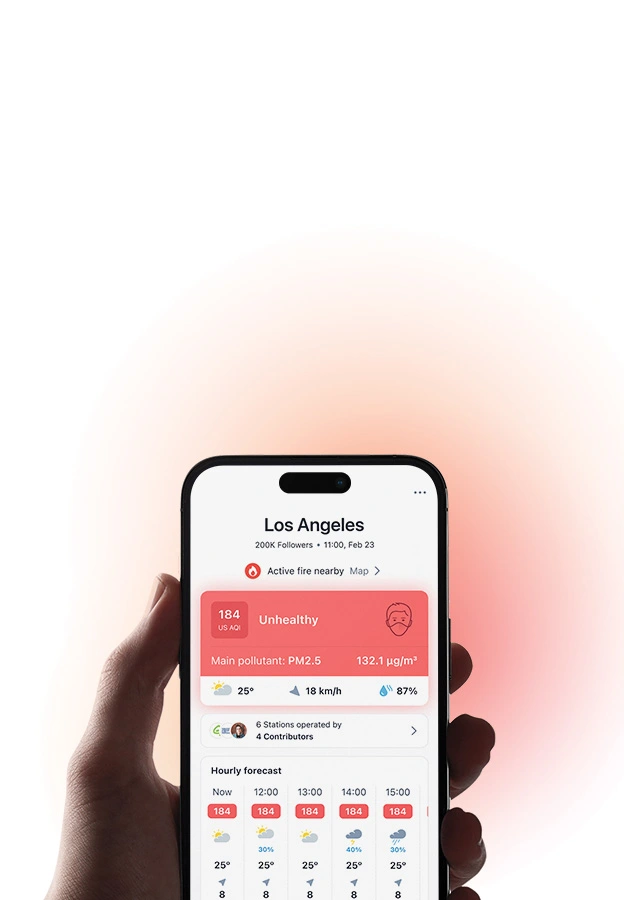
With air pollution at this level, it would be recommended to stay indoors as much as possible. Closing all windows and doors to prevent the ingress of more polluted air. Those who are sensitive to changes in air quality should remain indoors, but if venturing outside is unavoidable, then a good quality particle filter mask should be worn at all times. The AirVisual app is very informative in regards to air quality and it can be easily downloaded from the app store to any mobile device. This way you will have information available in real-time.
Does the level of pollution stay the same throughout the year in Yerevan?
The quality of air can be very changeable depending on rainfall, sunlight strength and hours and wind speed and direction. Looking back at the published figures for 2020 by IQAir.com, it can easily be seen that the month with the worst air quality in Yerevan was December with a reading of 63.5 µg/m³. This would classify it as being “Unhealthy”. Any figure between 55.5 and 150.4 µg/m³ falls into this category. The previous three months of September to November and March and April returned air quality from the “Moderate” bracket with figures between 12.1 and 35.4 µg/m³. The months of January and February provided Yerevan with air quality classed as being “Unhealthy for sensitive groups” with respective figures of 54.4 and 36.3 µg/m³. Figures between 35.5 and 55.4 µg/m³ fall into this category. July brought “Good” quality air with a reading of 12 µg/m³. The remaining three months of the year achieved the target figure of 10 µg/m³ or less as stipulated by the World Health Organisation (WHO). These were the summer months of May, June and August with respective records of 8.6, 8.9 and 9.7 µg/m³.
Historically, records were started in 2019 when the annual average figure was recorded as being 25.5 µg/m³. The following year of 2020 saw a slight improvement with a figure of 24.9 µg/m³. This 2020 figure coincided with the COVID-19 pandemic when many vehicles were no longer used on a daily basis in an attempt to stop the spread of the virus. Many factories and non-essential production units were also required to close which removed their emissions from the atmosphere and therefore, most cities revealed very good figures for air quality.
What is the source of air pollution in Yerevan?
Until 1992, the main sources of air pollution in the Republic of Armenia were the energy sector, non-ferrous metallurgy, industrial building materials, chemical industry enterprises, but due to the severe economic crisis, many of these industries were forced to cease operations.
The main sources of air pollution in Yerevan are road transport, urban development, mines and enterprises. 29 licenses have been issued for mining in Yerevan, and 405 companies have been allowed to release pollutants from real sources into the atmosphere. The share of motor vehicles in the mass emissions of harmful substances into the atmosphere in the Republic of Armenia is about 65 per cent.
Can anything be done to reduce air pollution in Yerevan?
The best way to protect the atmosphere from pollution is not to pollute it to begin with, as pollutants are impossible to catch. For that purpose, it is necessary to improve all production processes, to create waste-free productions and to filter the exhaust gases.
The main areas of concern are the transport infrastructure and management as well as the age of the fleet. Even though Yerevan’s road network has been extensively developed in recent years and further extension and enhancements are planned, Yerevan still needs to introduce a strategy regarding road use for public transport (as no dedicated lanes exist) and other alternative transport modes such as cycling. Reducing the age of the fleet is a long term process, beginning with the replacement of older vehicles in public transportation, in combination with switching to cleaner, more sustainable forms of fuel. Electric vehicles are to be introduced in the municipal fleet as a start.
The establishment of voluntary agreements on energy audits in industry to motivate companies (e.g. via small grants) to increase energy efficiency has also been introduced.
What are the detrimental effects of air pollution in Yerevan on our health?
The concentration of particulate matter (PM) is a key air quality indicator since it is the most common air pollutant that affects short term and long term health. Two sizes of particulate matter are used to analyse air quality; fine particles with a diameter of less than 2.5 microns or PM2.5 and coarse particles with a diameter of less than 10 microns or PM10. PM2.5 particles are more concerning because their small size allows them to travel deeper into the cardiopulmonary system.
The World Health Organisation’s air quality guidelines recommend that the annual mean concentrations of PM2.5 should not exceed 10 µg/m³ and 20 µg/m³ for PM10.


