Jumlah serbuk sari dan info alergi Wichita
Laporan serbuk sari dan alergi Wichita • 21:00, Oct 7
Indeks

Tinggi

Pohon
Tidak ada

Rumput
Tidak ada

Gulma
Tinggi
 26°
26° 3 km/h
 62%
62%Prakiraan alergi
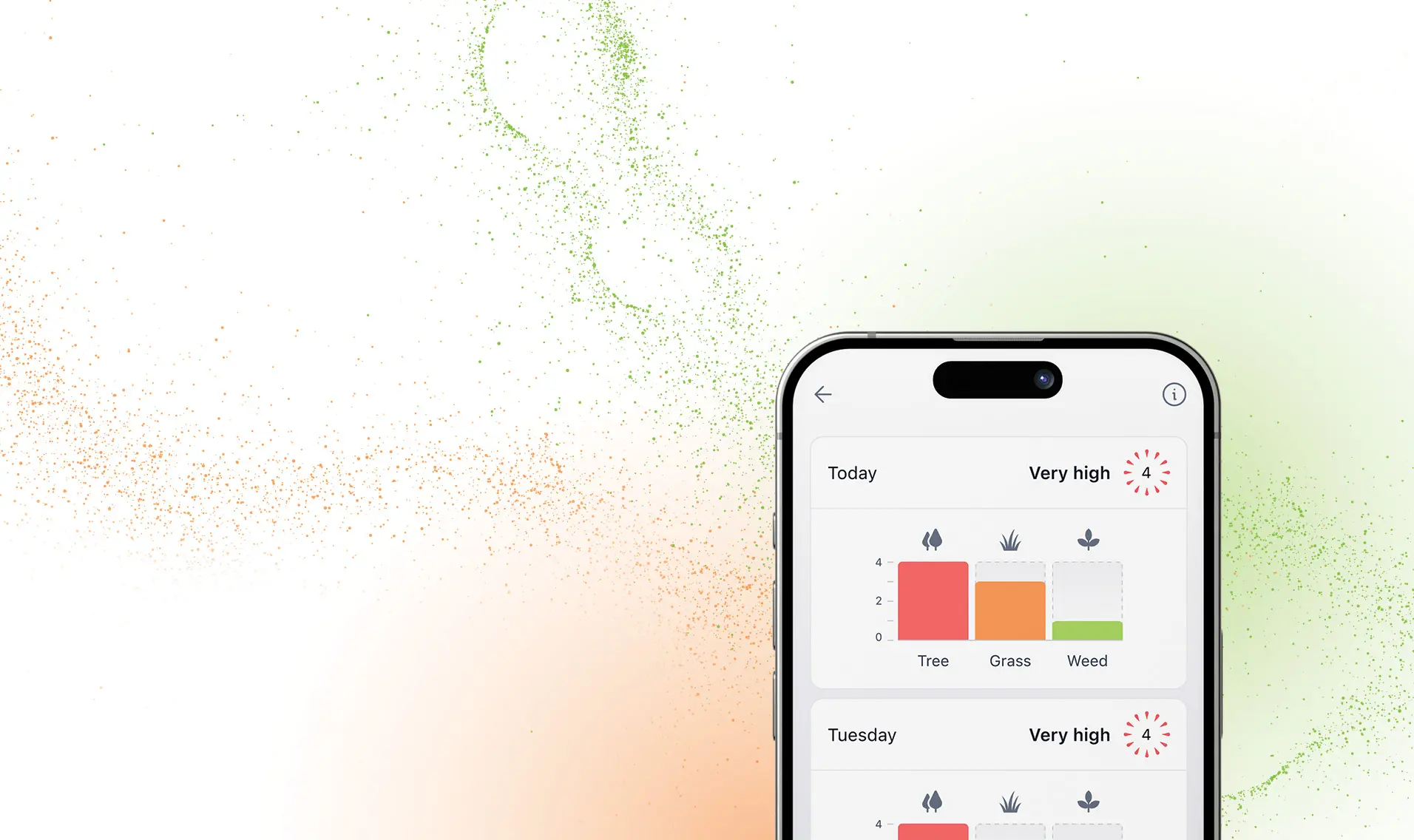
Prakiraan jumlah serbu sari Wichita
Hari ini  16 km/h 30°16° 61% | Kamis  25 km/h28°16° 53% | Jumat 23 km/h31°20° 36% |

Polutan udara
Kualitas udara di Wichita hari ini
Pelajari lebih lanjut tentang serbuk sari di Wichita


Lindungi dirimu dari polusi udara di Wichita

Memantau udara yang Anda hirup
Dapatkan pembacaan kualitas udara AirVisual yang akurat dan wawasan waktu nyata untuk udara yang lebih bersih. Monitor yang menunjukkan sumber polusi, menyoroti kapan penggunaan pembersih udara diperlukan.

Pembersih udara kelas medis
Dipercaya di seluruh dunia, HealthPro Series menggunakan teknologi HyperHEPA. Menyaring partikel sangat halus yang tidak dapat disaring oleh pembersih udara lainnya, memberikan perlindungan tingkat medis.

Pembersih udara yang kuat dan penuh gaya
Ringkas dan bertenaga, Seri Atem memadukan rekayasa Swiss dengan pemurnian udara berkinerja tinggi, menyaring partikel sangat halus dengan teknologi HyperHEPA.
Unduh Aplikasi Kualitas Udara kami


Is there a particular time of day when the pollen count is highest in Wichita?
There is a specific time of day when the pollen count tends to be at its highest in Wichita. This usually occurs during the early hours of the morning, typically between 5 AM and 10 AM. At this time, plants release a greater amount of pollen into the air. This happens because the air during the early morning is cooler and less turbulent, which allows the pollen to be carried by the breeze.
As the day progresses, the temperature begins to rise, and this can cause the pollen levels to decrease. The warmer air makes the pollen particles settle down, reducing their presence in the air. This decline continues into the afternoon and evening hours.
However, it's important to note that certain local factors can influence these patterns. Weather conditions, such as wind speed and humidity, play a role in how pollen is dispersed. Additionally, the types of plants present in the area can also impact the timing and intensity of peak pollen release. These factors can sometimes lead to variations in the expected pollen patterns.
Understanding when pollen counts are highest can help individuals who are sensitive to pollen plan their outdoor activities and take necessary precautions to manage their allergies.
Is the pollen count in Wichita higher during specific seasons?
The pollen count in Wichita follows distinct patterns throughout the year, with varying levels during different seasons. This variation is primarily influenced by the types of plants that are actively producing pollen during specific times.
Spring and Early Summer (March to June): During these months, tree pollen is at its peak. Trees such as oak, cedar, and pine release significant amounts of pollen into the air. This can lead to higher pollen counts and increased allergen exposure for those who are sensitive.
Late Spring and Early Summer: As spring progresses into early summer, grass pollen becomes more prevalent. This can be particularly bothersome for individuals who are allergic to grass pollen.
Late Summer and Autumn: Moving into late summer and autumn, weed pollen becomes more common. Weeds like ragweed are notorious for producing large amounts of pollen, contributing to higher pollen counts during this period.
Winter: During the winter months, pollen counts tend to be at their lowest. This is because most plants, including trees, grasses, and weeds, are not actively producing pollen during this time due to colder temperatures. This period provides relief for those with pollen allergies.
Understanding these seasonal pollen trends can help individuals with allergies better prepare and manage their symptoms throughout the year. It's important to stay informed about the prevalent allergens during each season and take appropriate precautions to minimize exposure.
Can the pollen count in Wichita affect indoor air quality?
Pollen from outside can find its way indoors through open windows, doors, and ventilation systems. This can potentially impact indoor air quality and trigger allergies, especially for people who are sensitive to pollen. Pollen particles are small and lightweight, allowing them to easily enter indoor spaces. When pollen levels are high outdoors, some of it inevitably enters buildings, and this can cause discomfort for those prone to allergies.
Regularly cleaning and maintaining indoor spaces can help manage indoor pollen levels. Dusting and vacuuming surfaces, as well as using a vacuum cleaner with a HEPA filter, can capture pollen particles and prevent them from circulating in the air. Using air purifiers with HEPA filters can further improve indoor air quality by trapping pollen and other allergens.
During high pollen seasons, it's advisable to keep windows closed to reduce the amount of pollen entering your home. While ventilation is important, using air conditioning with a clean filter can help circulate and filter indoor air more effectively. Taking these steps can contribute to a healthier indoor environment and provide relief for those who experience pollen-related allergies.
Can the pollen count in Wichita vary between different neighbourhoods or regions within the city?
The pollen count can indeed differ between various neighbourhoods or regions within Wichita. This variability can be attributed to several influencing factors. One of these factors is the assortment of vegetation present in each area. Neighbourhoods with an abundance of trees, grasses, or flowering plants may encounter higher pollen counts compared to regions that are more urban or developed.
Moreover, the proximity of an area to parks or green spaces plays a role in pollen distribution. Neighbourhoods situated closer to these areas might experience slightly elevated pollen levels due to the higher concentration of pollen-releasing plants in such spaces.
Local weather conditions also contribute to the variation in pollen counts. Wind, for example, can carry pollen from one area to another, affecting pollen levels. Additionally, temperature and humidity can influence when and how plants release pollen, further influencing pollen counts in different parts of the city.
In summary, the pollen count within Wichita can exhibit diversity among neighbourhoods or regions due to differences in plant types, proximity to green spaces, and local weather conditions. Areas abundant in vegetation, especially those close to parks, may experience higher pollen counts, while more urban or developed regions might have lower levels. Understanding these factors can help individuals anticipate and manage potential pollen exposure.
Are there any efforts in Wichita to reduce the pollen count and improve air quality?
Wichita has implemented several strategies to manage pollen counts and enhance air quality within the city. These measures aim to create a more comfortable and allergen-friendly environment for its residents. Some of the initiatives include:
1. Planting Low-Pollen and Non-Allergenic Plants: The city has been actively involved in selecting and planting vegetation that produces minimal pollen and poses fewer allergy risks. By incorporating low-pollen and non-allergenic plants in public spaces, Wichita reduces the overall pollen exposure for its residents.
2. Promoting Native Plants: Encouraging the use of native plants is another approach to mitigate pollen-related concerns. Native plants are adapted to the local climate and generally produce less airborne pollen compared to non-native species. This effort aligns with the goal of reducing allergenic plant species in urban areas.
3. Urban Planning and Green Spaces: The city's urban planning strategies include the incorporation of more trees and green spaces. This deliberate design helps disperse pollen and prevent its concentration in specific areas. The presence of trees and greenery also contributes to overall air quality improvement by filtering pollutants and providing shade.
4. Regular Green Area Maintenance: Consistent maintenance of green areas is vital in preventing the overgrowth of plants that produce high levels of pollen. By regularly trimming and managing these plants, Wichita reduces the potential for excessive pollen dispersion during peak seasons.
These combined efforts reflect Wichita's commitment to enhancing the living conditions of its residents, particularly those who are sensitive to pollen and allergens. Through thoughtful plant selection, urban planning, and ongoing maintenance, the city strives to create a more balanced and healthier outdoor environment for everyone to enjoy.
Di mana tingkat serbuk sari tertinggi di Kansas?
- Abilene3
- Alma3
- Andover3
- Anthony3
- Ashland3
- Augusta3
- Baldwin City3
- Basehor3
- Baxter Springs3
- Bel Aire3
- Belle Plaine3
- Beloit3
- Bonner Springs3
- Brownell3
- Burlington3
- Caldwell3
- Chapman3
- Cheney3
- Cherryvale3
- Cimarron3
- Clearwater3
- Coffeyville3
- Colwich3
- Concordia3
- Conway Springs3
- Cottonwood Falls3
- Council Grove3
- De Soto3
- Derby3
- Dighton3
- Dodge City3
- Douglass3
- Edgerton3
- Edwardsville3
- El Dorado3
- Elkhart3
- Ellis3
- Elwood3
- Emporia3
- Erie3
- Eudora3
- Fairway3
- Fort Riley3
- Fredonia3
- Galena3
- Garden Plain3
- Garnett3
- Girard3
- Goddard3
- Grandview Plaza3
- Halstead3
- Harper3
- Hays3
- Haysville3
- Hesston3
- Hill City3
- Hillsboro3
- Howard3
- Hoxie3
- Hugoton3
- Humboldt3
- Independence3
- Iola3
- Johnson3
- Junction City3
- Kansas City3
- Kinsley3
- La Cygne3
- Lansing3
- Leavenworth3
- Leawood3
- Louisburg3
- Lyndon3
- Maize3
- Manhattan3
- Marion3
- McConnell AFB3
- Meade3
- Minneapolis3
- Mission Hills3
- Mound City3
- Moundridge3
- Mulvane3
- Murdock3
- Ness City3
- Newbury3
- Newton3
- North Newton3
- Oaklawn-Sunview3
- Oberlin3
- Ogden3
- Olathe3
- Osage City3
- Osawatomie3
- Osborne3
- Oswego3
- Ottawa3
- Oxford3
- Paola3
- Parsons3
- Paxico3
- Peabody3
- Peck3
- Phillipsburg3
- Plainville3
- Prairie Village3
- Riley County3
- Roeland Park3
- Rose Hill3
- Rossville3
- Russell3
- Salina3
- Satanta3
- Silver Lake3
- Solomon3
- Sublette3
- Syracuse3
- Tonganoxie3
- Towanda3
- Trego County3
- Ulysses3
- Valley Falls3
- Victoria3
- WaKeeney3
- Wathena3
- Wellington3
- Wellsville3
- Westwood3
- Wichita3
- Winfield3
- Arma2
- Atchison2
- Atwood2
- Belleville2
- Chanute2
- Colby2
- Douglas County2
- Fort Scott2
- Frontenac2
- Garden City2
- Goodland2
- Gove2
- Herington2
- Hiawatha2
- Highland2
- Holcomb2
- Holton2
- Horton2
- Kiowa2
- Lakin2
- Lawrence2
- Lenexa2
- Leoti2
- Merriam2
- Mission2
- Oskaloosa2
- Overland Park2
- Pittsburg2
- Pleasanton2
- Pottawatomie County2
- Sabetha2
- Scott City2
- Seneca2
- Shawnee2
- St. Francis2
- Tribune2
- Troy2
- Westmoreland2
- Jetmore1
- Kechi1
- Park City1
- Sedan1
- Valley Center1
- Altamont0
- Arkansas City0
- Auburn0
- Buhler0
- Caney0
- Carbondale0
- Chetopa0
- Clay Center0
- Coldwater0
- Columbus0
- Ellinwood0
- Ellsworth0
- Ellsworth County0
- Eureka0
- Gardner0
- Great Bend0
- Greensburg0
- Haven0
- Hoisington0
- Hutchinson0
- Inman0
- Kingman0
- La Crosse0
- Larned0
- Liberal0
- Lincoln0
- Lindsborg0
- Lyons0
- Mankato0
- Marysville0
- McPherson0
- Medicine Lodge0
- Neodesha0
- Nickerson0
- Norton0
- Oakley0
- Overbrook0
- Plains0
- Pratt0
- Sedgwick0
- Sharon Springs0
- Shawnee County0
- Smith Center0
- South Hutchinson0
- Spring Hill0
- St. John0
- Sterling0
- Stockton0
- Tecumseh0
- Topeka0
- Wamego0
- Washington0
- Yates Center0
- Zeandale0