
Hanoi air quality map
Live air pollution map of Hanoi • 3.1M Followers • 06:00, Jan 24 Local time




Stations
Clean Air Facilities
Contributors

Government
0
Diplomatic
1
Non-profit
0
Education
5
Corporate
4
Healthcare
1
Hospitality
0
Individual
17Top contributors in Hanoi
Who is sharing outdoor air quality data in Hanoi?
Featured station
Discover some of the best station installation in Hanoi
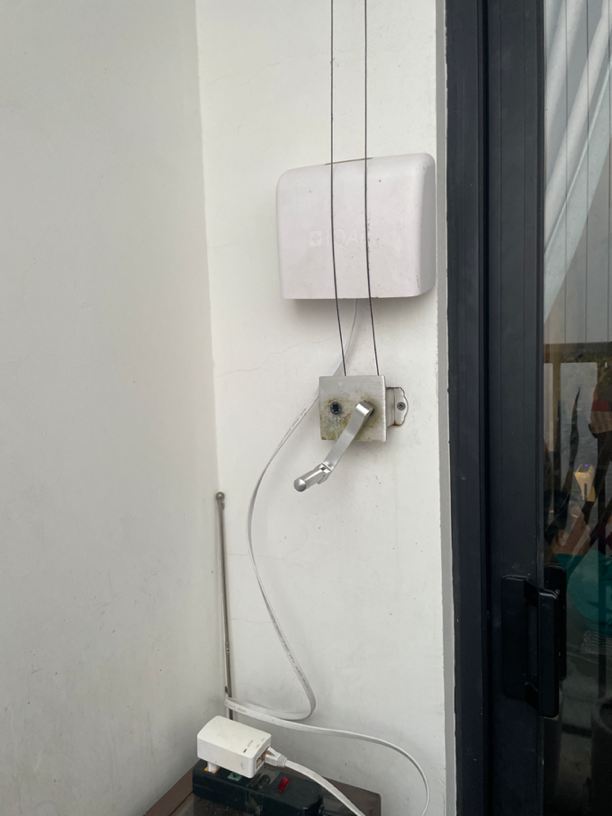
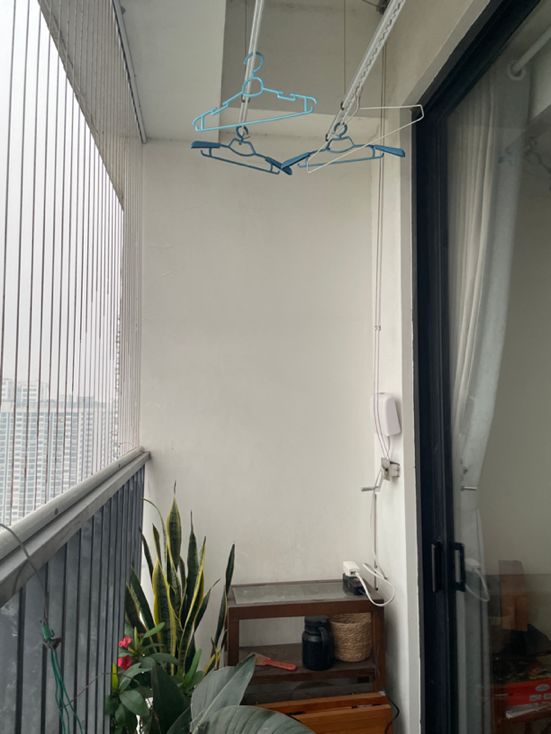
Station gallery

Ngoai Giao Doan (NO1T1), Hanoi
70
Newest stations deployed in Hanoi
AQI⁺ station ranking
Newest stations







Clean Air Facilities





Learn more about global air quality


Learn more about air pollution in Hanoi
Is the air quality in Hanoi very poor?
In 2019 The Air Pollution Index rose to an unprecedented level of 385. IQAir AirVisual receives data from 10 monitoring stations which are operated by the local authorities and 4 others operated by non-profit organisations.
The US AQI is a standard measurement system used widely to determine the level of airborne pollutants. The figures range from zero to five hundred where the lower the figure, the cleaner the air is. People who are more susceptible to breathing difficulties should avoid long periods of exposure when the number is higher than 150. These include children, the elderly, pregnant women and those suffering from asthma.
The main cause of this poor air quality is blamed on the extremely high number of cars and motorbikes which pour into the city centre on a daily basis. Hanoi had eight days in 2019 with a PM2.5 reading lower than the national standard of 50 µg/m3 (micrograms per cubic meter). Also to blame is the burning of rice fields after the crops have been harvested. These fine particles are particularly bad as they penetrate deep into the lungs and cause health problems due to the restrictions they cause.
Is Hanoi’s air quality poor all of the time?
Hanoi often receives the accolade of being the most polluted city in the country and often in the region. On hot, humid days fog is formed and hangs over the city. Because of this, the circulation of air is restricted which, in turn, prevents the diffusion of the pollutants. Due to this phenomena, the particulates cannot escape and are trapped at ground level which causes the poor air quality.
Hanoi ranked as the second most polluted city in Southeast Asia in 2019 by IQAir AirVisual with recorded PM2.5 figures of 40.8 µg/m3 which was an improvement on the 2017 figure of 45.8 µg/m3. Both these figures are above the recommended average levels of 10 micrograms as suggested by the WHO (World Health Organisation).
PM is the abbreviation used to describe Particle Matter and it refers to a mixture of both liquid droplets and solid particles found in the air. The more specific figure of PM 2.5 refers to ultra-fine particles which are a fraction of the width of a human hair. These particles are released through the burning of fossil fuels by industry and vehicles, but also from natural sources, such as dust and fine grains of sand.
What is the main cause of pollution in Hanoi?
500 tons of charcoal and 700 tons of waste are estimated to be burnt on a daily basis in and around Hanoi. The result of burning these materials causes carbon dioxide, and other toxic gases such as sulphur dioxide and carbon monoxide. Grass and stubble leftover from the harvest are burnt in order to prepare the ground for the next crop. Hundreds and thousands of hectares of land surrounding Hanoi are incinerated. It is estimated that over 300,000 tons of straw are burnt annually. Also contributing to this is a temperature inversion. This is when heat disperses from the ground into the atmosphere causing the creation of fog at relatively low levels. The fog traps the polluted air and prevents it escaping.
Within the city limits, there are thousands of households who use charcoal as their main source of energy to use in their stoves. City restaurants also offer barbeque cooked food. Together these factors combine to give Hanoi the reputation of being a heavily polluted city.
An official survey of 180,000 households showed that in the Red River Delta, 58 per cent burned their old straw. This region alone produces 1.2 – 4.7 million tons of CO2 and 28,000- 113,000 tons of CO. An average paddy field produces 1 ton of waste material and Vietnam annually produces almost 50 million tons of such waste.
The honeycomb charcoal stove which is favoured by so many households is popular because it is so cheap to use. On average the charcoal costs just 50 cents per day, whereas the same use of electricity would cost over ten times that amount - $5.60. The initial cost of the equipment has also got to be taken into account. An electric stove will be far more expensive than the clay or metal container used to hold the honeycomb charcoal. The CO2 emitted by this charcoal is equivalent to 1,870 tons, annually.
Construction sites produce a huge amount of dust from the demolition of the existing building and this continues whilst building the new project with cement and brick dust being ever-present. It is thought that new laws will be introduced to make the contractors talk more responsibility for the state of their site and the ensuing pollution it causes.
How deadly is air pollution In Hanoi?
In 2016 over 60,000 people died from lung cancer, heart disease, strokes and other related diseases all caused by breathing poor quality air. This equates to 165 daily deaths due to air pollution. The air quality on average is well below the World Health Organisation’s benchmark and, as such could reduce life expectancy by one year. Hospitals often report a marked increase in patients with breathing difficulties at times when the air quality is noticeably poor.
How do people cope with this situation?
Most people choose to wear a face-mask when spending time outdoors. They vary in price and quality but needless to say, better quality ones cost a little more. You can check out the IQAir KN95 masks available on our online store. Should you feel particularly vulnerable you may want to consider buying an air purifier for your home. This is especially vital if you have pre-existing respiratory problems. Other than that, you may find it necessary to remain indoors and close all the windows. This is not an ideal solution, but it will help keep some of the dirty air out. Another option is to get away for a few days from the polluted city. Try and head for the coast where the air is almost certainly cleaner because of its proximity to the ocean and the refreshing breezes.
Where is the cleanest air quality in Hanoi?
- Vinhome riverside, HS5-4460
- UDS Pharmacy - OceanPark162
- Vinhomes Riverside62
- Hoangquocviet66
- Me Tri - May Lam Da Hai Au - Hai Au Group67
- ISPH,Ha Dong, Ha Noi, VN68
- Truong Tieu Hoc Vinschool smart city69
- Ngoai Giao Doan (NO1T1)70
- Park 7 Times City Minh Khai70
- Cu Khoi, Long Bien71
- La Casta, Ha Dong72
- Tu Hoa str.72
- Le Duan - Hoan Kiem73
- Dao's Family - Mansion Parkcity75
- Mipec Long Bien75
- Tay Ho next to Dust Freedom75
- Vinh Tuy - ThucPham.com - Vi Ngon Thuong Hang75
- Dang Tay Ho76
- Truc Bach Lake76
- Lakeside77
- Linh Dam - ThucPham.com - Vi Ngon Thuong Hang79
- SmartOSC79
- Ciputra E581
- Minerva Church Hotel81
- HNTL82
- LFAY - French School87
- Quang Khanh, Tay Ho89
- Toa nha Charmvit, 117 D94
- Lang Ha - Giang Vo - Hoang Cau130
- 104 P. Tran Vu151
- Academy Rd155
- Khu do thi Ciputra155
- DUNG LE - MAY LOC KHONG KHI157