Kiraan debunga dan maklumat alahan untuk New York
Laporan debunga dan alahan New York • 14:00, Oct 28 Waktu tempatan
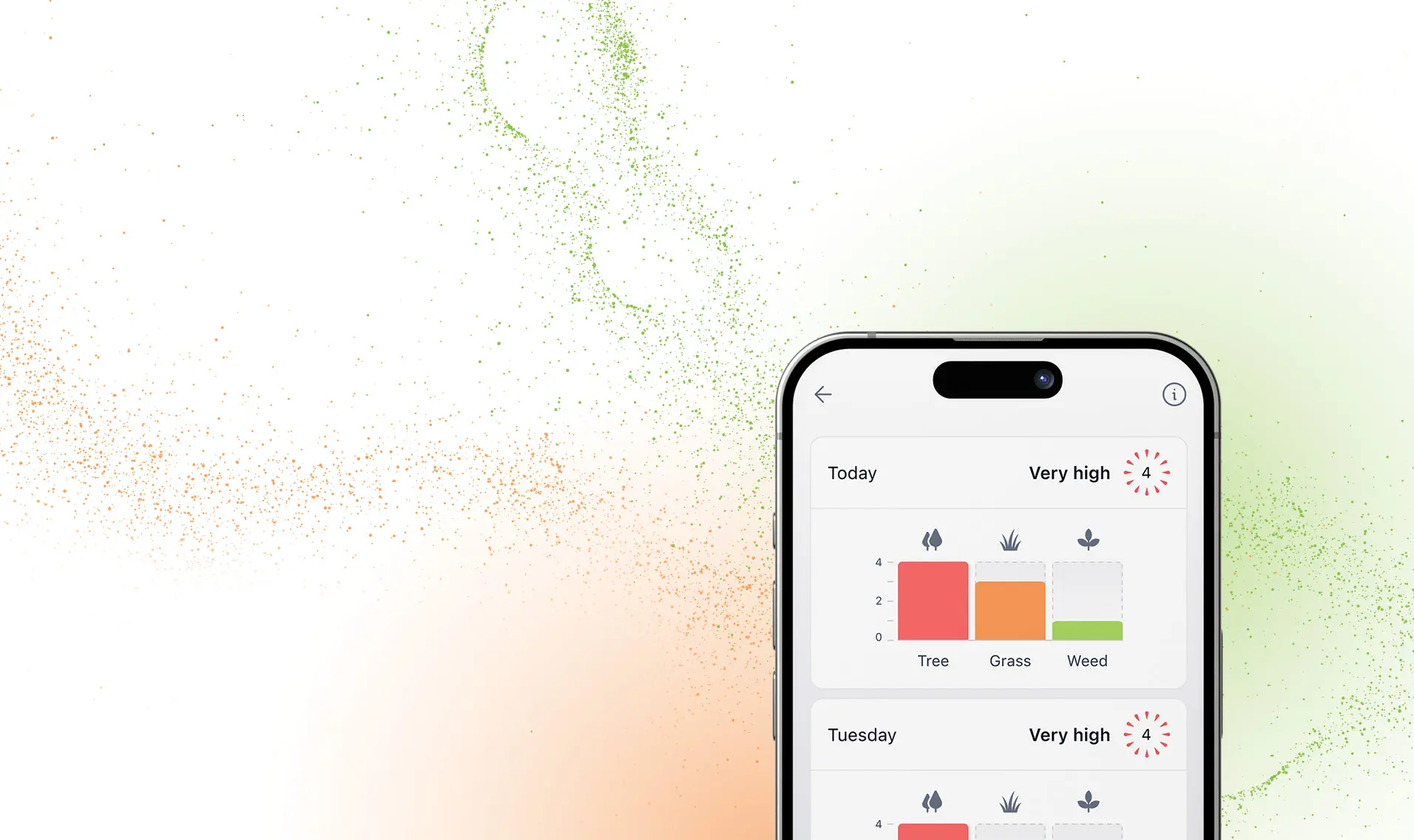
Indeks

Rendah

Pokok
Tiada

Rumput
Tiada

Rumpai
Rendah
 15°
 6 km/h
 54%
Ramalan alahan harian
Ramalan jumlah debunga New York
Hari Ini  12 km/h15°8° 71% | Khamis 13 km/h 13°11° 90% | Jumaat 22 km/h19°12° 68% |

Pencemar udara
Kualiti udara di New York hari ini
Ketahui lebih lanjut tentang debunga di New York


Lindungi diri anda daripada pencemaran udara di New York

Pantau udara yang anda hirup
Dapatkan bacaan kualiti udara AirVisual yang tepat dan pandangan masa nyata untuk udara yang lebih bersih. Monitor yang mendedahkan punca pencemaran serta menyerlahkan bila penggunaan penulen udara diperlukan.

Penulen udara gred perubatan
Dipercayai di seluruh dunia, Siri HealthPro menggunakan teknologi HyperHEPA. Menapis zarah ultrahalus yang terlepas oleh penulen udara lain, memberikan perlindungan gred perubatan.

Penulen udara berkuasa dan bergaya
Padat dan berkuasa, Siri Atem menggabungkan kejuruteraan Switzerland dengan penulenan udara berprestasi tinggi, menapis zarah ultrahalus dengan teknologi HyperHEPA.
Muat turun Aplikasi Kualiti Udara kami


What is the pollen count in New York City?
Levels of the pollen count fall into five numerical categories ranging from zero to four, where level zero carries minimal risk to allergy sufferers and level number four is high and will affect most people who suffer from allergies and should take precautions accordingly. Each category of the different pollens has its own level displayed on the IQAir website.
The Pollen Count is a quantity of the average number of pollen grains per cubic metre. It is typically recorded during the daytime, so pollen count forecasts will echo daytime figures. The amount of pollen can vary from day to day and can also vary throughout each day. It can be very dependent on weather conditions.
What are the main types of pollen to affect New York City?
The types of pollen that affect New York fall into three main categories which are tree pollen, grass pollen and weed pollen, although each of these can be sub-divided. Due to the certain types of vegetation found within New York City, the top allergens are from grasses, dock and plantain. The size of the pollen grains of dock ranges from 15-35 microns and are pollinated by the wind so can easily spread over long distances.
Does the pollen count in New York City change with the seasons?
The pollen season in New York City lasts mainly from April to August when most types of trees and grasses are in bloom. However, there are some tree species that bloom earlier, such as ash and birch especially if there has been a mild winter. Pollen from elm trees occurs later in the year around late summer to early winter. And as if that wasn't enough, there are also some species that bloom in late summer and into autumn, depending on the weather and temperature. This extends the season - especially for those who are allergic to several types of pollen. New York is a green city with many different types of trees planted in the parks. Tree pollen is most prevalent during Springtime when the trees are starting to come into bud and blossom, while grass pollen is most prevalent during the summer months of June, July and August.
What can be done by allergy sufferers when the pollen count is high in New York City?
Start with allergy tablets (antihistamines) and preventive nasal spray preferably a week before the expected spread. Eye drops can be used once the symptoms occur. The wearing of sunglasses can help with the glare from the sun. Plan your day, go out early in the morning, when it rains or soon after. Then there is less pollen in the air. Pollen sticks to the fur of dogs, cats and other pets. Make sure they are brushed or rinsed after they have been outside. It also sticks to human hair, so rinsing your hair can eliminate excess pollen.
Clothes should not be dried outside, if possible, because pollen sticks to the fibres as they are exposed to the elements. Days need to be planned to be out early in the morning when it rains or soon after. There is less pollen in the air at that time of day.
Allergies are one of our major public diseases, and the increasingly mild weather means that nature wakes up earlier in the year, which leads to a longer allergy season. Around fifty million Americans suffer from some form of symptoms related to pollen allergy (or allergic rhinitis). Of these, more than one in four have such serious problems that the quality of life and the ability to work or study are affected. Asthma and allergies are diseases that most often appear early in life and remain lifelong ailments. There is, therefore, a lot of research in the area, and today there is an over-the-counter and prescription treatment and also vaccination in injection or tablet form.
Why are some people affected by a high pollen count in New York City yet others remain unaffected?
We do not know all the reasons that go towards people being affected by pollen allergies. There is, however, a certain heredity, but also environmental and lifestyle factors such as smoking, air pollution and hygiene can be important. Allergy means that the immune system overreacts because it perceives an otherwise harmless substance, such as pollen, as harmful and reacts accordingly. In the event of an allergic reaction, the cells of the immune system will release chemical substances (including histamines) that cause the allergic reactions, e.g., increased secretion of fluid and mucus in the nose and eyes, contraction of the airways so that it becomes harder to breathe (asthma) and skin changes such as redness, swelling and itching (eczema).
How is the body affected by a high pollen count in New York City?
Pollen allergies affect between 10 and 20 per cent of the population. This percentage has doubled over the last decade. Nevertheless, some pollens can also have beneficial effects on health. When inhaled, pollen irritates the respiratory system and can cause rhino-conjunctivitis (hay fever), cough, respiratory discomfort, itching, even asthma, hives and eczema. The pollen grains remain in the upper respiratory tract (nose, sinuses, bronchus, pharynx, larynx and trachea) and it is the particles of the pollen grain that cause allergic reactions in humans.
Pollen allergy is a more developed problem in the city. Even if the city, compared to the countryside, has less vegetation, the organism of people living in the city is more sensitive and therefore more reactive to allergies, in particular because of air pollution. Stress can also be an aggravating factor for pollen allergy symptoms.
Is the high pollen count in New York City getting better or worse?
The multiplication of cases of pollen allergies is due to several factors related to climate change and air pollution. Rising temperatures cause earlier flowering and pollination and longer pollen seasons for species that pollinate in late winter and early spring (cypress, ash, birch). More exposed to pollens, the population develops more allergies. Also involved, birch and ragweed pollen grains, in larger quantities, are more allergenic. Moreover, as several studies have shown, the increase in the concentration of carbon dioxide in the atmosphere, necessary for photosynthesis, significantly increases the production of pollen.
Di manakah tahap debunga tertinggi di New York?
- Accord1
- Addison1
- Airmont1
- Akron1
- Albany1
- Albany County1
- Albertson1
- Albion1
- Alden1
- Alfred1
- Allegany1
- Allegany County1
- Altamont1
- Altmar1
- Amagansett1
- Amityville1
- Amsterdam1
- Andover1
- Angola1
- Angola on the Lake1
- Apalachin1
- Arcade1
- Arlington1
- Armonk1
- Athens1
- Atlantic Beach1
- Attica1
- Auburn1
- Averill Park1
- Avon1
- Babylon1
- Bainbridge1
- Baiting Hollow1
- Baldwin1
- Baldwinsville1
- Ballston Spa1
- Balmville1
- Bard College1
- Bardonia1
- Barnum Island1
- Batavia1
- Bath1
- Bay Park1
- Bay Shore1
- Bayport1
- Bayville1
- Baywood1
- Beacon1
- Beaver Dam Lake1
- Bedford1
- Bedford Hills1
- Bellerose1
- Bellerose Terrace1
- Bellmore1
- Bellport1
- Belmont1
- Bergen1
- Bethpage1
- Big Flats1
- Billington Heights1
- Binghamton1
- Blasdell1
- Blauvelt1
- Bloomfield1
- Blue Point1
- Bohemia1
- Bolivar1
- Brentwood1
- Brewerton1
- Brewster1
- Brewster Heights1
- Brewster Hill1
- Briarcliff Manor1
- Bridgehampton1
- Bridgeport1
- Brighton1
- Brightwaters1
- Brinckerhoff1
- Brockport1
- Brocton1
- Bronx1
- Bronxville1
- Brookhaven1
- Brookville1
- Broome1
- Buchanan1
- Buffalo1
- Busti1
- Caledonia1
- Callicoon1
- Calverton1
- Cambridge1
- Camillus1
- Canajoharie1
- Canandaigua1
- Canastota1
- Canisteo1
- Carle Place1
- Carmel1
- Catskill1
- Cayuga1
- Cayuga County1
- Cayuga Heights1
- Cedarhurst1
- Celoron1
- Center Moriches1
- Centereach1
- Centerport1
- Central Islip1
- Centre Island1
- Chadwicks1
- Chappaqua1
- Chautauqua County1
- Cheektowaga1
- Chenango Bridge1
- Chenango County1
- Chester1
- Chestnut Ridge1
- Chittenango1
- Churchville1
- Clarence1
- Clarence Center1
- Clark Mills1
- Clarkson1
- Clayville1
- Clifton Gardens1
- Clifton Springs1
- Clinton1
- Clintondale1
- Clyde1
- Cobleskill1
- Cohoes1
- Cold Spring1
- Cold Spring Harbor1
- Colonie1
- Columbia1
- Commack1
- Constantia1
- Cooperstown1
- Copiague1
- Coram1
- Corinth1
- Corning1
- Cornwall-on-Hudson1
- Cortland1
- Cortland County1
- Cortland West1
- Country Knolls1
- Cove Neck1
- Coxsackie1
- Cranberry Lake1
- Crompond1
- Croton-on-Hudson1
- Crown Heights1
- Crugers1
- Cuba1
- Cutchogue1
- Danby1
- Dansville1
- De Witt1
- Deer Park1
- Delevan1
- Depew1
- Deposit1
- DeRuyter1
- Dix Hills1
- Dover Plains1
- Dryden1
- Dundee1
- Dunkirk1
- Dutchess County1
- East Atlantic Beach1
- East Aurora1
- East Farmingdale1
- East Glenville1
- East Hampton1
- East Hampton North1
- East Hills1
- East Islip1
- East Ithaca1
- East Massapequa1
- East Meadow1
- East Moriches1
- East Nassau1
- East Northport1
- East Norwich1
- East Patchogue1
- East Quogue1
- East Rochester1
- East Rockaway1
- East Setauket1
- East Shoreham1
- East Syracuse1
- East Williston1
- Eastport1
- Eatons Neck1
- Eden1
- Eggertsville1
- Elbridge1
- Eldred1
- Elizabethtown1
- Ellenville1
- Elma Center1
- Elmira1
- Elmira Heights1
- Elmont1
- Elmsford1
- Elwood1
- Endicott1
- Endwell1
- Erie County1
- Fabius1
- Fairmount1
- Fairport1
- Falconer1
- Fallsburg1
- Farmingdale1
- Farmingville1
- Fayetteville1
- Firthcliffe1
- Fishers Island1
- Floral Park1
- Florida1
- Fonda1
- Fort Edward1
- Fort Johnson1
- Fort Montgomery1
- Fort Plain1
- Fort Salonga1
- Frankfort1
- Franklin County1
- Franklin Square1
- Franklinville1
- Fredonia1
- Freeport1
- Frewsburg1
- Friendship1
- Fulton1
- Galeville1
- Gang Mills1
- Garden City1
- Garden City Park1
- Garden City South1
- Gardnertown1
- Gasport1
- Gates1
- Genesee1
- Geneseo1
- Geneva1
- Germantown1
- Glasco1
- Glen Cove1
- Glen Head1
- Glens Falls1
- Glens Falls North1
- Glenwood Landing1
- Gloversville1
- Gordon Heights1
- Goshen1
- Gowanda1
- Grandyle Village1
- Granville1
- Great River1
- Greece1
- Green Island1
- Greene1
- Greenlawn1
- Greenport1
- Greenport West1
- Greenvale1
- Greenwich1
- Greenwood Lake1
- Groton1
- Hadley1
- Hagaman1
- Halesite1
- Hamburg1
- Hamilton County1
- Hamlin1
- Hammondsport1
- Hampton Bays1
- Harbor Isle1
- Harriman1
- Harris Hill1
- Hauppauge1
- Haverstraw1
- Haviland1
- Hawthorne1
- Head of the Harbor1
- Hempstead1
- Herkimer County1
- Hewlett1
- Hewlett Bay Park1
- Hewlett Harbor1
- Hicksville1
- High Falls1
- Highland1
- Highland Falls1
- Hillcrest1
- Hillside1
- Hillside Lake1
- Hilton1
- Holbrook1
- Holland1
- Holley1
- Holtsville1
- Homer1
- Honeoye Falls1
- Hoosick Falls1
- Hopewell Junction1
- Hornell1
- Horseheads1
- Horseheads North1
- Houghton1
- Hudson1
- Hudson Falls1
- Huntington1
- Huntington Bay1
- Huntington Station1
- Hurley1
- Hyde Park1
- Inwood1
- Irondequoit1
- Island Park1
- Islandia1
- Islip1
- Islip Terrace1
- Ithaca1
- Jamesport1
- Jamestown1
- Jamestown West1
- Jefferson Heights1
- Jefferson Valley-Yorktown1
- Jericho1
- Johnson City1
- Johnstown1
- Jordan1
- Kaser1
- Kenmore1
- Kerhonkson1
- Keuka Park1
- Kinderhook1
- Kings1
- Kings Park1
- Kingston1
- Kiryas Joel1
- Lackawanna1
- Lake Carmel1
- Lake Erie Beach1
- Lake Grove1
- Lake Katrine1
- Lake Luzerne1
- Lake Mohegan1
- Lake Placid1
- Lake Ronkonkoma1
- Lakeland1
- Lakeview1
- Lakewood1
- Lancaster1
- Lansing1
- Larchmont1
- Latham1
- Lattingtown1
- Laurel1
- Laurel Hollow1
- Lawrence1
- Le Roy1
- Levittown1
- Lewiston1
- Liberty1
- Lido Beach1
- Lima1
- Lincoln Park1
- Lindenhurst1
- Little Valley1
- Liverpool1
- Livingston County1
- Livonia1
- Lloyd Harbor1
- Lockport1
- Locust Valley1
- Long Beach1
- Lorenz Park1
- Loudonville1
- Lynbrook1
- Lyncourt1
- Lyons1
- Macedon1
- Madison County1
- Mahopac1
- Malverne1
- Mamaroneck1
- Manchester1
- Manlius1
- Manorville1
- Marcellus1
- Marion1
- Marlboro1
- Massapequa1
- Massapequa Park1
- Mastic1
- Mastic Beach1
- Mattituck1
- Mattydale1
- Maybrook1
- Mayville1
- McGraw1
- Mechanicstown1
- Mechanicville1
- Medford1
- Medina1
- Melrose Park1
- Melville1
- Menands1
- Merrick1
- Mexico1
- Middle Island1
- Middleport1
- Middletown1
- Mill Neck1
- Millbrook1
- Miller Place1
- Milton, Ulster County1
- Mineola1
- Minetto1
- Minoa1
- Monroe1
- Monroe County1
- Monsey1
- Montauk1
- Montebello1
- Montgomery1
- Monticello1
- Montour Falls1
- Montrose1
- Moravia1
- Moriches1
- Mount Ivy1
- Mount Kisco1
- Mount Morris1
- Mount Sinai1
- Mount Vernon1
- Mountain Lodge Park1
- Munsons Corners1
- Muttontown1
- Myers Corner1
- Nanuet1
- Napanoch1
- Naples1
- Nassau1
- Nazareth College1
- Nedrow1
- Nesconset1
- New Baltimore1
- New Cassel1
- New City1
- New Hartford1
- New Hempstead1
- New Hyde Park1
- New Paltz1
- New Rochelle1
- New Square1
- New Windsor1
- New York1
- New York County1
- New York Mills1
- Newark1
- Newburgh1
- Newfane1
- Niagara County1
- Niagara Falls1
- Niskayuna1
- Nissequogue1
- Norfolk1
- North Amityville1
- North Babylon1
- North Ballston Spa1
- North Bay1
- North Bay Shore1
- North Bellmore1
- North Bellport1
- North Boston1
- North Collins1
- North Gates1
- North Great River1
- North Lindenhurst1
- North Lynbrook1
- North Massapequa1
- North Merrick1
- North New Hyde Park1
- North Patchogue1
- North Sea1
- North Syracuse1
- North Tonawanda1
- North Valley Stream1
- North Wantagh1
- Northeast Ithaca1
- Northport1
- Northville, Northville County1
- Northwest Harbor1
- Northwest Ithaca1
- Norwich1
- Norwood1
- Noyack1
- Nunda1
- Oakdale1
- Oakfield1
- Oceanside1
- Ogdensburg1
- Olcott1
- Old Bethpage1
- Old Brookville1
- Old Field1
- Old Westbury1
- Olean1
- Oneida1
- Oneida County1
- Oneonta1
- Onondaga County1
- Ontario1
- Ontario County1
- Orange County1
- Orange Lake1
- Orchard Park1
- Oriskany1
- Oriskany Falls1
- Orleans County1
- Ossining1
- Oswego County1
- Otisville1
- Owego1
- Oxford1
- Oyster Bay1
- Oyster Bay Cove1
- Painted Post1
- Palenville1
- Palmyra1
- Parish1
- Patchogue1
- Pawling1
- Peach Lake1
- Pearl River1
- Peekskill1
- Pelham1
- Pelham Manor1
- Penn Yan1
- Perry1
- Phelps1
- Philmont1
- Phoenix1
- Pine Bush1
- Pine Plains1
- Pittsford1
- Plainedge1
- Plainview1
- Plattekill1
- Pleasant Valley1
- Pleasantville1
- Poestenkill1
- Point Lookout1
- Pomona1
- Port Byron1
- Port Dickinson1
- Port Ewen1
- Port Henry1
- Port Jefferson1
- Port Jefferson Station1
- Port Jervis1
- Portville1
- Potsdam1
- Poughkeepsie1
- Preston-Potter Hollow1
- Putnam County1
- Putnam Lake1
- Queens1
- Quogue1
- Randolph1
- Ransomville1
- Rapids1
- Ravena1
- Red Hook1
- Red Oaks Mill1
- Remsenburg-Speonk1
- Rhinebeck1
- Richfield Springs1
- Richmond1
- Richmondville1
- Ridge1
- Riverhead1
- Riverside, Suffolk County1
- Rochester1
- Rock Hill1
- Rockland1
- Rockville Centre1
- Rocky Point1
- Roessleville1
- Rome1
- Ronkonkoma1
- Roosevelt1
- Rosendale1
- Roslyn Harbor1
- Roslyn Heights1
- Rye1
- Sag Harbor1
- Salamanca1
- Salisbury1
- Salisbury Mills1
- Salt Point1
- Sanborn1
- Sands Point1
- Saranac Lake1
- Saratoga County1
- Saratoga Springs1
- Saugerties1
- Saugerties South1
- Sayville1
- Schenectady1
- Schoharie1
- Schuyler County1
- Schuylerville1
- Scotchtown1
- Scotts Corners1
- Scottsville1
- Seaford1
- Selden1
- Seneca County1
- Seneca Falls1
- Seneca Knolls1
- Setauket1
- Shelter Island1
- Shelter Island Heights1
- Sherburne1
- Sherrill1
- Shinnecock Hills1
- Shirley1
- Shokan1
- Shortsville1
- Shrub Oak1
- Sidney1
- Silver Creek1
- Skaneateles1
- Sloan1
- Sloatsburg1
- Smithtown1
- Sodus1
- Solvay1
- Sound Beach1
- South Blooming Grove1
- South Corning1
- South Fallsburg1
- South Farmingdale1
- South Floral Park1
- South Glens Falls1
- South Hempstead1
- South Hill1
- South Huntington1
- South Lockport1
- South Valley Stream1
- Southampton1
- Southold1
- Southport1
- Spackenkill1
- Spencerport1
- Spring Valley1
- Springs1
- Springville1
- St. Bonaventure1
- St. James1
- Steuben1
- Stewart Manor1
- Stillwater1
- Stone Ridge1
- Stony Brook1
- Stony Point1
- Stottville1
- Strykersville1
- Suffern1
- Sullivan1
- Sylvan Beach1
- Syosset1
- Syracuse1
- Tappan1
- Terryville1
- Thiells1
- Thornwood1
- Tillson1
- Tioga County1
- Tivoli1
- Tompkins County1
- Tonawanda1
- Tonawanda Town1
- Town Line1
- Tribes Hill1
- Troy1
- Trumansburg1
- Tuckahoe, Suffolk County1
- Tupper Lake1
- Ulster1
- Union Springs1
- Uniondale1
- University at Buffalo1
- Upper Brookville1
- Utica1
- Vails Gate1
- Valatie1
- Valhalla1
- Valley Stream1
- Vernon1
- Verplanck1
- Victor1
- Village Green1
- Village of the Branch1
- Viola1
- Voorheesville1
- Wading River1
- Wadsworth1
- Wainscott1
- Walden1
- Wallkill1
- Walton Park1
- Wampsville1
- Wanakah1
- Wantagh1
- Wappingers Falls1
- Warren1
- Warrensburg1
- Warsaw1
- Warwick1
- Washington1
- Washington Heights1
- Washington Mills1
- Washingtonville1
- Watchtower1
- Water Mill1
- Waterford1
- Waterloo1
- Waterville1
- Watervliet1
- Watkins Glen1
- Waverly1
- Wayland1
- Webster1
- Weedsport1
- Wellsville1
- Wesley Hills1
- West Babylon1
- West Bay Shore1
- West Elmira1
- West End1
- West Glens Falls1
- West Haverstraw1
- West Hills1
- West Hurley1
- West Islip1
- West Nyack1
- West Point1
- West Sand Lake1
- West Sayville1
- West Seneca1
- Westbury1
- Westchester County1
- Westfield1
- Westhampton1
- Westhampton Beach1
- Westmere1
- Weston Mills1
- Westvale1
- Wheatley Heights1
- Whitehall1
- Whitesboro1
- Williamson1
- Williamsville1
- Williston Park1
- Wilson1
- Wolcott1
- Woodbury, Nassau County1
- Woodbury village1
- Woodmere1
- Woodsburgh1
- Woodstock1
- Wurtsboro1
- Wyandanch1
- Wynantskill1
- Yaphank1
- Yonkers1
- Yorkshire1
- Yorktown Heights1
- Yorkville1
- Youngstown1
- Zena1
- Adams0
- Adams Center0
- Alexandria Bay0
- Aquebogue0
- Ardsley0
- Baxter Estates0
- Black River0
- Boonville0
- Broadalbin0
- Brownville0
- Cairo0
- Calcium0
- Camden0
- Canton0
- Carthage0
- Castleton-on-Hudson0
- Cazenovia0
- Central Square0
- Champlain0
- Chatham0
- Clayton0
- Clinton County0
- Congers0
- Cumberland Head0
- Dannemora0
- Delaware County0
- Delhi0
- Dexter0
- Dobbs Ferry0
- Dolgeville0
- East Greenbush0
- Eastchester0
- Essex0
- Fairview, Westchester County0
- Fishkill0
- Flanders0
- Flower Hill0
- Fort Covington0
- Fort Drum0
- Fulton County0
- Glen Park0
- Golden's Bridge0
- Gouverneur0
- Grand View-on-Hudson0
- Great Neck0
- Great Neck Estates0
- Great Neck Gardens0
- Great Neck Plaza0
- Greene County0
- Greenville, Westchester County0
- Hamilton0
- Hampton Manor0
- Hannawa Falls0
- Harbor Hills0
- Harrison0
- Hartsdale0
- Hastings-on-Hudson0
- Heritage Hills0
- Herkimer0
- Herricks0
- Ilion0
- Irvington0
- Jefferson County0
- Katonah0
- Keeseville0
- Kensington0
- Kings Point0
- La Fargeville0
- Lake Success0
- Lewis County0
- Lincolndale0
- Little Falls0
- Livingston Manor0
- Lowville0
- Malone0
- Manhasset0
- Manhasset Hills0
- Manorhaven0
- Margaretville0
- Massena0
- Merritt Park0
- Middleburgh0
- Mineville0
- Mohawk0
- Morrisonville0
- Morrisville0
- Munsey Park0
- Niverville0
- North Creek0
- North Hills0
- Nyack0
- Old Forge0
- Orangeburg0
- Oswego0
- Otsego County0
- Peru0
- Philadelphia0
- Piermont0
- Pine Hill0
- Plandome0
- Plandome Heights0
- Plattsburgh0
- Plattsburgh West0
- Port Chester0
- Port Washington0
- Port Washington North0
- Pulaski0
- Rensselaer0
- Rensselaer County0
- Roslyn0
- Roslyn Estates0
- Rotterdam0
- Rouses Point0
- Russell Gardens0
- Rye Brook0
- Sackets Harbor0
- Saddle Rock0
- Scarsdale0
- Scotia0
- Sea Cliff0
- Searingtown0
- Shenorock0
- Sleepy Hollow0
- Sparkill0
- Springfield Center0
- St. Johnsville0
- St. Lawrence County0
- Stamford0
- Tarrytown0
- Thomaston0
- Ticonderoga0
- Unadilla0
- University Gardens0
- Upper Nyack0
- Valley Cottage0
- Walton0
- Watertown0
- West Carthage0
- White Plains0
- Wilmington0
- Worcester0
- Fire Island--