Kiraan debunga dan maklumat alahan untuk Los Angeles
Laporan debunga dan alahan Los Angeles • 21:00, Oct 28
Indeks

Rendah

Pokok
Tiada

Rumput
Tiada

Rumpai
Rendah
 20°
 3 km/h
 82%
Ramalan alahan harian
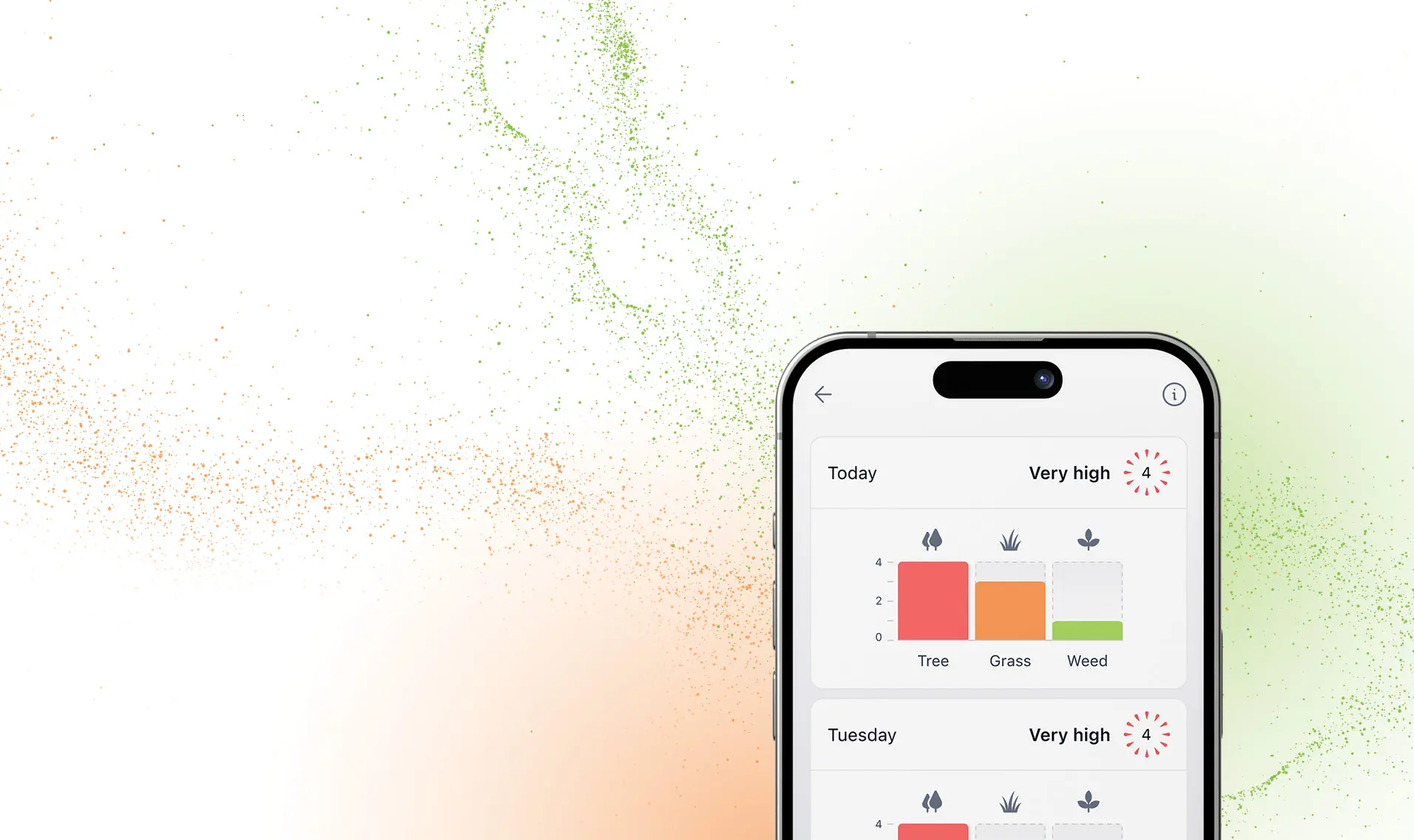
Ramalan jumlah debunga Los Angeles
Hari Ini  15 km/h 21°17° 81% | Khamis 12 km/h 20°17° 74% | Jumaat 16 km/h22°18° 60% |

Pencemar udara
Kualiti udara di Los Angeles hari ini
Ketahui lebih lanjut tentang debunga di Los Angeles


Lindungi diri anda daripada pencemaran udara di Los Angeles

Pantau udara yang anda hirup
Dapatkan bacaan kualiti udara AirVisual yang tepat dan pandangan masa nyata untuk udara yang lebih bersih. Monitor yang mendedahkan punca pencemaran serta menyerlahkan bila penggunaan penulen udara diperlukan.

Penulen udara gred perubatan
Dipercayai di seluruh dunia, Siri HealthPro menggunakan teknologi HyperHEPA. Menapis zarah ultrahalus yang terlepas oleh penulen udara lain, memberikan perlindungan gred perubatan.

Penulen udara berkuasa dan bergaya
Padat dan berkuasa, Siri Atem menggabungkan kejuruteraan Switzerland dengan penulenan udara berprestasi tinggi, menapis zarah ultrahalus dengan teknologi HyperHEPA.
Muat turun Aplikasi Kualiti Udara kami


What is the pollen count in Los Angeles?
The pollen count in Los Angeles varies depending on the type of pollen and the weather conditions. Currently, the main sources of pollen are trees and grasses. The pollen count is usually recorded during the hours of daylight, so pollen count forecasts will reflect daytime figures. The amount of pollen can vary from day to day and can also fluctuate throughout the day. The pollen count can be very dependent on weather conditions so the weather forecast should be consulted to get a better idea of the level of pollen over the next few days. There are three main types of pollen measured which are tree pollen, grass pollen, and weed pollen.
Does the pollen count in Los Angeles change with the seasons?
The pollen count gets higher when vegetation begins to form buds and starts to form flowers. Because California has milder winters than other states in the USA, the pollen season starts earlier. The months that register a higher pollen count are April, May and September. With the onset of winter, the pollen density drops away although allergy sufferers can still be affected by indoor allergens, such as dust, pet dander or mould spores. An allergen test can be easily booked in Los Angeles to discover the exact cause of the allergy which will then help to avoid those situations. The pollen count tends to rise during the morning and often peaks around early afternoon. The lowest count is towards the late afternoon and into the early evening. However, this can be relative because when the pollen count is very high, even though it decreases as the day progresses, there will still be a relatively high level of pollen still held in the air. With climate change and rising average temperatures, the allergy season is longer, especially for the most allergenic pollens such as pine or cedar.
Why is pollen in Los Angeles so irritating?
There are more and more pollen grains in the air we breathe. Birch, for example, is one of the most allergenic. The quantities recorded in the air have jumped by 20 per cent in 30 years. It is linked to climate change and, in particular, the rise in temperatures and carbon dioxide concentrations which are two key parameters that increase the quantities of pollen emitted by trees. Increasing the amount of carbon dioxide in the air "stimulates" photosynthesis, causing an increase in the quantity of pollen dispersed in the air. Another consequence of pollution is the increase in respiratory ailments, which makes more and more people sensitive to allergic phenomena.
What does a high pollen count mean to the citizens of Los Angeles?
An allergen is a substance in our environment that triggers a harmful reaction in our body on contact with it when it should normally be tolerated (hypersensitivity reaction). Pollens are made up of several proteins, some of which are allergens. Allergy is a disorder of the immune system which corresponds to a loss of tolerance vis-à-vis substances that are theoretically harmless: allergens. For the allergy to be triggered, two conditions are necessary: a genetic predisposition and exposure to the allergenic substance.
What can be done by allergy sufferers when the pollen count is high in Los Angeles?
In patients with allergies to pollen, it is common for an inflammation of the nose to occur, known as rhinitis, which causes nasal congestion or stuffiness. For this symptom, antihistamines may be insufficient, so it is recommended to take nasal decongestants in order to minimize it. Another group of drugs that are specified in allergic processes are corticosteroids, due to their anti-inflammatory effect. They can be administered by topical, inhalation, oral, or injectable routes. In the case of pollen allergy, topical (intranasal) corticosteroids are considered the most effective treatment for symptoms of rhinitis, such as nasal congestion, itching, sneezing, and a runny nose. Immunotherapy or anti-allergy vaccination consists of administering to the patient, progressive and repeated quantities of an allergen with the aim of modifying the body's response to natural exposure to said substance. That is, the vaccines seek to reduce the hypersensitivity of the patient until the allergen is tolerated.
How is the pollen count in Los Angeles measured?
Pollen is caught in the air by a special pollen trap. The pollen trap is usually sited 15 meters above the ground and constantly sucks in the air. It is necessary that the pollen trap is placed at that height so that it is not affected by pollen from very local sources – for example, a large birch tree immediately nearby. When the pollen trap stands at a height of 15 meters, it collects pollen from a radius of approximately 30 kilometers. The pollen trap stores pollen either on a strip mounted on a drum or directly on a small glass plate. Both parts are controlled by a small clockwork in the pollen trap, which ensures that the drum or glass plate moves 2 millimeters per hour.
Does the weather affect pollen levels in Los Angeles?
The weather does affect pollen levels, and it plays a direct role in the severity and length of the allergy season. Weather conditions can increase or decrease the amount of pollen production and dispersion. For example, a mild winter can indicate an early allergy season because trees tend to start pollinating earlier. Warm air and higher temperatures will produce an increase in the pollen counts in Los Angeles, while a sudden drop or freeze in temperatures can stop pollen production. On humid, windy days, pollen spreads easily, but on rainy days, pollen is washed away from the air. However, rain can also cause some types of pollen, such as grass and weed pollen, to break up into smaller particles that can trigger more allergic reactions. At the same time, the pollen amounts vary during the day. Most species release their pollen over a period of three to four hours in the middle of the day when temperatures are at their highest. Therefore, it is important to check the weather forecast and the pollen count for your area before going outside if you have pollen allergies. You can also take preventive measures such as taking allergy medication, wearing a mask, keeping your windows shut, and using air filters to reduce your exposure to pollen.
Di manakah tahap debunga tertinggi di California?
- Aromas3
- Arvin3
- Avenal3
- Bakersfield3
- Bear Valley Springs3
- Benton Park3
- Bret Harte3
- Buttonwillow3
- Bystrom3
- Cantua Creek3
- Caruthers3
- Casa Loma3
- Ceres3
- Corcoran3
- Cowan3
- Delano3
- Delhi3
- Denair3
- Desert Center3
- Desert Hot Springs3
- Earlimart3
- Empire3
- Farmersville3
- Firebaugh3
- Fowler3
- Goshen3
- Grayson3
- Greenacres3
- Hardwick3
- Hilmar-Irwin3
- Hughson3
- Huron3
- Kerman3
- Kettleman City3
- Keyes3
- La Cresta3
- Lamont3
- Las Lomas3
- Laton3
- Livingston3
- Los Banos3
- Madera3
- Madera Acres3
- McFarland3
- Mecca3
- Modesto3
- Needles3
- Oildale3
- Pajaro3
- Palm Desert3
- Parklawn3
- Patterson Tract3
- Pixley3
- Raisin City3
- Rexland Acres3
- Richgrove3
- Riverdale Park3
- Rosedale3
- Rouse3
- Selma3
- Shafter3
- Stallion Springs3
- Stanislaus3
- Terra Bella3
- Teviston3
- Thermal3
- Tipton3
- Tranquillity3
- Turlock3
- Vista Santa Rosa3
- Waterford3
- Waukena3
- Weedpatch3
- West Modesto3
- West Park3
- Alameda2
- Aliso Viejo2
- Allensworth2
- Alpaugh2
- Armona2
- Atascadero2
- Atwater2
- Belvedere2
- Biola2
- Bonadelle Ranchos2
- Brisbane2
- Brooktrails2
- Buellton2
- California City2
- Calwa2
- Castroville2
- Cayucos2
- China Lake Acres2
- Chowchilla2
- Clovis2
- Coalinga2
- Corte Madera2
- Cotati2
- Cutler2
- Cuyama2
- Del Rey2
- Del Rio2
- Dinuba2
- Dos Palos2
- Easton2
- Edwards Air Force Base2
- El Sobrante, Contra Costa County2
- Escalon2
- Fairmead2
- Franklin, Merced County2
- Fresno2
- Fresno County2
- Gustine2
- Hanford2
- Hercules2
- Home Garden2
- Inyokern2
- King City2
- Kings2
- Kingsburg2
- Laguna Hills2
- Laguna Woods2
- Lagunitas-Forest Knolls2
- Lake Don Pedro2
- Lake Nacimiento2
- Lake San Marcos2
- Larkspur2
- Le Grand2
- Lemoore Station2
- Lincoln2
- Lindsay2
- Lockwood, Monterey County2
- London2
- Manchester2
- Marin City2
- Marina2
- Matheny2
- Mayfair2
- McSwain2
- Mendocino County2
- Mendota2
- Merced2
- Merced County2
- Mill Valley2
- Mission Viejo2
- Mojave2
- Montalvin Manor2
- Monterey County2
- Morro Bay2
- Moss Landing2
- New Cuyama2
- Newman2
- North Edwards2
- Old Fig Garden2
- Orange Cove2
- Orosi2
- Parksdale2
- Parkwood2
- Parlier2
- Penngrove2
- Pine Canyon2
- Pinole2
- Planada2
- Point Reyes Station2
- Poplar-Cotton Center2
- Reedley2
- Ridgecrest2
- Riverbank2
- Rodeo2
- Rohnert Park2
- Rollingwood2
- San Francisco2
- San Marcos2
- San Pablo2
- Sanger2
- Santa Clara County2
- Sausalito2
- Sea Ranch2
- Soledad2
- Sonoma State University2
- South Dos Palos2
- South San Francisco2
- Stratford2
- Strawberry, Marin County2
- Sunnyside2
- Tamalpais-Homestead Valley2
- Tara Hills2
- Tarpey Village2
- Tiburon2
- Visalia2
- Wasco2
- Westley2
- Willits2
- Winton2
- Woodville2
- Acalanes Ridge1
- Acampo1
- Acton1
- Adelanto1
- Adin1
- Agoura Hills1
- Agua Dulce1
- Aguanga1
- Ahwahnee1
- Alameda County1
- Alamo1
- Albany1
- Albion1
- Alhambra1
- Alhambra Valley1
- Allendale1
- Alondra Park1
- Alpine1
- Alpine County1
- Alpine Village1
- Alta1
- Alta Sierra, Kern County1
- Alta Sierra, Nevada County1
- Altadena1
- Alturas1
- Alum Rock1
- Amador1
- Amador City1
- Amador Pines1
- American Canyon1
- Amesti1
- Anaheim1
- Anderson1
- Angels1
- Angwin1
- Antelope1
- Antioch1
- Anza1
- Apple Valley1
- Aptos1
- Aptos Hills-Larkin Valley1
- Arbuckle1
- Arcadia1
- Arcata1
- Arden-Arcade1
- Arnold1
- Arroyo Grande1
- Artesia1
- Ashland1
- Atherton1
- Auberry1
- Auburn1
- Auburn Lake Trails1
- August1
- Avalon1
- Avery1
- Avila Beach1
- Avocado Heights1
- Azusa1
- Baker1
- Bakersfield Country Club1
- Baldwin Park1
- Banning1
- Barstow1
- Bass Lake1
- Bay Point1
- Bayview, Humboldt County1
- Baywood Park1
- Beale Air Force Base1
- Bear Valley, Mariposa County1
- Beaumont1
- Beckwourth1
- Bell1
- Bell Canyon1
- Bell Gardens1
- Bella Vista1
- Bellflower1
- Belmont1
- Ben Lomond1
- Benbow1
- Bend1
- Benicia1
- Benton1
- Berkeley1
- Bermuda Dunes1
- Berry Creek1
- Bertsch-Oceanview1
- Bethel Island1
- Beverly Hills1
- Bieber1
- Big Bear City1
- Big Bear Lake1
- Big Pine1
- Big River1
- Biggs1
- Bishop1
- Black Point-Green Point1
- Blackhawk1
- Blacklake1
- Bloomington1
- Blue Lake1
- Blythe1
- Bodega1
- Bodega Bay1
- Bodfish1
- Bolinas1
- Bonita1
- Bonny Doon1
- Bonsall1
- Boonville1
- Bootjack1
- Boron1
- Boronda1
- Borrego Springs1
- Bostonia1
- Boulder Creek1
- Boyes Hot Springs1
- Bradbury1
- Bradley1
- Brawley1
- Brea1
- Brentwood1
- Bridgeport1
- Broadmoor1
- Brookdale1
- Brooks1
- Buckhorn1
- Bucks Lake1
- Buena Park1
- Buena Vista1
- Burbank, Los Angeles County1
- Burbank, Santa Clara County1
- Burlingame1
- Burney1
- Burnt Ranch1
- Butte1
- Butte Creek Canyon1
- Butte Meadows1
- Butte Valley1
- Byron1
- Cabazon1
- Calabasas1
- Calaveras1
- Calexico1
- California Pines1
- California Polytechnic State University1
- Calimesa1
- Calipatria1
- Calistoga1
- Callender1
- Calpine1
- Camanche Village1
- Camarillo1
- Cambria1
- Cambrian Park1
- Cameron Park1
- Camino1
- Camino Tassajara1
- Camp Nelson1
- Camp Pendleton Mainside1
- Camp Pendleton South1
- Campbell1
- Campo1
- Camptonville1
- Canby1
- Canyon Lake1
- Canyondam1
- Capitola1
- Carlsbad1
- Carmel-by-the-Sea1
- Carmel Valley Village1
- Carmet1
- Carmichael1
- Carpinteria1
- Carson1
- Cartago1
- Casa Conejo1
- Casa de Oro-Mount Helix1
- Caspar1
- Castaic1
- Castle Hill1
- Castro Valley1
- Cathedral City1
- Catheys Valley1
- Cazadero1
- Cedar Ridge1
- Centerville, Fresno County1
- Centerville, Shasta County1
- Cerritos1
- Chalfant1
- Challenge-Brownsville1
- Channel Islands Beach1
- Charter Oak1
- Cherry Valley1
- Cherryland1
- Chester1
- Chico1
- Chinese Camp1
- Chino1
- Chino Hills1
- Chualar1
- Chula Vista1
- Citrus1
- Citrus Heights1
- Claremont1
- Clarksburg1
- Clay1
- Clayton1
- Clearlake1
- Clearlake Oaks1
- Clearlake Riviera1
- Clio1
- Clipper Mills1
- Cloverdale1
- Clyde1
- Coachella1
- Coarsegold1
- Cobb1
- Coffee Creek1
- Cohasset1
- Cold Springs, El Dorado County1
- Cold Springs, Tuolumne County1
- Coleville1
- Colfax1
- Collierville1
- Colma1
- Coloma1
- Colton1
- Columbia1
- Colusa1
- Colusa County1
- Commerce1
- Comptche1
- Compton1
- Concord1
- Concow1
- Contra Costa Centre1
- Contra Costa County1
- Copperopolis1
- Corning1
- Corona1
- Coronado1
- Coronita1
- Corralitos1
- Costa Mesa1
- Coto de Caza1
- Cottonwood, Shasta County1
- Country Club1
- Courtland1
- Covelo1
- Covina1
- Crescent City1
- Crest1
- Crestline1
- Creston1
- Crockett1
- Cromberg1
- Crowley Lake1
- Cudahy1
- Culver City1
- Cupertino1
- Cutten1
- Cypress1
- Daly City1
- Dana Point1
- Danville1
- Davenport1
- Davis1
- Day Valley1
- Deer Park1
- Del Aire1
- Del Dios1
- Del Mar1
- Del Monte Forest1
- Del Norte County1
- Del Rey Oaks1
- Descanso1
- Desert Edge1
- Desert Palms1
- Desert Shores1
- Desert View Highlands1
- Diablo1
- Diamond Bar1
- Diamond Springs1
- Dillon Beach1
- Discovery Bay1
- Dixon1
- Dobbins1
- Dogtown1
- Dorrington1
- Dorris1
- Downey1
- Downieville1
- Duarte1
- Dublin1
- Dunnigan1
- Dunsmuir1
- Durham1
- Dutch Flat1
- East Foothills1
- East Hemet1
- East Los Angeles1
- East Nicolaus1
- East Oakdale1
- East Palo Alto1
- East Pasadena1
- East Porterville1
- East Quincy1
- East Rancho Dominguez1
- East Richmond Heights1
- East San Gabriel1
- East Shore1
- East Sonora1
- East Whittier1
- Eastern Goleta Valley1
- Eastvale1
- Edna1
- El Cajon1
- El Centro1
- El Cerrito, Contra Costa County1
- El Dorado County1
- El Dorado Hills1
- El Granada1
- El Macero1
- El Monte, Contra Costa County1
- El Portal1
- El Rio1
- El Segundo1
- El Verano1
- Eldridge1
- Elk Creek1
- Elk Grove1
- Elkhorn1
- Elmira1
- Elverta1
- Emerald Lake Hills1
- Emeryville1
- Encinitas1
- Escondido1
- Esparto1
- Etna1
- Eucalyptus Hills1
- Eureka1
- Exeter1
- Fair Oaks1
- Fairbanks Ranch1
- Fairfax, Marin County1
- Fairfield1
- Fairview1
- Fallbrook1
- Farmington1
- Felton1
- Ferndale1
- Fetters Hot Springs-Agua Caliente1
- Fiddletown1
- Fieldbrook1
- Fields Landing1
- Fillmore1
- Fish Camp1
- Florence-Graham1
- Florin1
- Folsom1
- Fontana1
- Foothill Farms1
- Ford City1
- Forest Meadows1
- Forest Ranch1
- Foresta1
- Foresthill1
- Forestville1
- Fort Bidwell1
- Fort Bragg1
- Fort Irwin1
- Fort Jones1
- Fortuna1
- Foster City1
- Fountain Valley1
- Franklin, Sacramento County1
- Frazier Park1
- Freedom1
- Fremont1
- French Camp1
- French Gulch1
- French Valley1
- Friant1
- Fruitdale1
- Fruitridge Pocket1
- Fullerton1
- Fulton1
- Galt1
- Garberville1
- Garden Acres1
- Garden Grove1
- Gardena1
- Garnet1
- Gasquet1
- Georgetown1
- Gerber1
- Geyserville1
- Gilroy1
- Glen Ellen1
- Glendale1
- Glendora1
- Glenn1
- Gold Mountain1
- Gold River1
- Golden Hills1
- Goleta1
- Gonzales1
- Good Hope1
- Graeagle1
- Grand Terrace1
- Granite Bay1
- Granite Hills1
- Grass Valley1
- Graton1
- Green Acres1
- Green Valley, Los Angeles County1
- Green Valley, Solano County1
- Greenfield, Monterey County1
- Greenview1
- Greenville1
- Grenada1
- Grimes1
- Grizzly Flats1
- Groveland1
- Grover Beach1
- Guadalupe1
- Guerneville1
- Guinda1
- Hacienda Heights1
- Half Moon Bay1
- Hamilton Branch1
- Happy Camp1
- Happy Valley1
- Harbison Canyon1
- Hartland1
- Hartley1
- Hasley Canyon1
- Hathaway Pines1
- Hawaiian Gardens1
- Hawthorne1
- Hayfork1
- Hayward1
- Healdsburg1
- Heber1
- Hemet1
- Herald1
- Hermosa Beach1
- Hesperia1
- Hidden Hills1
- Hidden Meadows1
- Hidden Valley Lake1
- Highgrove1
- Highland1
- Highlands1
- Hillsborough1
- Hollister1
- Holtville1
- Home Gardens1
- Homeland1
- Homestead Valley1
- Hoopa1
- Hopland1
- Hornbrook1
- Hornitos1
- Humboldt County1
- Humboldt Hill1
- Huntington Beach1
- Huntington Park1
- Hydesville1
- Idlewild1
- Idyllwild-Pine Cove1
- Igo1
- Imperial1
- Imperial Beach1
- Imperial County1
- Independence1
- Indian Wells1
- Indianola1
- Indio1
- Inglewood1
- Interlaken1
- Inverness1
- Inyo County1
- Ione1
- Iron Horse1
- Irvine1
- Irwindale1
- Isla Vista1
- Isleton1
- Ivanhoe1
- Jackson1
- Jamestown1
- Jamul1
- Janesville1
- Jenner1
- Johnstonville1
- Johnsville1
- Joshua Tree1
- Julian1
- Jurupa Valley1
- Keeler1
- Kelly Ridge1
- Kelseyville1
- Kennedy1
- Kensington1
- Kentfield1
- Kenwood1
- Kern1
- Kernville1
- Klamath County1
- Knightsen1
- La Cañada Flintridge1
- La Crescenta-Montrose1
- La Habra1
- La Habra Heights1
- La Honda1
- La Mesa1
- La Mirada1
- La Palma1
- La Presa1
- La Puente1
- La Quinta1
- La Riviera1
- La Selva Beach1
- La Verne1
- Ladera1
- Ladera Ranch1
- Lafayette1
- Laguna Beach1
- Laguna Niguel1
- Lake Almanor Country Club1
- Lake Almanor West1
- Lake Arrowhead1
- Lake California1
- Lake County1
- Lake Elsinore1
- Lake Forest1
- Lake Isabella1
- Lake Los Angeles1
- Lake of the Pines1
- Lake Riverside1
- Lake Shastina1
- Lake Sherwood1
- Lake Wildwood1
- Lakehead1
- Lakeland Village1
- Lakeport1
- Lakeside, San Diego County1
- Lakeview1
- Lakewood1
- Lancaster1
- Larkfield-Wikiup1
- Las Flores, Orange County1
- Lassen County1
- Lathrop1
- Lawndale1
- Laytonville1
- Lebec1
- Lee Vining1
- Leggett1
- Lemon Cove1
- Lemon Grove1
- Lemon Hill1
- Lennox1
- Lenwood1
- Leona Valley1
- Lewiston1
- Lexington Hills1
- Lincoln Village1
- Linda1
- Linden1
- Little Grass Valley1
- Little River1
- Littlerock1
- Live Oak CDP1
- Live Oak, Sutter County1
- Livermore1
- Lockeford1
- Lockwood, Amador County1
- Lodi1
- Loma Linda1
- Loma Mar1
- Loma Rica1
- Lomita1
- Lompico1
- Lompoc1
- Lone Pine1
- Long Barn1
- Long Beach1
- Lookout1
- Loomis1
- Los Alamitos1
- Los Alamos1
- Los Altos1
- Los Altos Hills1
- Los Angeles1
- Los Angeles County1
- Los Berros1
- Los Gatos1
- Los Molinos1
- Los Olivos1
- Los Osos1
- Lost Hills1
- Lower Lake1
- Loyalton1
- Loyola1
- Lucas Valley-Marinwood1
- Lucerne1
- Lucerne Valley1
- Lynwood1
- Macdoel1
- Madeline1
- Madera County1
- Madison1
- Magalia1
- Malibu1
- Mammoth Lakes1
- Manhattan Beach1
- Manila1
- Manteca1
- Manton1
- March ARB1
- Maricopa1
- Marin County1
- Marina del Rey1
- Mariposa1
- Mariposa County1
- Markleeville1
- Martell1
- Martinez1
- Marysville1
- Mather1
- Maxwell1
- Mayflower Village1
- Maywood1
- McArthur1
- McClellan Park1
- McCloud1
- McKinleyville1
- Mead Valley1
- Meadow Vista1
- Meadowbrook1
- Meiners Oaks1
- Mendocino1
- Menifee1
- Menlo Park1
- Mentone1
- Mesa1
- Mesa Verde1
- Mesa Vista1
- Meyers1
- Mi-Wuk Village1
- Middletown1
- Midpines1
- Midway City1
- Millbrae1
- Millerton1
- Millville1
- Milpitas1
- Mineral1
- Minkler1
- Mira Monte1
- Mission Canyon1
- Mission Hills1
- Modjeska1
- Modoc County1
- Mokelumne Hill1
- Mono Vista1
- Monrovia1
- Montague1
- Montara1
- Montclair1
- Monte Rio1
- Monte Sereno1
- Montebello1
- Montecito1
- Monterey1
- Monterey Park1
- Montgomery Creek1
- Monument Hills1
- Moorpark1
- Morada1
- Moraga1
- Moreno Valley1
- Morgan Hill1
- Morongo Valley1
- Mount Hermon1
- Mount Shasta1
- Mountain Gate1
- Mountain House1
- Mountain Ranch1
- Mountain View Acres1
- Mountain View, Contra Costa County1
- Mountain View, Santa Clara County1
- Muir Beach1
- Murphys1
- Murrieta1
- Muscoy1
- Myrtletown1
- Napa1
- Napa County1
- National City1
- Nevada1
- Nevada City1
- Nevada County1
- Newark1
- Newcastle1
- Newell1
- Newport Beach1
- Nicasio1
- Nice1
- Nicolaus1
- Niland1
- Nipomo1
- Norco1
- Nord1
- North Auburn1
- North El Monte1
- North Fair Oaks1
- North Fork1
- North Highlands1
- North Lakeport1
- North Richmond1
- North San Juan1
- North Shore1
- North Tustin1
- Norwalk1
- Novato1
- Nuevo1
- Oak Hills1
- Oak Park1
- Oak Run1
- Oak View1
- Oakdale1
- Oakhurst1
- Oakland1
- Oakley1
- Oasis1
- Occidental1
- Oceano1
- Oceanside1
- Ocotillo1
- Ojai1
- Olancha1
- Old Station1
- Olivehurst1
- Ontario1
- Onyx1
- Orange1
- Orange County1
- Orangevale1
- Orcutt1
- Orinda1
- Orland1
- Oroville1
- Oroville East1
- Oxnard1
- Pacheco1
- Pacific Grove1
- Pacifica1
- Palermo1
- Palm Springs1
- Palmdale1
- Palo Alto1
- Palo Cedro1
- Palos Verdes Estates1
- Paradise, Paradise County1
- Paradise Park1
- Paramount1
- Parkway1
- Pasadena1
- Pasatiempo1
- Paso Robles1
- Penn Valley1
- Pepperdine University1
- Perris1
- Pescadero1
- Petaluma1
- Phelan1
- Philo1
- Phoenix Lake1
- Pico Rivera1
- Piedmont1
- Pike1
- Pine Flat1
- Pine Grove1
- Pine Hills1
- Pine Mountain Club1
- Pine Mountain Lake1
- Pine Valley1
- Pioneer1
- Piru1
- Pismo Beach1
- Pittsburg1
- Placentia1
- Placer County1
- Placerville1
- Platina1
- Pleasant Hill1
- Pleasanton1
- Pleasure Point1
- Plumas1
- Plumas Lake1
- Plymouth1
- Point Arena1
- Pollock Pines1
- Pomona1
- Port Hueneme1
- Porterville1
- Portola1
- Portola Valley1
- Potrero1
- Potter Valley1
- Poway1
- Prunedale1
- Quartz Hill1
- Quincy1
- Rail Road Flat1
- Rainbow1
- Ramona1
- Rancho Calaveras1
- Rancho Cordova1
- Rancho Cucamonga1
- Rancho Mirage1
- Rancho Mission Viejo1
- Rancho Murieta1
- Rancho Palos Verdes1
- Rancho San Diego1
- Rancho Santa Fe1
- Rancho Santa Margarita1
- Rancho Tehama Reserve1
- Randsburg1
- Red Bluff1
- Red Corral1
- Redding1
- Redlands1
- Redondo Beach1
- Redway1
- Redwood City1
- Redwood Valley1
- Reliez Valley1
- Rialto1
- Richmond1
- Ridgemark1
- Rio del Mar1
- Rio Dell1
- Rio Linda1
- Rio Vista1
- Ripon1
- River Pines1
- Riverside1
- Riverside County1
- Robbins1
- Rocklin1
- Rolling Hills Estates1
- Rolling Hills, Los Angeles County1
- Rolling Hills, Madera County1
- Romoland1
- Rosamond1
- Rosemead1
- Rosemont1
- Roseville1
- Ross1
- Rossmoor1
- Rough and Ready1
- Round Valley1
- Rowland Heights1
- Running Springs1
- Rutherford1
- Sacramento1
- Sacramento County1
- Salida1
- Salinas1
- Salton City1
- San Andreas1
- San Anselmo1
- San Antonio Heights1
- San Ardo1
- San Benito County1
- San Bernardino1
- San Bernardino County1
- San Bruno1
- San Buenaventura (Ventura)1
- San Carlos1
- San Clemente1
- San Diego1
- San Diego Country Estates1
- San Diego County1
- San Dimas1
- San Fernando1
- San Gabriel1
- San Jacinto1
- San Joaquin County1
- San Jose1
- San Juan Bautista1
- San Juan Capistrano1
- San Leandro1
- San Lorenzo1
- San Luis Obispo1
- San Luis Obispo County1
- San Marino1
- San Martin1
- San Mateo1
- San Mateo County1
- San Miguel, Contra Costa County1
- San Miguel, San Luis Obispo County1
- San Pasqual1
- San Rafael1
- San Ramon1
- Santa Ana1
- Santa Barbara1
- Santa Barbara County1
- Santa Clara1
- Santa Clarita1
- Santa Cruz1
- Santa Cruz County1
- Santa Fe Springs1
- Santa Margarita1
- Santa Maria1
- Santa Monica1
- Santa Paula1
- Santa Rosa1
- Santa Rosa Valley1
- Santa Susana1
- Santa Venetia1
- Santa Ynez1
- Santee1
- Saranap1
- Saratoga1
- Saticoy1
- Sattley1
- Scotia1
- Scotts Valley1
- Seacliff1
- Seal Beach1
- Searles Valley1
- Seaside1
- Sebastopol1
- Seeley1
- Sereno del Mar1
- Shandon1
- Shasta1
- Shasta County1
- Shasta Lake1
- Shaver Lake1
- Sheep Ranch1
- Shell Ridge1
- Shelter Cove1
- Sheridan1
- Shingle Springs1
- Shingletown1
- Sierra1
- Sierra City1
- Sierra Madre1
- Sierraville1
- Signal Hill1
- Silver Lakes1
- Silverado Resort1
- Simi Valley1
- Siskiyou County1
- Sisquoc1
- Sky Valley1
- Sleepy Hollow1
- Smartsville1
- Soda Bay1
- Solana Beach1
- Solano1
- Solvang1
- Somis1
- Sonoma1
- Sonoma County1
- Sonora1
- Soquel1
- Soulsbyville1
- South El Monte1
- South Gate1
- South Lake Tahoe1
- South Oroville1
- South Pasadena1
- South San Gabriel1
- South San Jose Hills1
- South Taft1
- South Whittier1
- Spreckels1
- Spring Valley Lake1
- Spring Valley, Lake County1
- Spring Valley, San Diego County1
- Springville1
- Squaw Valley1
- St. Helena1
- Stanford1
- Stanton1
- Stevenson Ranch1
- Stinson Beach1
- Stirling City1
- Stockton1
- Stonyford1
- Strathmore1
- Strawberry, Tuolumne County1
- Suisun City1
- Summerland1
- Sun Village1
- Sunny Slopes1
- Sunnyside-Tahoe City1
- Sunnyvale1
- Sunol1
- Susanville1
- Sutter1
- Sutter County1
- Sutter Creek1
- Swall Meadows1
- Taft1
- Taft Heights1
- Taft Mosswood1
- Tahoma1
- Talmage1
- Tancred1
- Taylorsville1
- Tehachapi1
- Tehama County1
- Temecula1
- Temelec1
- Temescal Valley1
- Temple City1
- Templeton1
- Tennant1
- Thermalito1
- Thornton1
- Thousand Oaks1
- Thousand Palms1
- Three Rivers1
- Timber Cove1
- Tomales1
- Tooleville1
- Topanga1
- Toro Canyon1
- Torrance1
- Trabuco Canyon1
- Tracy1
- Trinidad1
- Trinity1
- Trinity Center1
- Trona1
- Truckee1
- Tulare County1
- Tuolumne City1
- Tuolumne County1
- Tustin1
- Twain Harte1
- Twentynine Palms1
- Twin Lakes, Mono County1
- Twin Lakes, Santa Cruz County1
- Ukiah1
- Union City1
- University of California-Davis1
- University of California-Santa Barbara1
- Upland1
- Upper Lake1
- Vacaville1
- Val Verde1
- Valinda1
- Valle Vista1
- Vallecito1
- Vallejo1
- Valley Center1
- Valley Ford1
- Valley Springs1
- Vandenberg AFB1
- Vandenberg Village1
- Ventura1
- Verdi1
- Vernon1
- Victorville1
- View Park-Windsor Hills1
- Villa Park1
- Vina1
- Vincent1
- Vine Hill1
- Vineyard1
- Virginia Lakes1
- Vista1
- Volcano1
- Walker1
- Walnut1
- Walnut Creek1
- Walnut Grove1
- Walnut Park1
- Warm Springs1
- Washington1
- Watsonville1
- Wawona1
- Weaverville1
- Weed1
- Weitchpec1
- Weldon1
- West Athens1
- West Bishop1
- West Carson1
- West Covina1
- West Hollywood1
- West Menlo Park1
- West Point1
- West Puente Valley1
- West Rancho Dominguez1
- West Sacramento1
- West Whittier-Los Nietos1
- Westhaven-Moonstone1
- Westlake Village1
- Westminster1
- Westmont1
- Westmorland1
- Westwood1
- Wheatland1
- Whitehawk1
- Whitmore1
- Whittier1
- Wildomar1
- Wilkerson1
- Williams1
- Willow Creek1
- Willowbrook1
- Willows1
- Wilsonia1
- Wilton1
- Winchester1
- Windsor1
- Winter Gardens1
- Winterhaven1
- Winters1
- Wofford Heights1
- Woodacre1
- Woodbridge1
- Woodcrest1
- Woodlake1
- Woodland1
- Woodlands1
- Woodside1
- Yermo1
- Yolo1
- Yolo County1
- Yorba Linda1
- Yosemite Lakes1
- Yosemite Valley1
- Yosemite West1
- Yountville1
- Yreka1
- Yuba1
- Yuba City1
- Yucaipa1
- Yucca Valley1
- Zayante1
- Bear Valley, Alpine County0
- Carnelian Bay0
- Cedar Flat0
- Dollar Point0
- June Lake0
- Kings Beach0
- Kirkwood0
- Mono0
- Piñon Hills0
- Silver City0
- Soda Springs0
- Tahoe Vista0
- Tulelake0
- Wrightwood0