Menambahkan
Kualitas udara di Litoměřice
Indeks kualitas udara (AQI⁺) dan polusi udara PM2.5 di Litoměřice • 905 Pengikut • 11.00, Jun 05 Waktu setempat
33*
AQI⁺ USBaik

Polutan utama:
PM2.5
6 µg/m³

17°

3 km/h

84 %
Prakiraan per jam
Prakiraan indeks kualitas udara (AQI⁺) Litoměřice


Prakiraan setiap hari
Prakiraan indeks kualitas udara (AQI⁺) Litoměřice
| Hari ini | 27 |  90% | 19° 13° |  9 km/h | 85% |
| Sab | 33 |  | 23° 11° | 9 km/h | 65% |
| Min | 28 |  | 24° 14° | 16 km/h | 57% |
Polutan udara
Berapa kualitas udara saat ini di dekat Litoměřice?

Konsentrasi PM2.5 saat ini 1.2 kali nilai panduan PM2.5 tahunan WHO.
Rekomendasi kesehatan
 Enjoy outdoor activities |
 Open your windows to bring clean, fresh air indoors Get a monitor |
lindungi dirimu dari polusi udara di Litoměřice

Memantau udara yang Anda hirup
Dapatkan pembacaan kualitas udara AirVisual yang akurat dan wawasan waktu nyata untuk udara yang lebih bersih. Monitor yang menunjukkan sumber polusi, menyoroti kapan penggunaan pembersih udara diperlukan.

Pembersih udara kelas medis
Dipercaya di seluruh dunia, HealthPro Series menggunakan teknologi HyperHEPA. Menyaring partikel sangat halus yang tidak dapat disaring oleh pembersih udara lainnya, memberikan perlindungan tingkat medis.

Pembersih udara yang kuat dan penuh gaya
Ringkas dan bertenaga, Seri Atem memadukan rekayasa Swiss dengan pemurnian udara berkinerja tinggi, menyaring partikel sangat halus dengan teknologi HyperHEPA.
Serbuk sari
Berapa jumlah serbuk sari di Litoměřice hari ini?
Indeks

Tidak ada
 Pohon Tidak ada | 0% |
 Rumput Tidak ada | 0% |
 Gulma Tidak ada | 0% |
Sumber:
Open-Meteo.comRekomendasi kesehatan
Enjoy outdoor activities |
Open your windows to bring clean, fresh air indoors Get a monitor |
Serbuk sari
Berapa jumlah serbuk sari di Litoměřice hari ini?
Indeks
Tidak ada
Pohon Tidak ada | 0% |
Rumput Tidak ada | 0% |
Gulma Tidak ada | 0% |
Sumber:
Open-Meteo.comlindungi dirimu dari polusi udara di Litoměřice
Memantau udara yang Anda hirup
Dapatkan pembacaan kualitas udara AirVisual yang akurat dan wawasan waktu nyata untuk udara yang lebih bersih. Monitor yang menunjukkan sumber polusi, menyoroti kapan penggunaan pembersih udara diperlukan.
Pembersih udara kelas medis
Dipercaya di seluruh dunia, HealthPro Series menggunakan teknologi HyperHEPA. Menyaring partikel sangat halus yang tidak dapat disaring oleh pembersih udara lainnya, memberikan perlindungan tingkat medis.
Pembersih udara yang kuat dan penuh gaya
Ringkas dan bertenaga, Seri Atem memadukan rekayasa Swiss dengan pemurnian udara berkinerja tinggi, menyaring partikel sangat halus dengan teknologi HyperHEPA.
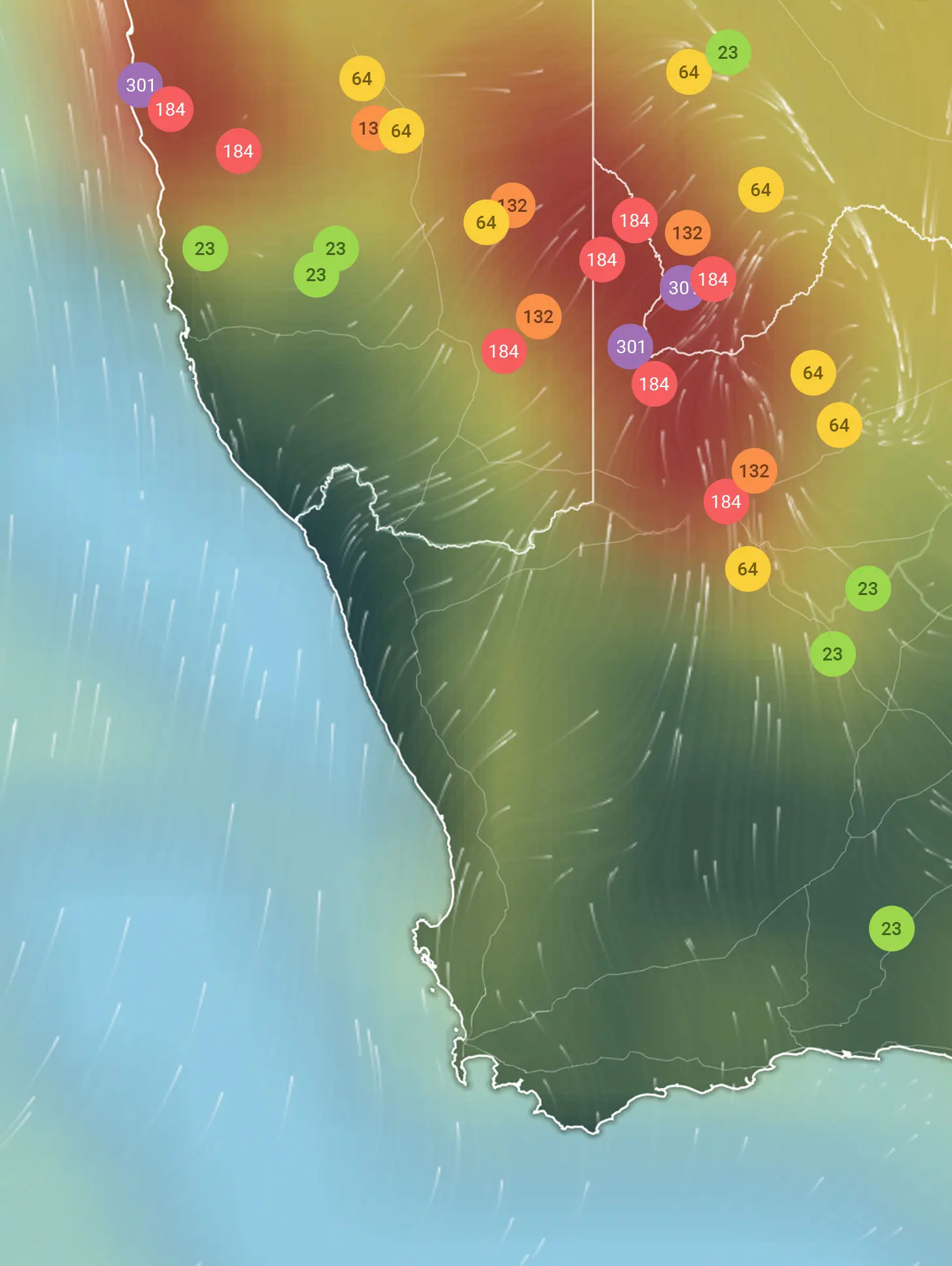
Lokasi paling berpolusi dekat Litoměřice
Rangking AQI⁺ Seluruh Dunia

Kualitas udara historis di dekat Litoměřice
Riwayat
Grafik riwayat kualitas udara untuk Litoměřice
Kualitas udara historis di dekat Litoměřice
Riwayat
Grafik riwayat kualitas udara untuk Litoměřice
Lokasi paling berpolusi dekat Litoměřice
Rangking AQI⁺ Seluruh Dunia


Be the first to measure and contribute air quality data to your community
Pelajari lebih lanjut tentang kualitas udara global


Pelajari lebih lanjut tentang polusi udara di Litoměřice
Bagaimana kualitas udara saat ini di Litoměřice?
Kualitas udara saat ini di Litoměřice dianggap baik. Udara bersih dan menimbulkan sedikit atau tidak ada risiko kesehatan.
What is the current level of air pollution in Litoměřice?
Litoměřice is a town in the Ústí nad Labem Region of the Czech Republic. It is situated at the confluence of the rivers Elbe and Ohre. It is approximately 64 kilometres north west of the capital, Prague. According to a census conducted at the start of last year, Litoměřice had an estimated population of approximately 23,600 residents. At the start of 2022, Litoměřice was experiencing a period of “Moderate” air quality with a US AQI reading of 61. This United States Air Quality Index number is calculated using the levels of six of the most prolific air pollutants, such as nitrogen dioxide, sulphur dioxide, ozone, carbon monoxide and both sizes of particulate matter, which are PM2.5 and PM10. It can then be used as the metric when comparing air quality in other cities around the world. If data is unavailable for all 6 pollutants, a figure can still be calculated by using what figures there are. The only pollutant measured in Litoměřice was PM2.5 which was 16.7 µg/m³.
This level of PM2.5 is just over one and a half times over the recommended safe level of 10 µg/m³ as suggested by the World Health Organisation (WHO) as being an acceptable level. Although no amount of air pollution is considered to be safe.
When air pollution is from this “Moderate” bracket the given advice would be to remain indoors as much as possible, closing doors and windows to prevent the ingress of more polluted air. Those who are more sensitive to poor quality air should avoid venturing outside until it improves. If this is unavoidable, then a good quality face mask should be worn at all times. All types of outdoor exercise should be avoided until the air quality improves. There is a downloadable app from AirVisual.com which is suitable for all operating systems and gives the latest information regarding air quality in real-time.
Does the level of air pollution change much throughout the year in Litoměřice?
Air quality can be affected by many variables, therefore it is easy to see just how quickly it can change in a relatively short space of time. During 2020 the figures published by IQAir.com show the air quality fell into three categories during the year. The months of February, May, June and July achieved the target figure set by the WHO as being less than 10 µg/m³. The months of August, September and October returned figures from the “Good” category with figures between 10.1 and 12 µg/m³. The remaining five months of the year saw air quality in the “Moderate” bracket with figures between 12.1 and 35.4 µg/m³.
There were no records kept regarding air pollution before 2020 when a figure of 12.4 µg/m³ was noted. This low figure was to be expected because it may have been affected by the COVID-19 pandemic as many vehicles were no longer in daily use because the offices were closed, in an attempt to halt the spread of the virus. Many factories and non-essential production units were also required to close which removed their emissions from the atmosphere, albeit on a temporary basis. Worldwide, cities reported a much better quality of air due to the general lack of traffic pollution in city centres due to the pandemic.
Is there a main source of air pollution in Litoměřice?
In the spring of 2018, a Dispersion Study was carried out in order to evaluate the state of the air and the share of individual pollutants in Litoměřice. Emissions are substances released into the air from the chimneys of power plants, factories, family houses or from car exhausts and are expressed in terms of the amount of pollutants emitted per unit time (e.g. kg / day or t / year). The emission limit determines how much pollutant a source of pollution can release into the air.
Benzo (a) pyrene is one of the polycyclic aromatic hydrocarbons, which are characterized by their persistence in the environment for a very long time, as they resist natural decomposition processes. They arise mainly from imperfect combustion (unsuitable or obsolete combustion equipment, unsuitable combustion conditions) of organic substances (coal, oils, diesel, petrol and plastics). These pollutants have proven mutagenic and carcinogenic properties.
What can be done to improve air quality in Litoměřice?
Litoměřice is so unfortunate that fumes go to the town not only from a paper mill in Štětí, but also from the remote Mělník power plant. Another cause of bad air and especially PM10 dust particles is the power plant in the Louny region. Based on a previous survey, it turned out that another polluter (dust) is the Libochovany quarry, the heating plant in Litoměřice and the meat processing plant in Roudnice.
The local government has announced subsidies for the owners of houses that are old and still use wet wood and dirty coal as fuel.
What are the detrimental effects of breathing in polluted air?
Atmospheric pollution mainly affects the cardiovascular and respiratory systems, but the harmfulness always depends on how long we have been exposed to the pollution and how big the dust particles have been. The size of the particles affects where the dust particle is trapped in the respiratory system and can cause both serious health problems.
- Particles larger than 10 microns are trapped in the upper respiratory tract - so we can sneeze out of irritation, for example.
- Particles smaller than 10 microns penetrate the larynx and are called inhaled or so-called thoracic particles.
- Particles smaller than 2.5 microns settle in the bronchi. They affect clogged arteries and can increase the likelihood of inflammation of the veins or heart attack. They also have a bad effect on pregnant women, for example, because these particles can disrupt the transport of oxygen to the placenta and new-borns can have higher blood pressure and lower birth weight.
- Particles smaller than 1 micron penetrate the alveoli and particles smaller than 0.1 microns penetrate into the blood.
With short-term exposure to pollution, most often only irritation of the upper respiratory tract occurs, more rarely inflammatory diseases.
Due to long-term increased concentrations of pollution, chronic diseases and diseases of the lower respiratory tract - such as chronic obstructive pulmonary disease or cancer - arise which cause a shorter lifespan.