Menambahkan
Kualitas udara di Guarulhos
Indeks kualitas udara (AQI⁺) dan polusi udara PM2.5 di Guarulhos • 73K Pengikut • 04.00, Jun 05 Waktu setempat
36
AQI⁺ USBaik

Polutan utama:
PM2.5
6.5 µg/m³

14°

13 km/h

88 %
Prakiraan per jam
Prakiraan indeks kualitas udara (AQI⁺) Guarulhos


Prakiraan setiap hari
Prakiraan indeks kualitas udara (AQI⁺) Guarulhos
| Hari ini | 58 |  | 20° 14° |  17 km/h | 77% |
| Sab | 76 |  | 22° 11° | 13 km/h | 70% |
| Min | 59 | | 22° 9° | 9 km/h | 64% |
Polutan udara
Berapa kualitas udara saat ini di dekat Guarulhos?

Konsentrasi PM2.5 saat ini 1.3 kali nilai panduan PM2.5 tahunan WHO.
Rekomendasi kesehatan
 Enjoy outdoor activities |
 Open your windows to bring clean, fresh air indoors Get a monitor |
lindungi dirimu dari polusi udara di Guarulhos

Memantau udara yang Anda hirup
Dapatkan pembacaan kualitas udara AirVisual yang akurat dan wawasan waktu nyata untuk udara yang lebih bersih. Monitor yang menunjukkan sumber polusi, menyoroti kapan penggunaan pembersih udara diperlukan.

Pembersih udara kelas medis
Dipercaya di seluruh dunia, HealthPro Series menggunakan teknologi HyperHEPA. Menyaring partikel sangat halus yang tidak dapat disaring oleh pembersih udara lainnya, memberikan perlindungan tingkat medis.

Pembersih udara yang kuat dan penuh gaya
Ringkas dan bertenaga, Seri Atem memadukan rekayasa Swiss dengan pemurnian udara berkinerja tinggi, menyaring partikel sangat halus dengan teknologi HyperHEPA.
Rekomendasi kesehatan
Enjoy outdoor activities |
Open your windows to bring clean, fresh air indoors Get a monitor |
lindungi dirimu dari polusi udara di Guarulhos
Memantau udara yang Anda hirup
Dapatkan pembacaan kualitas udara AirVisual yang akurat dan wawasan waktu nyata untuk udara yang lebih bersih. Monitor yang menunjukkan sumber polusi, menyoroti kapan penggunaan pembersih udara diperlukan.
Pembersih udara kelas medis
Dipercaya di seluruh dunia, HealthPro Series menggunakan teknologi HyperHEPA. Menyaring partikel sangat halus yang tidak dapat disaring oleh pembersih udara lainnya, memberikan perlindungan tingkat medis.
Pembersih udara yang kuat dan penuh gaya
Ringkas dan bertenaga, Seri Atem memadukan rekayasa Swiss dengan pemurnian udara berkinerja tinggi, menyaring partikel sangat halus dengan teknologi HyperHEPA.
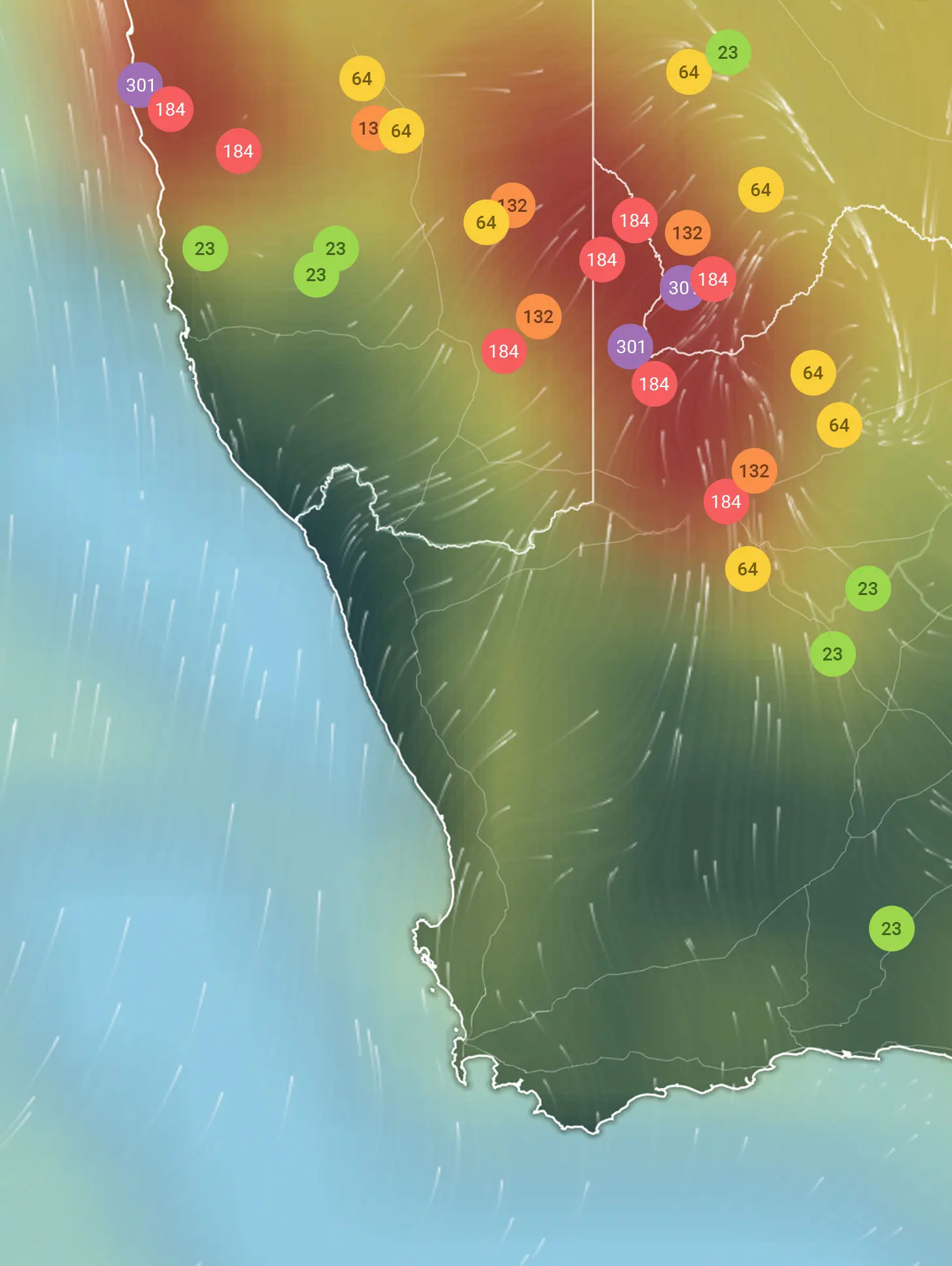
Lokasi paling berpolusi dekat Guarulhos
Rangking AQI⁺ Seluruh Dunia
Ranking stasiun
Ranking stasiun AQI⁺ real-time untuk stasiun di Guarulhos

Kualitas udara historis di dekat Guarulhos
Riwayat
Grafik riwayat kualitas udara untuk Guarulhos
Kualitas udara historis di dekat Guarulhos
Riwayat
Grafik riwayat kualitas udara untuk Guarulhos
Lokasi paling berpolusi dekat Guarulhos
Rangking AQI⁺ Seluruh DuniaRanking stasiun
Ranking stasiun AQI⁺ real-time untuk stasiun di Guarulhos


Measure your own air quality
Get a monitor and contribute air quality data in your city.
Pelajari lebih lanjut tentang kualitas udara global


Pelajari lebih lanjut tentang polusi udara di Guarulhos
Bagaimana kualitas udara saat ini di Guarulhos?
Kualitas udara saat ini di Guarulhos dianggap baik. Udara bersih dan menimbulkan sedikit atau tidak ada risiko kesehatan.
What is the current level of air pollution in Guarulhos?
Guarulhos is the second most populous city in the Brazilian state of São Paulo and the 13th most populous state in Brazil. According to a census conducted in 2020, it has a population of approximately 1,221,927 people.
In September 2021, Guarulhos experienced a period of “Moderate” air quality with a US AQI reading of 99. This United States Air Quality Index number is calculated using the levels of six of the most prolific air pollutants, such as nitrogen dioxide, sulphur dioxide, ozone, carbon monoxide and both sizes of particulate matter, which are PM2.5 and PM10. It can then be used as the metric when comparing air quality in other cities around the world. If data is unavailable for all 6 pollutants, a figure can still be calculated by using what figures there are. For Guarulhos there were three recorded figures which were for PM2.5 - 35 µg/m³, PM10 - 79 µg/m³ and ozone (O3) - 24 µg/m³. It can be seen that the level of PM2.5 is three and a half times that of the target figure suggested by the World Health Organisation (WHO). Their target figure is 10 µg/m³.
With air pollution at this level, it is recommended to close doors and windows to prevent the ingress of more polluted air. Those of a sensitive disposition should remain indoors until the air quality improves. If venturing outside is unavoidable, then a good quality mask should be worn at all times. There is an app available to download to your mobile device from AirVisual which will inform you as to the state of the air in real-time.
Does the level of pollution stay the same throughout the year in Guarulhos?
Air pollution can be very volatile and therefore change very easily and quickly. Looking back at the figures published by IQAir.com for 2020 it can be seen that the best month of the year for air quality was in February when Guarulhos achieved the target figure of 10 µg/m³ or less, as suggested by the World Health Organisation (WHO). The months of January and December returned readings of 9.8 µg/m³ and 10.1 µg/m³ respectively, which is qualified as being “Good”. The reading needs to be between 10 and 12 µg/m³ to qualify as such. For the remaining nine months, the air quality was classified as being “Moderate” with readings between 12.1 and 35.4 µg/m³. The month with the worst air quality was September when the reading was 27.4 µg/m³. The best air quality out of these months was in November with a figure of 12.8 µg/m³.
Historically, records were kept from 2017 when the recorded figure was 17.3 µg/m³. The following year saw a level at 21.6 µg/m³ before an improvement the following year of 18.7 µg/m³. A figure of 16.4 µg/m³ was recorded for 2020 but this reading may have been affected by the COVID-19 situation as many vehicles were no longer in daily use in an attempt to halt the spread of the virus. Many factories and non-essential production units were also required to close which removed their emissions from the atmosphere.
Is there a main source of air pollution in Guarulhos?
Burning and forest fires are the main source of air pollution in Central Brazil and the Amazon. The levels of air pollution generated by fires in the Amazon region reach PM10 values of 500 µg/m³, which represents about 25 times more pollution than the normal average for the region (20 µg/m³). Deforestation in the Amazon is also the main source of greenhouse gas emissions in Brazil.
Biomass burning from deforested areas and pasture maintenance also releases large amounts of particulate matter. It has been one of the main causes of respiratory diseases that occur during the dry season in the Amazon. Between July and October 2019 alone, there were more than two thousand hospitalizations due to respiratory diseases directly related to burns, and the most affected were babies (21%) and people over 60 years old (49%). In August 2019, when one of the biggest peaks in the number of hot spots in the month was registered since 2010, about three to four and a half million people were exposed to fine particulate matter generated by fires beyond the limits established as harmful to the health.
What can be done to reduce air pollution in Guarulhos?
In recent years, what stands out the most in the media are news related to climate, such as: air pollution generated by the burning of fossil fuels, emission of industrial gases, fires, among others.
This has caused an increase in global temperatures, greenhouse effect, rise in ocean levels, among others that are related. Given the situation, it is necessary that the current society takes strict attitudes in relation to air pollution.
There are numerous corrective and preventive tips to try to alleviate this problem, including:
- Set limits on pollution levels in urban and rural environments.
- Strict criteria regarding gas emission standards.
- Use of equipment that reduces the levels of emitted gases, including automotive catalysts, depolluting filters in industrial chimneys.
- Promote the reforestation of degraded areas.
- Control burning (crops, pastures and forests).
- Creation and expansion of green areas in urban areas, such as tree-lined squares, ecological parks, gardens, etc
What are the health impacts of breathing dirty air in Guarulhos?
Breathing polluted air doesn't just affect the lungs and can go beyond causing premature death. Air pollution affects almost every organ in the body. A recent study by the Forum of International Respiratory Societies shows that air pollution contributes to a range of diseases and complications, from diabetes and dementia to fertility problems and childhood leukaemia.
PM2.5 (fine particulate material) is a fine dust emitted mainly by vehicles, industries and sugarcane burning. In the human body, this particle has effects that cause respiratory diseases, ischemic cardiovascular and cerebrovascular diseases and lung cancer.
Ozone, a gas formed by combinations of other pollutants from traffic, landfills and agriculture, among other sources, is invisible. It contributed to 500,000 deaths worldwide in 2017 and was the cause of up to 23 million emergency calls in 2015. Exposure to nitrogen dioxide (NO2), one of the precursors of ozone caused mainly by the combustion of fossil fuels, can cause respiratory and cardiovascular diseases and have reproductive and developmental impacts.