Add
AddAir quality in Nashville
Air quality index (AQI⁺) and PM2.5 air pollution in Nashville • 36.7K Followers • 07:00, Jun 16 Local time
26
US AQI⁺Good

Main pollutant:
PM2.5
4.8 µg/m³

21°

3 km/h

75 %
Hourly forecast
Nashville air quality index (AQI⁺) forecast


Daily forecast
Nashville air quality index (AQI⁺) forecast
| Today | 38 |  | 28° 17° |  15 km/h | 57% |
| Wed | 52 | | 30° 19° | 31 km/h | 71% |
| Thu | 60 |  90% | 30° 23° | 23 km/h | 69% |
Air pollutants
What is the current air quality in Nashville?

PM2.5 concentration currently meets the WHO annual PM2.5 guideline.
Health recommendations
 Enjoy outdoor activities |
 Open your windows to bring clean, fresh air indoors Get a monitor |
Protect yourself from air pollution in Nashville

Air Purifiers

Face Masks

Air Quality Monitors
Clean Air Facilities


Pollen
What is the pollen count in Nashville today?
Index

Moderate
 Tree Low | 25% |
 Grass Moderate | 50% |
 Weed Low | 25% |
Source:
wetter.comHealth recommendations
Enjoy outdoor activities |
Open your windows to bring clean, fresh air indoors Get a monitor |
Pollen
What is the pollen count in Nashville today?
Index
Moderate
Tree Low | 25% |
Grass Moderate | 50% |
Weed Low | 25% |
Source:
wetter.comProtect yourself from air pollution in Nashville
Air Purifiers
Face Masks
Air Quality Monitors
Most polluted locations near Nashville
Worldwide AQI⁺ ranking
Station ranking
Real-time AQI⁺ station ranking for stations in Nashville

City ranking
Real-time USA AQI⁺ city ranking
Historic air quality near Nashville
History
Historic air quality graph for Nashville
Historic air quality near Nashville
History
Historic air quality graph for Nashville
Clean Air Facilities
Most polluted locations near Nashville
Worldwide AQI⁺ rankingStation ranking
Real-time AQI⁺ station ranking for stations in Nashville
City ranking
Real-time USA AQI⁺ city ranking
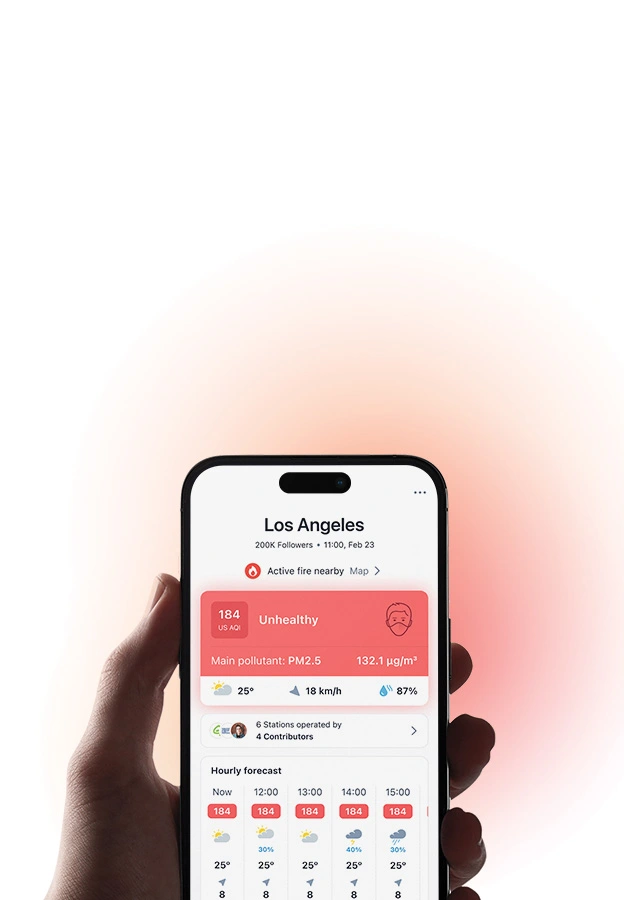


Measure your own air quality
Get a monitor and contribute air quality data in your city.


Learn more about air pollution in Nashville
What is the current air quality in Nashville?
The current air quality in Nashville is considered good. Air pollution levels are low and there are no expected health risks, making it a good time to enjoy normal outdoor activities.
Is Nashville a polluted city?
Nashville, Tennessee air quality varies depending on the time of year, the examined air pollutant, and the applied air pollutant standard.
Nashville is in attainment for the U.S. Environmental Protection Agency’s (EPA’s) most rigorous air pollution standards: short-term ozone, short-term PM2.5, and annual PM2.5.1 The capital city of Tennessee, however, has not always met these standards. It wasn’t until 2007 that Nashville finally met short-term and annual PM2.5 standards, and 2013 that Nashville met ozone standards.
Moreover, during the most recent 2017 to 2019 monitoring period, levels for both annual PM2.5 and daily ozone remained near the governing threshold, indicating that increased emissions from population growth or climate-change derived wildfires could cause Nashville air quality to exceed federal standards in the future.
Relatively speaking, Nashville ranked as the 387th most polluted city in the United States (out of 1518 cities) in 2019, thus falling within the top 25 percentile of polluted U.S. cities. Still, the capital city is not the most polluted city in Tennessee; rather it falls 7th in the state behind:
- Red Bank air quality: 13.5 μg/m3 *
- Farragut air quality:12.9 μg/m3 *
- Chattanooga air quality:12.4 μg/m3 *
- Goodlettsville air quality:12.0 μg/m3 *
- Knoxville air quality:10.2 μg/m3 *
- Athens air quality: 10.0 μg/m3
* Above the World Health Organization target for average annual PM2.5 of 10 μg/m3
While Nashville air quality may be deemed acceptable based on key U.S. EPA standards, the capital city is not impervious to pollution spikes that can jeopardize the health of residents. In March 2021, Nashville experienced PM2.5 readings as high as 42 μg/m3 (nearly 4 times the WHO’s annual PM2.5 target, and 2 times higher than its daily PM2.5 target).
Importantly, area emission sources can cause very high, localized spikes that can induce adverse health effects and trigger asthma attacks, even when city-wide pollution levels are deemed safe.
Follow Nashville’s real-time air quality index (AQI) levels on this page or with the IQAir-AirVisual mobile app to be notified when pollution levels reach dangerous levels. Observe the health recommendations when Nashville air pollution exceeds or is anticipated to exceed “good” standards.
What causes air pollution in Nashville?
Nashville is the capital and most populous city of Tennessee. Its environment is shaped by both its urban center and agricultural surroundings. Major pollution sources in Nashville include:2
- the daily transit of nearly 700,000 residents via motor vehicles
- power plants
- factories
- diesel exhaust from construction equipment, commercial trucks, and railway trains
- resuspended dust during construction and road repair
- boats and ships on the Cumberland River
- wind-blown pesticides and dust from agricultural fields
In 2010, Tennessee ranked 11th for industrial toxic air pollution caused by coal-based power generation by the National Resources Defense Council.3 During that year, Tennessee’s coal-based plants emitted more than 9.6 million pounds of harmful chemicals, accounting for 37 percent of state pollution and about 3 percent of all pollution from U.S. power plants. In 2021, the Tennessee Valley Authority (the state’s federally owned energy corporation) committed to phasing out coal power by 2035, instead turning toward gas, nuclear, and renewable energy.4 If achieved, the TVA could significantly reduce air pollution exposure for Nashville residents and reduce its carbon (greenhouse gas) emissions by 80 percent.
Wildfires represent a sporadic and temporary pollution source that can significantly impact Nashville air quality. Increasingly hot and dry conditions have contributed to increasingly prevalent and dangerous wildfires in recent years. In 2019, 529 wildfires burned over 5,300 acres across the state, contributing to PM2.5 levels above WHO targets in Nashville during July, August, and September.5
When a Spare the Air alert is in place within the Napa area, people should reduce or forego outdoor activities as much as possible to protect their health, and limit pollution emitting activities which may contribute to the city’s poor air quality.
When is Nashville air quality the worst?
Air quality in Nashville is largely seasonal.
In the summer months, high temperatures and stagnant air combine to increase the prevalence and longevity of ambient air pollutants. Ozone is the primary threat during these months, often reaching “moderate” to “unhealthy” levels for hours at a time.
Unlike most other commonly measured air pollutants, ozone is not emitted directly into the atmosphere. Rather, it is formed when ambient nitrogen dioxide (NO2) and volatile organic compounds (VOCs) react in the air in the presence of sunlight and heat (UV radiation).
Since sunlight and heat are key to start chemical reactions between precursor pollutants, ozone tends to exist at higher levels during the summer and during hot summer afternoons in particular. Hotter temperatures accelerate ozone formation, increasing ambient ozone levels. During the 2017 to 2019 monitoring period, Nashville experienced 6 days of “orange” ozone levels and 1 day of “red” ozone levels.
While Nashville ozone levels tend to subside in the winter when sunlight and heat is less abundant, PM2.5 pollution becomes more prevalent. Winter wood burning, increased car idling, and cool air inversions, weather conditions that trap air pollutants in the lower atmosphere, drive Nashville’s winter PM2.5 levels. In the absence of summer wildfires, Nashville’s most PM2.5 polluted months would be November, December, and January.
While air pollution trends are indicative, air quality can be difficult to predict. Follow IQAir’s Nashville air quality forecast at the top of this page to know when city-wide air quality is expected to improve or deteriorate and plan accordingly.
What are some health problems associated with breathing polluted air in Nashville?
Nashville air pollution is of particular concern to children, the elderly, and those with underlying health conditions. However, all residents can suffer consequences from breathing polluted air. The WHO cautions that no level of air pollution exposure has been found to be free of health risk.6
Breathing air pollution, such as PM2.5 and ozone, has been linked to:7
- asthma attacks
- airway irritation
- inflammation of the respiratory tract
- coughing and wheezing
- lung tissue scarring and reduced lung function
- heart arrhythmias
- increased disposition towards respiratory conditions such as pneumonia, bronchitis, and emphysema
Prolonged air pollution exposure can lead to:
- developmental and reproductive harm
- cancer
- heart attacks
- stroke
- early death
In Tennessee, the impact of the state’s air quality is apparent in the numbers:8
- Roughly 25,000 Tennessee children per year will suffer asthma attacks, 7,600 of which occur in children living in Nashville
- Roughly 52,000 sick days are linked to breathing higher levels of ozone
Even when ambient pollution levels are high, it is possible to reduce adverse outcomes of breathing polluted air Nashville. When pollution levels are high, avoid strenuous outdoor activity, wear an air pollution mask, and use an air purifier to improve indoor air quality where available.
What are some of the main pollutants found in the air in Nashville?
Of the 6 air pollutants commonly monitored by the U.S. EPA, PM2.5 and ozone reach “unhealthy” concentrations most often. This owes to the prevalence of these two air pollutants as well as their relatively high risk to health.
Both ozone precursor pollutants and PM2.5 originate primarily from fossil fuel combustion, with motor vehicle exhaust the leading emission source. Tackling fossil fuel related emissions
PM2.5
PM2.5 is suspended particulate matter measuring less than 2.5 micrometers in diameter. Its near-microscopic size allows it to pass through the body’s defenses in the airways and lungs and embed within the bloodstream when inhaled. Once PM2.5 penetrates into the bloodstream, it can be transported throughout the body to cause far-reaching bodily harm. It is for this reason that PM2.5 is widely considered the most dangerous air pollutant.
While Nashville is in attainment for both annual and short-term PM2.5 measures, PM2.5 concentrations can reach unhealthy levels for hours at time. Periods of elevated PM2.5 are common during the wildfire season, occurring in the late summer months, as well as during the winter months as a result of winter wood burning and cool air inversions.
Ozone
Ozone is a colorless, odorless gas pollutant made of three unstable and highly reactive oxygen atoms. Ozone differs from PM2.5 in that, rather than being emitted directly into the air, it is formed from “precursor pollutants” NO2 and VOCs, reacting in sunlight and heat. This attribute causes ozone levels to correlate with temperature, increasing in prevalence during the summer months.
+ Article Resources
[1] American Lung Association. (2020). State of the air – 2020.
[2] Metro Government of Nashville. (2007). A Codification of the General Ordinances of Nashville and Davidson County, Tennessee. Municode.
[3] Meador J. (2012, August 12) Tennessee named 11th worst state for coal-based air pollution. Nashville Scene.
[4] Flessner D. (2021, April 29). TVA plans to phase out coal power by 2035 as the utility turns to more gas, nuclear and renewable energy. Chattanooga Times Free Press.
[5] Tennessee Department of Health. (2021, April 30). Tennessee state fire marshal’s office and Division of Forestry promote Wildfire Community Preparedness Day on May 1, 2021. TN.gov.
[6] World Health Organization. (2020). Air quality guidelines – global update 2005.
[7] Dale J. (2020, July 29). Health impacts of air pollution in Tennessee. Patch.
[8] Clean Air Task Force. (2017). Health risks in Tennessee from oil and gas air pollution.