Añadir
Calidad del aire en Walla Walla
Índice de calidad del aire (ICA⁺) y contaminación del aire PM2.5 en Walla Walla • 17.8K Seguidores • 07:00, ago 07 Hora local

165
ICA⁺ USPerjudicial

Contam. principal:
PM2.5
75.5 µg/m³

24°

10 km/h

30 %
Pronóstico horario
Pronóstico del índice de calidad del aire (AQI⁺) de Walla Walla


Pronóstico diario
Pronóstico del índice de calidad del aire (AQI⁺) de Walla Walla
| Hoy | 158 | | 38° 22° |  19 km/h | 16% |
| sáb | 102 | | 36° 20° | 20 km/h | 16% |
| dom | 111 | | 35° 21° | 18 km/h | 17% |
Contaminantes del aire
¿Cuál es la calidad de aire actual en Walla Walla?

La concentración de PM2,5 es actualmente 15.1 veces superior al valor de referencia anual de PM2,5 de la OMS.
Recomendaciones de salud
 Avoid outdoor exercise |
 Close your windows to avoid dirty outdoor air Get a monitor |
 Wear a mask outdoors Get a mask |
 Run an air purifier Get an air purifier |
Protégete de la contaminación del aire en Walla Walla

Controle el aire que respira
Obtenga lecturas precisas de la calidad del aire de AirVisual e información en tiempo real para un aire más limpio. Monitores que revelan las fuentes de contaminación y señalan cuándo es necesario utilizar un purificador de aire.

Purificadores de aire de calidad médica
La HealthPro Series, de confianza en todo el mundo, utiliza la tecnología HyperHEPA. Filtra partículas ultrafinas que otros purificadores de aire pasan por alto, ofreciendo una protección de grado médico.

Potentes y elegantes purificadores de aire
Compacta y potente, la serie Atem combina la ingeniería suiza con la purificación de aire de alto rendimiento, filtrando partículas ultrafinas con la tecnología HyperHEPA.
Polen
¿Qué concentración de polen hay hoy en Walla Walla?
Índice

Bajo
 Árboles Ninguno | 0% |
 Gramíneas Ninguno | 0% |
 Maleza Bajo | 25% |
Fuente:
wetter.comRecomendaciones de salud
Avoid outdoor exercise |
Close your windows to avoid dirty outdoor air Get a monitor |
Wear a mask outdoors Get a mask |
Run an air purifier Get an air purifier |
Polen
¿Qué concentración de polen hay hoy en Walla Walla?
Índice
Bajo
Árboles Ninguno | 0% |
Gramíneas Ninguno | 0% |
Maleza Bajo | 25% |
Fuente:
wetter.comProtégete de la contaminación del aire en Walla Walla
Controle el aire que respira
Obtenga lecturas precisas de la calidad del aire de AirVisual e información en tiempo real para un aire más limpio. Monitores que revelan las fuentes de contaminación y señalan cuándo es necesario utilizar un purificador de aire.
Purificadores de aire de calidad médica
La HealthPro Series, de confianza en todo el mundo, utiliza la tecnología HyperHEPA. Filtra partículas ultrafinas que otros purificadores de aire pasan por alto, ofreciendo una protección de grado médico.
Potentes y elegantes purificadores de aire
Compacta y potente, la serie Atem combina la ingeniería suiza con la purificación de aire de alto rendimiento, filtrando partículas ultrafinas con la tecnología HyperHEPA.
Lugares más contaminados cerca de Walla Walla
Ranking AQI⁺ mundial
Ranking de estaciones
Ranking AQI⁺ de estaciones en tiempo real en Walla Walla

Ranking de ciudades
Ranking de calidad del aire AQI⁺ de USA en tiempo real
Calidad del aire histórica cerca de Walla Walla
Historial
Gráfico de calidad del aire histórica para Walla Walla
Calidad del aire histórica cerca de Walla Walla
Historial
Gráfico de calidad del aire histórica para Walla Walla
Lugares más contaminados cerca de Walla Walla
Ranking AQI⁺ mundialRanking de estaciones
Ranking AQI⁺ de estaciones en tiempo real en Walla Walla
Ranking de ciudades
Ranking de calidad del aire AQI⁺ de USA en tiempo real
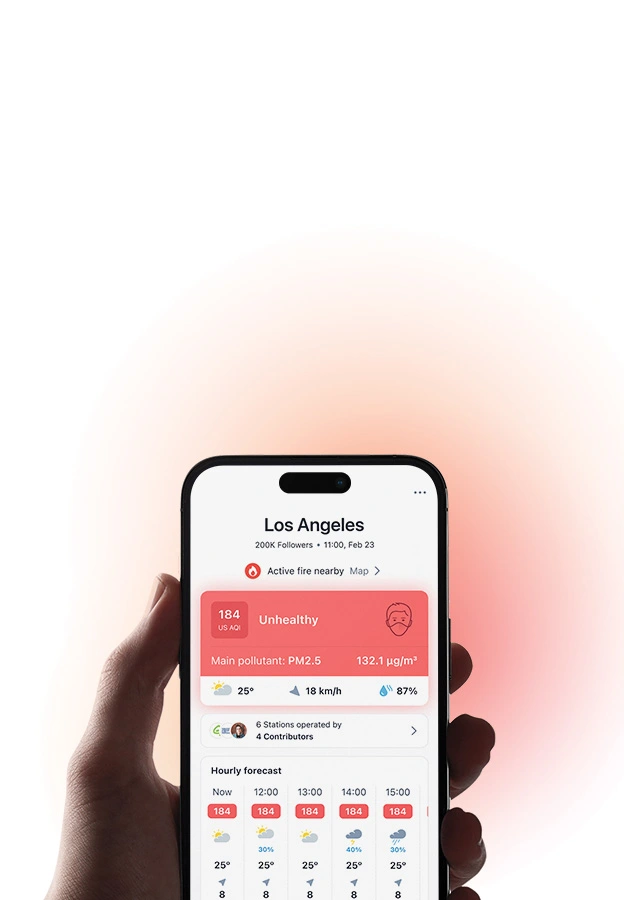


Measure your own air quality
Get a monitor and contribute air quality data in your city.
Obtén más información sobre la calidad del aire global


Obtén más información sobre la contaminación del aire en Walla Walla
¿Cuál es la calidad del aire actual en Walla Walla?
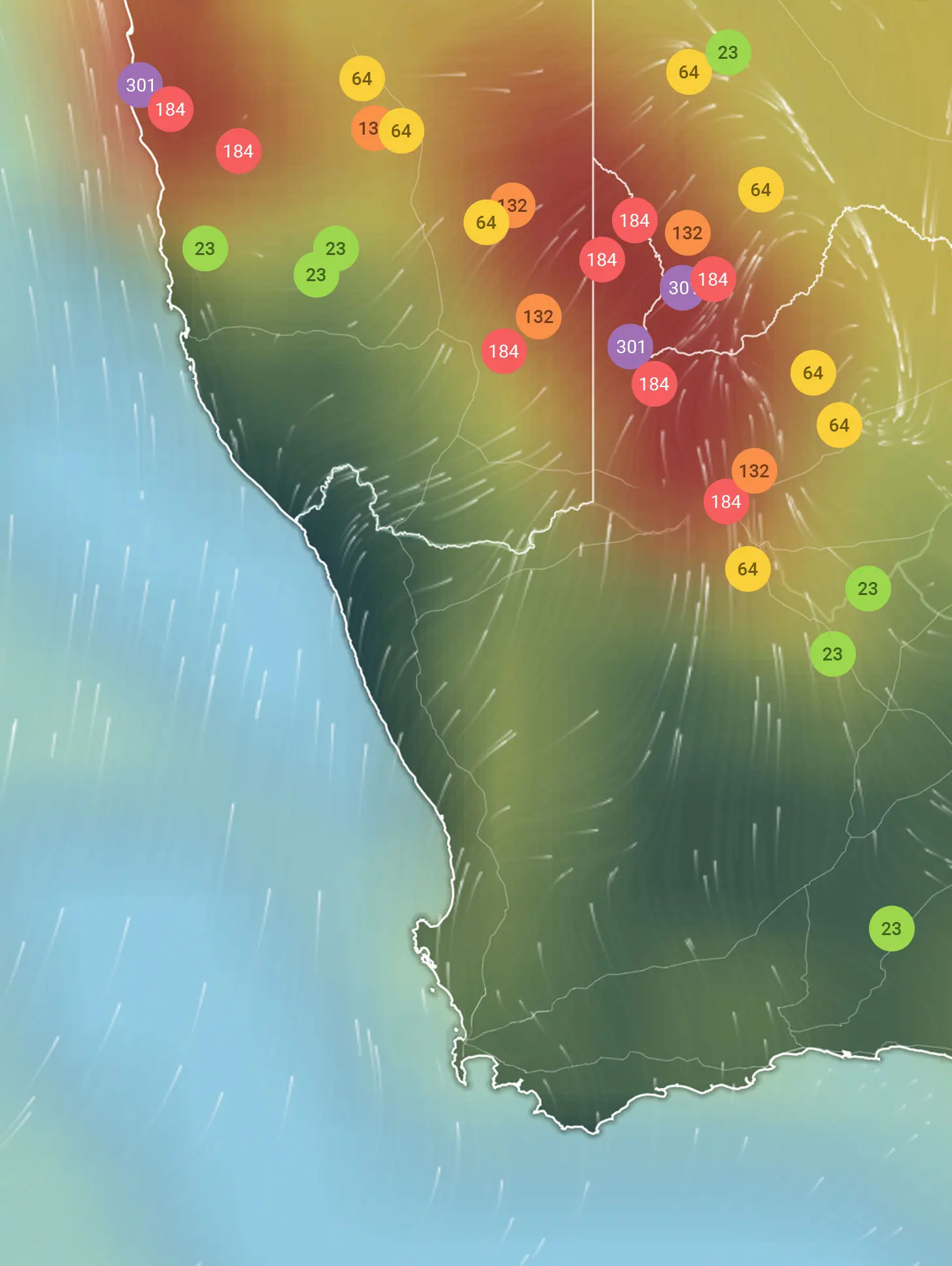
La calidad del aire actual en Walla Walla se considera poco saludable. Algunos miembros del público en general pueden experimentar efectos en la salud, mientras que los grupos sensibles pueden verse más afectados.
What is the current level of air pollution in Walla Walla City?
Walla Walla is the largest city and county seat of Walla Walla County, Washington County. The last census was conducted in 2019 when it was seen to have increased to 33,000, from 31,000 in 2010. If the two suburbs are included, then the figure is closer to 45,000 people. It is in the southeastern region of Washington, around a four-hour drive from Portland, Oregon.
During the middle part of 2021, Walla Walla was going through a period of “Unhealthy” air with a US AQI reading of 163. This United States Air Quality Index number is calculated using the levels of six of the most prolific air pollutants, namely, nitrogen dioxide, sulfur dioxide, ozone, carbon monoxide and both sizes of particulate matter, being PM2.5 and PM10. It can be used as a standard when comparing air quality in other cities around the world. If data is unavailable for all 6 pollutants, a figure can still be calculated by using what figures there are. The only recorded figure in Walla Walla was for PM2.5 which was 77.9 µg/m³. The World Health Organization (WHO) has a recommended level of 10 µg/m³, so with this figure, it can be seen to be over seven times the recommended level, although no level is considered to be safe.
Is the level of air pollution always high in Walla Walla?
Looking back at the figures for 2020, released by IQAir.com, it is easily seen that the worst month for air pollution was during September when the average figure was 69.1 which placed it firmly in the “Unhealthy” category. Readings between 55.5 and 150.4 µg/m³ qualify for this bracket. December and January were the next worse with figures of 11.6 and 11.4 µg/m³, respectively. With figures such as these, the air quality is considered to be “Good”. Readings between 10 and 12 µg/m³ qualify for such a category.
Historically, air quality records have been held since 2017 when the average figure was recorded as being 12.7 µg/m³ or “Moderate”. The following two years showed improved figures of 7.2 and 7.8 µg/m³, respectively which was less than 10 µg/m³ which is the target figure as recommended by the World Health Organisation (WHO).
Unfortunately in 2020, the air quality slipped down into the “Moderate” category with a 13.3 µg/m³ figure. This figure is quite surprising because of the restrictions imposed by the COVID-19 situation. Many vehicles were temporarily unused as their drivers were not required to work from the office, instead, they were furloughed and allowed to work from home. This had the effect of drastically reducing pollution within the city center. Many small factories and non-essential production units were also temporarily closed which again lead to an improvement in air quality. Yet for some reason, Walla Walla recorded quite a poor level when other cities were seeing much better air quality because of the lower rates of pollution.
Where does the air pollution come from in Walla Walla?
It would appear that most of the air pollution in Washington and Walla Walla comes from wildfires, both locally and from wind-blown particles from fires burning in the USA. The situation is made worse by the topography of the area. Many of the valleys trap air between their sides and it often remains there until the strength and speed of the wind increases.
When air quality gets to be at a high pollutant level, several measures are recommended to mitigate the circumstances. Community Health continues to recommend everyone stay indoors, take part in only light activities and keep windows closed. Air conditioners should be run on recirculated air with the outside air intake closed off. Those who must be outside should wear N-95 respirator masks, state and local officials warned.
Point sources are stationary industrial facilities such as pulp and paper mills and factories that burn fossil fuels. They operate under ministry authorization (a regulation, permit, approval, or code of conduct), or an air discharge permit.
Area sources are stationary sources that are not normally required to obtain a discharge permit from the ministry. These sources include prescribed burning, residential wood use, light industry, and other residential, commercial and institutional sources. Emissions from most of these area sources are small compared to point sources but can be significant when considered as a group.
Mobile sources include motor vehicles mainly involved in the transportation of people and goods such as cars and trucks, aircraft, marine vessels, trains, off-road vehicles and small off-road engines such as lawnmowers, other garden equipment and construction vehicles.
Large trucks are mostly powered by diesel engines, whilst cars are mostly powered by gasoline engines. Gas and diesel engines emit the same pollutants except that diesel engines produce much higher amounts of NOx and PM2.5 and lower amounts of VOCs and carbon monoxide. Diesel PM is considered particularly harmful because the particles are extremely small and can be inhaled easily. All vehicles produce small particles due to the abrasion of tires, brake discs and the road surface. These particles then pollute the local environment by becoming entrapped in the soil where they eventually find their way into the food chain.
What are the significant air pollutants in Walla Walla?
Air pollutants that pose the most serious threat to health are particulate matter and ground-level ozone which is the main ingredients of smog. They mainly affect the lowest part of the atmosphere, which holds the air we breathe. Particulate matter is a significant problem in rural areas because of wood-burning and wildfires.
Particulate matter is the tiny solid or liquid particles that are suspended in the air. Some particles are large or dark enough to be seen as smoke, soot or dust. Whilst others are so small that they can only be detected with an electron microscope. They fall into two categories being primary and secondary. Primary sources are emitted directly into the atmosphere by wood and fossil fuel burning. Secondary sources are formed in the atmosphere by chemical reactions involving nitrogen dioxide, sulfur dioxide, volatile organic compounds and ammonia under the influence of sunlight. Particulate matter is measured in microns (one-millionth of a meter). PM can make lakes and other sensitive areas more acidic, causing changes to the nutrient balance and harming aquatic life.
Particulate matter less than 10 microns and invisible to the naked eye and small enough to be inhaled into the nose and throat is known as PM10. Its main sources are from road dust, road construction, mixing and applying fertilizers and pesticides and from wildfires. PM10 is the main source of haze that reduces visibility. It takes hours or even days for PM10 to settle out of the air.
Particulate matter that measures 2.5 microns and less is generally known as PM2.5. It can travel deep into the lungs and become lodged there causing heart and lung problems and sometimes premature death. Because of its microscopic size, it penetrates the lungs as far as the alveoli where it transfers to the bloodstream where it then can travel around the body.
The main sources for PM2.5 are from the combustion of fossil fuels and wood (motor vehicles, woodstoves and fireplaces), industrial activity, garbage incineration and agricultural burning of stubble and the like.
These fine particles are small enough to make their way deep into the lungs. They are associated with many types of health problems such as a runny nose and coughing, to bronchitis, asthma, emphysema, pneumonia, heart disease and even premature death. PM2.5 is the worst public health problem from air pollution, and because of its small size, takes significantly longer than PM10 to settle out of the air.
Ground-level ozone is a secondary pollutant as is formed by the reaction of volatile organic compounds (VOCs) and nitrogen oxide (NOx) in the sunshine and warm temperatures. When air is stagnant ozone soon builds up. It’s a blueish gas with a noticeable odor.
Even low levels of ozone can irritate the eyes, nose, and throat. Ozone can also reduce lung function, irritate the airways, and make them red and swollen, it is often seen as being similar to a sunburn. People with pre-existing heart or lung problems are most at risk, but even healthy people who are active outdoors can be affected when ozone levels are high. Ozone exposure can contribute to asthma, and reduced resistance to colds and other infections. It can also damage the environment as plants and trees produce much lower yields and animals’ respiratory systems can become damaged in the same way that humans can.
Other types of pollution can also be found in the air that we breathe. These can include sulfur oxides (SOx), nitrogen oxides (NOx), volatile organic compounds (VOCs), carbon monoxide (CO) and ammonia (NH3), persistent organic pollutants (POPs) such as dioxins and furans, and heavy metals such as mercury. Most of these pollutants come from combustion and industrial processes or the evaporation of paints and common chemical products.
The health impacts of these pollutants can vary. Carbon monoxide can be fatal in high concentrations and causes illness at lower concentrations. Dioxins and furans are amongst the most toxic chemicals in the world.
They can have a severe impact on the environment, but some are relatively short-lived such as nitrogen dioxide. However, some others are long-lived (POPs) and can travel the world on wind currents in the upper atmosphere. Sulfur dioxide can transform in the atmosphere to sulphuric acid which is a major component of acid rain.
What are the health impacts of polluted air in Walla Walla?
Air pollution is a proven cause of ailments and premature deaths. The greatest danger is represented by the considerable disturbances generated by fine dust and ozone. With each breath taken, gases such as nitrogen dioxide and ozone as well as thousands of fine particles enter our airways and our lungs. The finer the particles, the deeper they penetrate the lungs. Excessive concentration of these substances increases the frequency of respiratory tract disorders and affections in both children and adults. For example, episodes of dyspnoea, chronic cough and phlegm, acute and chronic bronchitis, respiratory tract infections may occur.
Air pollution also contributes to aggravating these ailments in people who already suffer from them. The more polluted the air, for example near busy roads, the greater the frequency with which attacks occur. Polluted air causes a reduction in average lung capacity and, consequently, an increase in urgent medical interventions and hospital admissions due to respiratory tract diseases.
Anyone can be affected by air pollution. If we can theoretically consider that we are equal in the face of the problem, there are many distinctions of age and social class. Younger and older people are more vulnerable because their metabolism is either developing or weakened. Regarding the difference in impact between the different social and economic levels, it is simply linked to the fact that the less we are informed the less we protect ourselves and that the poorer we are the more we live in areas that are sources of pollution (industrial sites, airports, busy roads, etc.).
So-called "sensitive" people (who suffer from allergies, cardiorespiratory disease and smokers) should also be careful. When pollution peaks are reached, it is recommended that these people at risk not go out. More generally, city dwellers are considered to be a population at risk, because of the heavy automobile traffic and industrial emissions they encounter.
An individual exposed to air pollution over a long period, even at low doses, is more likely to be affected by the cardiopulmonary disease (myocardial infarction, asthma, etc.). The risk of cancer is also greater. Air pollution contributes to a decrease in fertility, an increase in infant mortality and a weakened immune system.
Short-term exposure to particulate pollution can aggravate lung disease causing asthma attacks and acute bronchitis, increase susceptibility to respiratory infections or may even cause heart attacks and arrhythmias in people with heart disease.
Even if you are healthy, you may experience temporary symptoms, such as Irritation of the eyes, nose and throat, coughing, tightness in the chest and shortness of breath.