Añadir
Calidad del aire en Saskatoon
Índice de calidad del aire (ICA⁺) y contaminación del aire PM2.5 en Saskatoon • 28.3K Seguidores • 17:00, jul 25 Hora local
52
ICA⁺ USModerado

Contam. principal:
PM2.5
10 µg/m³

32°

6 km/h

39 %
Pronóstico horario
Pronóstico del índice de calidad del aire (AQI⁺) de Saskatoon


Pronóstico diario
Pronóstico del índice de calidad del aire (AQI⁺) de Saskatoon
| Hoy | 73 | | 32° 19° |  11 km/h | 54% |
| sáb | 68 | | 28° 21° | 30 km/h | 60% |
| dom | 67 | | 31° 18° | 15 km/h | 55% |
Contaminantes del aire
¿Cuál es la calidad de aire actual en Saskatoon?

La concentración de PM2,5 es actualmente 2 veces superior al valor de referencia anual de PM2,5 de la OMS.
Recomendaciones de salud
 Sensitive groups should reduce outdoor exercise |
 Close your windows to avoid dirty outdoor air Get a monitor |
 Sensitive groups should wear a mask outdoors Get a mask |
 Sensitive groups should run an air purifier Get an air purifier |
Protégete de la contaminación del aire en Saskatoon

Controle el aire que respira
Obtenga lecturas precisas de la calidad del aire de AirVisual e información en tiempo real para un aire más limpio. Monitores que revelan las fuentes de contaminación y señalan cuándo es necesario utilizar un purificador de aire.

Purificadores de aire de calidad médica
La HealthPro Series, de confianza en todo el mundo, utiliza la tecnología HyperHEPA. Filtra partículas ultrafinas que otros purificadores de aire pasan por alto, ofreciendo una protección de grado médico.

Potentes y elegantes purificadores de aire
Compacta y potente, la serie Atem combina la ingeniería suiza con la purificación de aire de alto rendimiento, filtrando partículas ultrafinas con la tecnología HyperHEPA.
Polen
¿Qué concentración de polen hay hoy en Saskatoon?
Índice

Moderado
 Árboles Ninguno | 0% |
 Gramíneas Moderado | 50% |
 Maleza Bajo | 25% |
Fuente:
wetter.comRecomendaciones de salud
Sensitive groups should reduce outdoor exercise |
Close your windows to avoid dirty outdoor air Get a monitor |
Sensitive groups should wear a mask outdoors Get a mask |
Sensitive groups should run an air purifier Get an air purifier |
Polen
¿Qué concentración de polen hay hoy en Saskatoon?
Índice
Moderado
Árboles Ninguno | 0% |
Gramíneas Moderado | 50% |
Maleza Bajo | 25% |
Fuente:
wetter.comProtégete de la contaminación del aire en Saskatoon
Controle el aire que respira
Obtenga lecturas precisas de la calidad del aire de AirVisual e información en tiempo real para un aire más limpio. Monitores que revelan las fuentes de contaminación y señalan cuándo es necesario utilizar un purificador de aire.
Purificadores de aire de calidad médica
La HealthPro Series, de confianza en todo el mundo, utiliza la tecnología HyperHEPA. Filtra partículas ultrafinas que otros purificadores de aire pasan por alto, ofreciendo una protección de grado médico.
Potentes y elegantes purificadores de aire
Compacta y potente, la serie Atem combina la ingeniería suiza con la purificación de aire de alto rendimiento, filtrando partículas ultrafinas con la tecnología HyperHEPA.
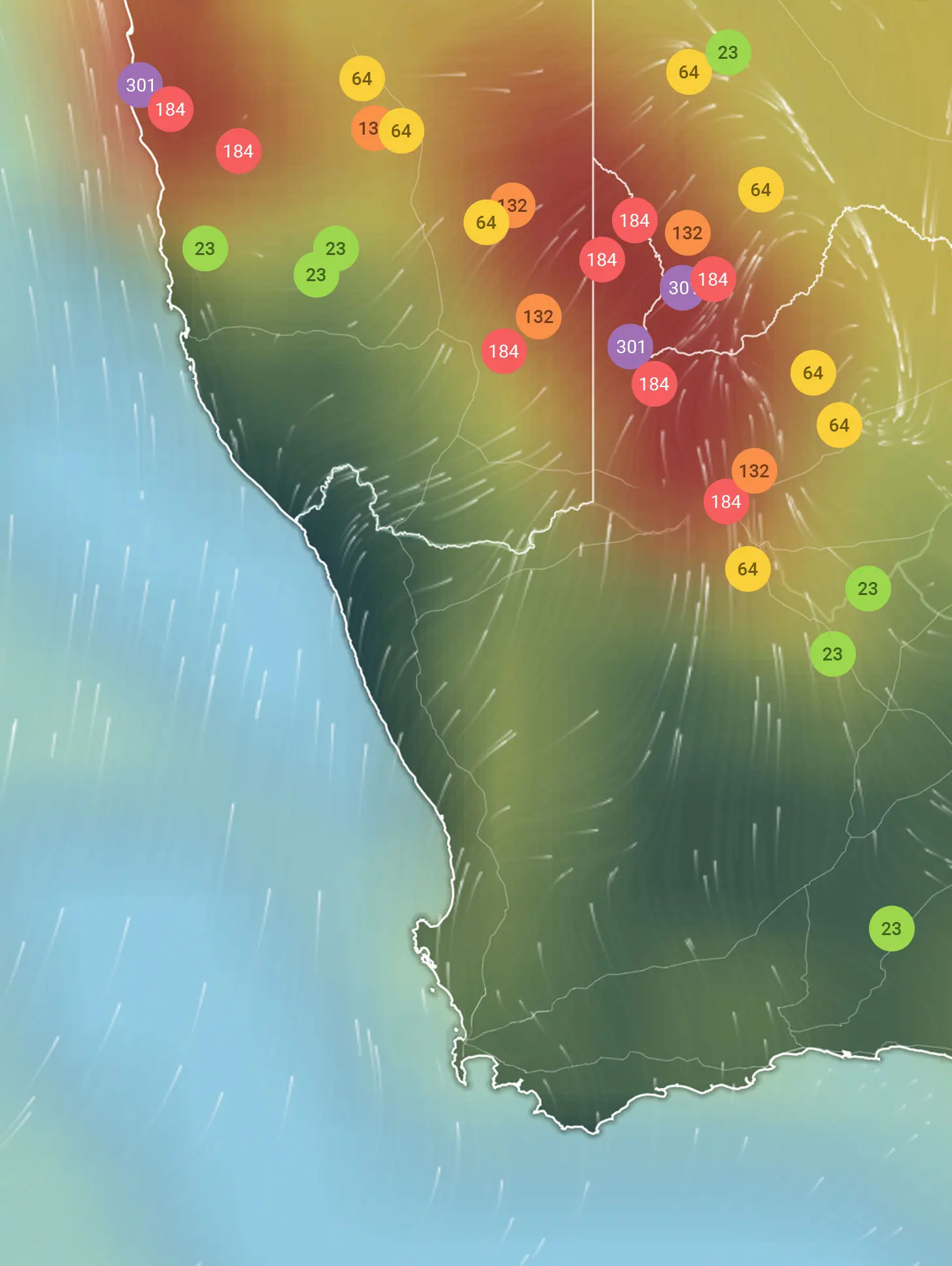
Lugares más contaminados cerca de Saskatoon
Ranking AQI⁺ mundial
Ranking de estaciones
Ranking AQI⁺ de estaciones en tiempo real en Saskatoon

Ranking de ciudades
Ranking de calidad del aire AQI⁺ de Canada en tiempo real
Calidad del aire histórica cerca de Saskatoon
Historial
Gráfico de calidad del aire histórica para Saskatoon
Calidad del aire histórica cerca de Saskatoon
Historial
Gráfico de calidad del aire histórica para Saskatoon
Lugares más contaminados cerca de Saskatoon
Ranking AQI⁺ mundialRanking de estaciones
Ranking AQI⁺ de estaciones en tiempo real en Saskatoon
Ranking de ciudades
Ranking de calidad del aire AQI⁺ de Canada en tiempo real



Measure your own air quality
Get a monitor and contribute air quality data in your city.
Obtén más información sobre la calidad del aire global


Obtén más información sobre la contaminación del aire en Saskatoon
¿Cuál es la calidad del aire actual en Saskatoon?
La calidad del aire actual en Saskatoon se considera moderada. Es aceptable para la mayoría de las personas, aunque algunas extremadamente sensibles pueden experimentar leves molestias.
What is the air quality of Saskatoon?
Saskatoon is a city located in the province of Saskatchewan, being the largest city in the region and home to over 246 thousand inhabitants (a number taken from a census conducted in 2016 and thus will have grown since then). The province of Saskatchewan itself is full of large amounts of forested areas, nature reserves and fresh water bodies, having over 100 thousand lakes. It has a history of being set up as a ‘dry’ community, meaning that its early settlers were against the consumption of alcohol, historically being known as a temperance colony.
Nowadays, Saskatoon sees a large amount of its economy based around the production or extraction of materials such as potash or oil, as well as the mining of rare or precious goods such as gold, diamond uranium and coal. There is also a growing scene in the IT and digital media industry, another factor that can draw people towards living and working within the city. Whilst they are all important drivers in the city’s economy, they can also have a negative impact on the quality of air.
In 2019, Saskatoon came in with a PM2.5 reading of 8.2 μg/m³ as its yearly average. This is a respectable reading that placed Saskatoon within the World Health Organizations (WHO's) target goal of 10 μg/m³ or less for the best quality of air. This reading placed the city in 3309th place out of all cities ranked worldwide, as well as 41st place out of all cities ranked in Canada. Whilst this still represents a great quality of air for the city, it could certainly stand to improve its PM2.5 readings further, considering that Canadian cities hold some of the best air quality in the world, with many of its cities coming in with considerably cleaner readings.
What are some causes of polluted air in Saskatoon?
Saskatoon has numerous causes of air pollution occurring within the city limits, and as mentioned whilst Canadian cities tend to have some of the best air quality in the world (with Canada ranking in at 90th place out of all 98 countries ranked worldwide in 2019), they are still not exempt from the polluting effects of industry and the mass movement of people in their daily lives.
One of the most prominent causes of air pollution within Saskatoon would stem from vehicle exhaust and emission fumes. With a vast amount of people on the road at any given time, as well as increasing vehicle ownership as time goes on, there would be a large amount of cars, motorbikes and other smaller personal vehicles inhabiting the road, giving out large amounts of noxious chemicals and fine particulate matter.
In regards to industry, particularly for the import and export side of things, the use of heavy duty vehicles is required. These include ones such as trucks and lorries, vehicles that are above a certain size and weight and often run on diesel fuels. These can put out far greater amounts of pollution than a singular vehicle of a smaller size would, as well as giving off huge amounts of finely ground rubber particles, which can wreak havoc on both wildlife and human health when respired.
Other pertinent sources would be construction sites, road repairs, the formation of secondary pollutants in the atmosphere, as well as factory or power plant emissions, and even the burning of firewood or charcoal during the colder winter months.
When is the air quality at its most polluted in Saskatoon?
Observing the air quality data gathered over the course of 2019, Saskatoon showed a period of time where the air pollution levels were significantly higher. These elevations in pollution typically correlate with the colder months, although there can be exceptions due to other occurrences such as forest fires or other polluting events taking place throughout the year.
Towards the end of the year is when these higher numbers started to make themselves apparent, with the month of November still maintaining a respectable PM2.5 reading of 6.1 μg/m³. This then jumped significantly up to 9 μg/m³ in December, showing the Saskatoon had entered into its time period of higher pollution levels.
This continued on into the early months of the following year, with readings that remained high all the way through to May. January through to May all came in with readings of 8.2 μg/m³, 8.9 μg/m³, 10.3 μg/m³, 9 μg/m³ and 9.1 μg/m³ respectively, making March the most polluted month of the year at 10.3 μg/m³, and the only month to break into the ‘good’ air quality ratings bracket (10 to 12 μg/m³ required for classification). In closing, the months of December through to March of the following year are when Saskatoon displayed its highest levels of air pollution.
When is the air quality at its cleanest in Saskatoon?
Continuing on from the previous question, after the period of time when there was a higher level of air pollution present, once it began to abate, there were other months that showed significantly improved levels of air quality. With the month of March coming in with its reading of 9.1 μg/m³, the following month of June came in with a lesser reading of 7.5 μg/m³, after which the PM2.5 continued to drop.
The months of July through to November where the cleanest out of the year for Saskatoon in 2019, with readings of 6.5 μg/m³, 6.5 μg/m³, 5 μg/m³, 6 μg/m³ and 6.1 μg/m³ respectively, making September the cleanest month of the year with its reading of 5 μg/m³, less than half of the most polluted month of the year (March at 10.3 μg/m³).
What are some of the main pollutants found in the air in Saskatoon?
The main pollutants found in the air would be ones mostly emanating from vehicles. These include chemicals such as nitrogen dioxide (NO2) and sulfur dioxide (SO2), with nitrogen dioxide being the biggest offender in terms of its release from vehicles. The various oxides of nitrogen (NOx) can also linger in the atmosphere and convert into one of the most prevalent forms of pollution found in Saskatoon, namely ozone (O3).
This is formed when the aforementioned oxides of nitrogen (among other chemicals) get exposed to solar radiation and convert into ozone, or smog as it is known when it accumulates in larger amounts. These would be a few of the main pollutants found in the air in Saskatoon.