Add
AddAir quality in Oakland
Air quality index (AQI⁺) and PM2.5 air pollution in Oakland • 192.3K Followers • 01:00, Aug 28 Local time
21
US AQI⁺Good

Main pollutant:
PM2.5
3.8 µg/m³

17°

9 km/h

84 %
Hourly forecast
Oakland air quality index (AQI⁺) forecast


Daily forecast
Oakland air quality index (AQI⁺) forecast
| Today | 21 |  | 22° 15° |  12 km/h | 75% |
| Sat | 27 |  | 18° 13° | 21 km/h | 79% |
| Sun | 13 | | 23° 13° | 15 km/h | 65% |
Air pollutants
What is the current air quality in Oakland?

PM2.5 concentration currently meets the WHO annual PM2.5 guideline.
Health recommendations
 Enjoy outdoor activities |
 Open your windows to bring clean, fresh air indoors Get a monitor |
Protect yourself from air pollution in Oakland

Monitor the air you breathe
Get accurate AirVisual air quality readings and real-time insights for cleaner air. Monitors that reveal pollution sources, highlight when air purifier use is needed.

Medical grade air purifiers
Trusted worldwide, the HealthPro Series uses HyperHEPA technology. Filters ultrafine particles other air purifiers miss, delivering medical-grade protection.

Powerful, stylish air purifiers
Compact and powerful, the Atem Series combines Swiss engineering with high-performance air purification, filtering ultrafine particles with HyperHEPA technology.
Pollen
What is the pollen count in Oakland today?
Index

Low
 Tree None | 0% |
 Grass None | 0% |
 Weed Low | 25% |
Source:
wetter.comHealth recommendations
Enjoy outdoor activities |
Open your windows to bring clean, fresh air indoors Get a monitor |
Pollen
What is the pollen count in Oakland today?
Index
Low
Tree None | 0% |
Grass None | 0% |
Weed Low | 25% |
Source:
wetter.comProtect yourself from air pollution in Oakland
Monitor the air you breathe
Get accurate AirVisual air quality readings and real-time insights for cleaner air. Monitors that reveal pollution sources, highlight when air purifier use is needed.
Medical grade air purifiers
Trusted worldwide, the HealthPro Series uses HyperHEPA technology. Filters ultrafine particles other air purifiers miss, delivering medical-grade protection.
Powerful, stylish air purifiers
Compact and powerful, the Atem Series combines Swiss engineering with high-performance air purification, filtering ultrafine particles with HyperHEPA technology.
Most polluted locations near Oakland
Worldwide AQI⁺ ranking
Station ranking
Real-time AQI⁺ station ranking for stations in Oakland

City ranking
Real-time USA AQI⁺ city ranking
Historic air quality near Oakland
History
Historic air quality graph for Oakland
Historic air quality near Oakland
History
Historic air quality graph for Oakland
Clean Air Facilities
Most polluted locations near Oakland
Worldwide AQI⁺ rankingStation ranking
Real-time AQI⁺ station ranking for stations in Oakland
City ranking
Real-time USA AQI⁺ city ranking
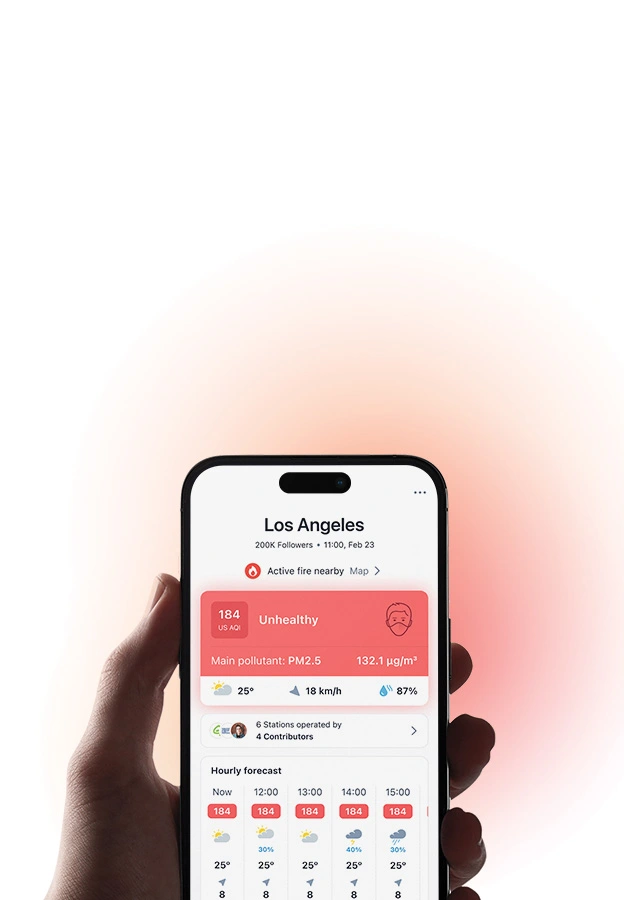


Measure your own air quality
Get a monitor and contribute air quality data in your city.


Learn more about air pollution in Oakland
What is the current air quality in Oakland?
The current air quality in Oakland is considered good. Air pollution levels are low and there are no expected health risks, making it a good time to enjoy normal outdoor activities.
How bad is Oakland air quality?
Oakland air quality consistently ranks among the worst in the United States. In 2019, the city faced challenges in meeting US Environmental Protection Agency (EPA) attainment levels for both PM2.5 and ozone pollution, the nation’s most pervasive air pollutants at dangerous levels.
The American Lung Association’s (ALA) annual “State of the Air” report grades cities on their ability to meet federal air pollution targets and ranks them comparatively. For measures of unhealthy ozone days and 24-hour PM2.5 pollution, Oakland’s report card received “F”s.1
Ozone is a key component to smog, created when precursor pollutants like nitrogen oxides (NOx) and organic substances, including volatile organic compounds (VOCs), react in sunlight. Since temperatures over 80°F are typically required for its formation, Oakland ozone season tends to run from April to October. During these months, there are roughly 94 days over 80°F, increasing the threat of ozone.2
In the 2016 to 2018 monitoring period, Oakland air quality experienced a weighted average of 8.8 unhealthy ozone days, more than double the allowable federal target of 3.2 unhealthy days. This weighted average is calculated from the city’s 20 “orange” ozone days, 3 “red” ozone days, and 1 “purple” ozone day. Since at least 1996, Oakland has never met federal ozone targets.
Compared to other cities nationally, these figures ranked Oakland 8th for worst ozone out of 228 included metropolitan areas.
Inhaling even small levels of ozone can produce breathing problems, such as coughing, irritation, and chest pain as well as long-term health problems, such as lung cancer, permanent lung damage, and early death.
Oakland tends to have a better grasp on city-wide PM2.5 levels. From 2003 to 2014, Oakland succeeded in meeting both targets for annual and 24-hour PM2.5. More recently, however, PM2.5 levels have been slipping. Part of Oakland's challenge is unpredictable wildfires, which have become increasingly frequent and severe. Oakland’s highest PM2.5 levels tend to be a result of smoke from nearby wildfires.
While the 2019 annual average for PM2.5 met the US EPA target, it failed to meet the 24-hour PM2.5 target for an allowable number of unhealthy PM2.5 days. From 2016 to 2018, Oakland experienced a weighted average of 11.2 unhealthy PM2.5 days (far above the 3.2-day guideline).
In 2019, Oakland ranked 3rd nationally for worst 24-hour PM2.5 out of 217 included metropolitan areas, and 5th nationally for annual particle pollution out of 203 metropolitan areas.
PM2.5 is widely regarded as the most harmful air pollutant to human health. Exposure to PM2.5 has been definitively linked to health effects such as cardiovascular disease, respiratory illness, and premature mortality.
While annual averages and trends allude to typical air pollution levels in Oakland, real-time and forecast data should be monitored for actionable insights to present conditions. Oakland’s forecast air quality data is presented at the top of this page, beneath the city overview. Monitoring anticipated pollution levels and following health advisories can reduce pollution exposure by up to 80 percent.
What is the biggest source of air pollution in Oakland?
Mobile emissions from motor vehicles, ships, planes, and trains comprise the largest source of air pollution in Oakland.3 While transportation emissions are a constant threat to Oakland’s air quality, wildfires tend to give way to the city’s most extreme pollution events. Days or hours categorized as “unhealthy” or worse have historically registered from wildfire smoke in the Bay Area.
Oakland’s weather and geography can further exacerbate the city’s challenges with high emissions. Marine inversions cause Oakland’s polluted air to become trapped at the ground level. These marine inversions are caused when air cooled by the Pacific Ocean becomes capped by warmer, denser air above, flowing inland from the hills. As the upper warm air layer prevents the cooler air below from rising and dispersing normally, emissions accumulate, contributing to elevated air quality index levels in the Bay Area.
Use the Oakland air pollution map to discover the origin of pollution in real time. Watch as wind moves PM2.5 pollution from wildfires, roadways, and stationary emission sources to locations across the city.
Is Oakland air quality unhealthy?
Oakland air quality does often reach unhealthy levels. The city’s long history of difficulty in meeting federal air pollution attainment levels has taken its toll on residents.
Individuals sensitive to air pollution, such as children under 18, adults over 65, and those with pre-existing heart and lung conditions, tend to be more adversely affected than others. In Alameda County, there are 342,510 children under the age of 18, 230,510 adults over the age of 65, and 280,387 with qualifying underlying health conditions. All of these groups are subject to acute health complications as a result of Oakland’s high air pollution levels.
According to the California Department of Public Health (CDPH), asthma affects about 18 percent of Oakland’s youth, a figure roughly twice the national average. Nearly a third of these cases are estimated to be the result of poor air quality.
Differences in air quality across Oakland’s many neighborhoods, has resulted in differences in the health outcomes of residents. West Oakland, a lower income, under resourced community is one such example. Residents of West Oakland are 5 times more likely to be exposed to unhealthy air pollution than their higher-income city counterparts.
The health implications for West Oakland residents are similarly stark. Data indicates that residents here tend to live 7 years less than the Alameda County average. While a number of attributing factors may be at play, respiratory disease and related cancers are the leading cause of death in West Oakland, killing 176.8 per 100,000 people from 2015 to 2017.
The disproportionate burden this community carries, along with the East Oakland neighborhood, is an environmental justice issue which must be addressed. More stringent government regulations on high-emission sources, more equitable zoning, increased education on the dangers of poor air quality, and free resources for combating air pollution indoors and out are some such means to better address this inequality in the future.
Why is it so smoky in Oakland?
Wildfires in the Bay Area are becoming increasingly frequent and severe, giving way to smoky air quality conditions in Oakland. Some of the area’s worst fires have been relatively recent, with record acreage burned in 2017 and 2018. As of August, 2020 appears on track to exceed these years. Many environmental scientists attribute the growing problem of wildfires in America’s West to human-caused climate change.4 As conditions become hotter and drier, wildfires burn bigger, hotter, and faster.
Climate change has already doubled the risk of extreme fire conditions in California, according to a study published by the Lamont Doherty Earth Observatory at Columbia University. In the last 50 years, there's been an eight-fold increase in annual burned acreage, while at the same time summer temperatures have increased by 2.5 degrees.5
In August 2020, a series of wildfires near Oakland were ignited by a dry lightning storm. Over the course of 3 days, roughly 11,000 strikes sparked 367 fires in the area. Normally, lightning-produced wildfires of this magnitude are rare. It’s been more than a decade since the last “historic lightning siege.” Most fires in the Bay area, rather, are started by humans — a result of faulty power lines, arson, neglected campfires, cigarettes, etc. The 2020 “lightning siege” resulted in more than 1.1 million scorched acres in just 9 days, a fire footprint roughly the size of Rhode Island.6 Air pollution levels as a result of the fires caused several days of unhealthy air quality. San Francisco air quality and San Jose air quality were similarly affected.
In the coming years, Oakland wildfires will continue to present a difficult emission source to manage, particularly amidst warming temperatures. Until climate change is met with urgency, fire prevention must rely on the laborious task of clearing volatile debris and forest undergrowth by manual removal or low-intensity “prescribed fires.” An estimated 8-10 million acres currently require thinning and ‘prescribed burning’ according to The California Department of Forestry and Fire Prevention (CAL FIRE).7 It will take time, however, for such an ambitious target to be met, especially at the current clearance rate of a million acres a year. Until then, Oakland’s smoky skies will likely be part of a seasonal trend.
Is wildfire smoke in Oakland unhealthy?
Over the last 3 years, 5 of the most destructive wildfires in California have been in close proximity to Oakland, contributing to unhealthy air pollution levels in the Bay Area.8 Often, Oakland’s most severe pollution events are the direct result of wildfire smoke.
In November 2018, Oakland’s monthly AQI averaged 121, “unhealthy for sensitive groups” as a result of The Kincade Fire, Carr Fire, and Mendocino Complex Fire that collectively burned over 150,000 acres. This was the highest monthly average Oakland has experienced in recent history.
The August 2020 “lightning siege” fires have also produced toxic pollution spikes. On August 21st, 2020, Oakland averaged an AQI of 154, the highest rating of the year so far.
Elevated air pollution levels in Oakland, as a result of wildfires, are more likely to occur May through October, when conditions are particularly hot and dry. Follow Oakland air quality advisories at the top of this page for actionable insights for reducing pollution exposure.
+ Article Resources
[1] American Lung Association. (2020). State of the air – 2020.
[2] Current Results. (2020). Napa temperatures: averages by month.
[3] Smith C, et al. (2018, December 11). Oakland’s air quality problem: Can first-of-its-kind legislation solve it? Oakland North.
[4] Irfan U. (2020, August 21). What makes California’s current major wildfires so unusual. Vox.
[5] Ray S, et al. (2020, August 25). California’s new normal: How the climate crisis is fueling wildfires and changing life in the Golden State. East Bay Times.
[6] Andrew F, et al. (2020, August 23). 1.1 million acres burned in nine days in California, as new lightning-ignited blazes forecast into Monday. The Washington Post.
[7] Helvarg D. (2019, December 20). How will California prevent more mega-wildfire disasters? National Geographic.
Where is the cleanest air quality in Oakland?
- 52nd Street1
- 5th Avenue1
- Victor Avenue1
- Glenview2
- Oakland Zoo EDU2
- Camden Street3
- Berkeley Fire Station 54
- Caballo Hills4
- Golden Gate District4
- Sayre Drive4
- Castle Drive7
- Selkirk Street7
- North Oakland8
- Fruitvale Avenue9
- Upper Dimond9
- Piedmont Pines10
- Sobrante Road10
- Lake Royal Apartments11
- Sequoyah11
- Clarendon Crescent12
- Glenview La Cresta12
- Orange Street12
- Park Lane12
- Gravatt Drive13
- Merriewood13
- Montclair13
- Northwood Court13
- Sequoyah Road13
- 3110 Adeline Street14
- 1140 66th Street15
- 5839 Ross Street15
- Ashmount Avenue15
- Chestnut Street15
- 114 Strathmoor Drive16
- 6886 Pinehaven Road16
- Coliseum16
- Malcolm Avenue16
- Markham ES16
- 7027 Buckingham17
- 82nd Avenue17
- Manzanita Drive17
- Redwood Heights17
- 3945 Waterhouse Road18
- 6499-6351 Aspinwall Rd18
- 6820 Thornhill Drive18
- Hilltop Crescent18
- Hoolyrood Drive18
- Hoover - Foster18
- Lodge Court18
- Piedmont Avenue18
- Scotia Avenue18
- Swainland Road18
- Woodminster18
- 14225 Skyline Blvd19
- Claremont Hills 219
- Thornhill Drive19
- Melville Drive20
- Moore Drive20
- Parkridge Drive20
- Space Sciences Lab20
- 1643 Grand View Dr21
- 51 Eucalyptus Path21
- Brookside Avenue21
- Grand View Dr (outside)21
- Haverhill Drive21
- Lakeshore21
- Longwalk Drive21
- Manzanita at Villanova21
- Oakdale Avenue21
- Windward Hill21
- 6948 Ridgewood Drive22
- 816 Apgar Street22
- Burton Drive22
- Hillview Street22
- Linden St22
- Sims Drive22
- Bushrod23
- Donna Way23
- Hannah Street23
- Maybelle Avenue23
- Prescott23
- Rosie's House23
- Temple Sinai23
- 544 63rd Street24
- 8121 Surrey Lane24
- 998-900 Leo Way24
- Fruitvale Village24
- Redwood Heights Guido Cul De Sac24
- 61st Street25
- Ascot Place25
- Crocker Highlands25
- East Lake25
- Harrison Street25
- Lawton Avenue25
- Vernon Street25
- Warwick Avenue25
- Wisconsin-Norton25
- 3118-3176 35th Ave26
- 4041 Laurel Ave26
- 433-401 3rd St26
- 598-400 Crofton Ave26
- Leona Heights26
- Locksley Avenue26
- McClymonds26
- Paws and Claws26
- Sereno Circle26
- Zinn Drive26
- 22nd Avenue Outdoor27
- Field Street27
- Holman Road27
- Peralta Rockets and Fiber Works27
- 1467 Wellington Street28
- 1938-1998 98th Ave28
- 2506 Delmer St28
- 5879 Skyline Boulevard28
- Curtis St28
- Lowrey Road28
- Mid Skyline Boulevard28
- Oakland East28
- West Street & 43rd Street28
- William Street28
- 2608 West St29
- Hudson-Shafter29
- Sunnyhills and Hillcroft Circle29
- Westfield Way29
- 1799-1601 Linden St30
- Bridge Avenue Fruitvale30
- The Head-Royce School30
- West Oakland-West End Commons130
- 1226 32nd St32
- Burckhalter ES32
- Castlemont High School32
- Highland Community ES32
- Horace Mann ES32
- 5680-5684 Miles Ave33
- Bridges Academy ES33
- Burckhalter Elementary School (Oakland)33
- Global Family ES33
- Fruitvale ES34
- The College Preparatory School34
- EnCompass Academy ES35
- Life Academy HS35
- Melrose Leadership Academy ES35
- Oakland Academy of Knowledge (OAK) ES35
- Lifers Dashwood36
- Coliseum College Prep HS37
- Franklin ES37
- Lifers 537
- Allendale ES38
- East Oakland Pride ES38
- Greenleaf ES38
- Garfield ES39
- Hillegass Ave39
- Lifers San Leandro40
- Manzanita Community ES40
- Fremont High School41
- Frick United Academy of Language MS41
- Urban Promise Academy MS41
- International Community ES42
- Rudsdale Continuation HS42
- Think College Now/Cesar Chavez Education Center (Oakland)42
- Laurel ES43
- Picardy43
- Westlake Elementary School44
- Bishop O’Dowd High50
- Chabot Elementary School53
- Roosevelt MS53
- Lincoln Elementary School58
- Oakland High School (Oakland)58
- Acorn Woodland Elementary School (OUSD)62