جودة الهواء في Chon Buri
مؤشر جودة الهواء (AQI⁺) وتلوث الهواء بـ PM2.5 في Chon Buri • 05:17, يوليو 06

ترتيب المدن الأكثر تلوثاً حالياً
ترتيب المدن الأكثر تلوثًا في الوقت الحقيقي لـ Chon Buri

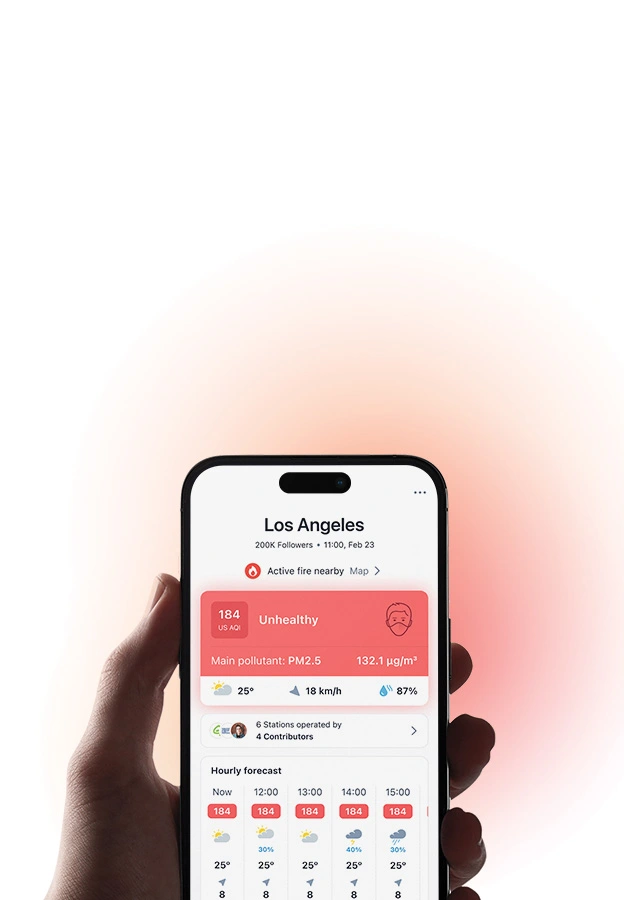


تعرف على المزيد حول جودة الهواء العالمية


تعرّف على المزيد حول تلوث الهواء في Chon Buri
Does Chon Buri have bad pollution levels?
Chon Buri is a province, or state located in the eastern region of Thailand. The capital city of this state also goes by the same name, and it is home to the major tourist destination city of Pattaya. The population numbers appear to be rising at quite a high rate over the last few years, with many Thai nationals as well as expatriates or foreign workers making their way over to Chon Buri. The registered population as of late 2018 was over 1.5 million, although it is known that there are many more inhabitants that are unregistered, particularly amongst certain groups of locals.
The etymology of the cities name comes from ancient Sanskrit as a combination of the words ‘water’ and ‘city’, hence leading to it being known as city of water, due to its coastal location as well as the historical relevance of such close proximity of these bodies of water.
Looking at some of the cities contained within the state, it is apparent that Chon Buri does indeed suffer from many pollutive issues, with cities such as Bang Lamung as well as Pattaya both coming in with elevated readings of PM2.5, although of note is that they are free from year round elevated readings of pollution, and their yearly averages tend to get skewed by particularly polluted months that let the whole year down. Some months actually manage to come in nicely within the World Health Organizations (WHO's) target goal of 10 μg/m³ or less for the best quality of air, with the closer to 0 being of course the most optimal.
Bang Lamung came in with a PM2.5 average of 23 μg/m³ over 2019, putting it into the ‘moderate’ pollution bracket, which requires a PM2.5 reading of anywhere between 12.1 to 35.4 μg/m³ to be classified as such. This reading also placed it into 720th place out of all cities ranked worldwide in 2019, a reading that whilst not overtly disastrous is still indicative of some fairly prominent pollution issues.
Pattaya also came in with a yearly average reading of 20.9 μg/m³, placing it again in the moderate ratings bracket as well as 835th out of all cities ranked worldwide. Si Racha also came in with a reading of 20.8 μg/m³, as well as the city of Chon Buri coming in at 19.5 μg/m³.
This is indicative that Chon Buri state does indeed have some air pollution related issues that need addressing, with some months rising up into dangerous levels of pollution, with the reasons as to why being discussed in short.
What are the main causes of pollution in Chon Buri?
With a rapidly growing economy, as well as a rising population and more infrastructure and urban planning being committed to the various cities in Chon Buri state, the related anthropogenic (human based) activity would subsequently be on the rise, and as preventative measures to reduce pollution come into play, so do other compounding factors to make it worse, creating a cat and mouse situation whereby the pollution levels fluctuate between getting better and worse.
With Pattaya being a major tourist destination, there would be a large amount of pollution associated with this aspect, although of note is that during the year of 2020 and beyond, the covid-19 crisis has largely stopped all forms of tourism from occurring, even restricting the movement of locals from moving around in their own country. This has had a large impact on reducing pollution levels in Chon Buri, as well as worldwide, although due to the transient nature of this period of time, 2019 will be a better guide to utilize in order to understand Chon Buri’s pollution levels.
The main causes of pollution would be from vehicle fumes, with numerous cars, motorbikes and heavy duty vehicles such as trucks, buses and lorries making their way across each of the cities, as well as travel in and out of the province. Many of these would run on outdated engines, particularly the heavy duty vehicles, notorious for the outpouring of black soot and other visible pollutants, often running on diesel fuels that give off far more pollution than newer or cleaner counterparts would.
Other causes of pollution would be industry, with thousands of factories across the region giving off smoke and haze from the use of diesel in their heavy machinery, as well as widespread use of coal to provide energy to these plants. Industrial effluence as a side effect of whatever product is being made is also a contributing factor, besides just the fumes released from the combustion of coal.
Other sources would include construction sites, with rapid growth often seeing large amounts of new infrastructure popping up and the subsequent massive increase in construction. Poorly maintained sites can leak off large amounts of fine particulate matters as well as microplastics and even heavy metals such as lead, mercury or cadmium.
Other pertinent issues would be open burning sources caused by people disposing of refuse or waste via burning out in the open, as well as crop and stubble burning caused by farmers utilizing the extremely illegal slash and burn farming methods. Despite their high level of illegality, they still continue to afflict many parts of Thailand, often taking place in hard to reach areas outside of a city’s limits, and under the cover of darkness. All of these issues added together would cause the heightened readings of PM2.5 that were recorded in the state of Chon Buri over 2019.
What are the main pollutants found in the air in Chon Buri?
With main pollution sources mostly coming from the combustion of one material or another, the subsequent fumes, smoke and haze in the air would be permeated with related forms of chemical compounds, some of which arise directly from the source, with others forming as a ‘secondary’ pollutant whereby chemicals in the air, under the right conditions, will bond together to form novel and even more dangerous forms of pollution.
Some of the main pollutants that would be found coming from vehicles would be ones such as nitrogen dioxide (NO2) and sulfur dioxide (SO2). Nitrogen dioxide is a particularly prominent culprit here, having the ability to cause damage to the lungs of people who are exposed on a daily basis as well as cause irritation to the respiratory tract and trigger off conditions such as asthma.
Other pollutants would include ones such as black carbon and volatile organic compounds (VOC's), some of which would include ones such as xylene toluene, methylene chloride, tetrachloroethylene, ethylene glycol and formaldehyde. All of these are extremely harmful to breathe, and extremely easy to do so due to their volatile nature making them reach a gaseous form at much lower temperatures as compared to many other compounds.
These are all pollutants released from the burning of organic materials, biomass and fossil fuels, as well as inorganic materials such as rubber or plastics, sometimes found emanating from industrial areas or from open burn sites.
Apart from chemical compounds, fine particulate matters or forms of PM2.5 or PM.10 would be found in the air near industrial or construction sites, with ones such as black carbon or finely ground gravel or silica dust being prominent. Both black carbon and silica dust are known to have carcinogenic properties when inhaled. These are but a few of the pollutants that would be found in the air in Chon Buri, with other novel pollutants being introduced during periods of particularly high PM2.5 readings.
When is Chon Buri at its most polluted?
Observing the data taken over 2019 once again, a distinct pattern emerges across all cities in the state of Chon Buri, with certain months having much cleaner readings of PM2.5 and with other months being considerably worse.
The months that came in with the highest readings of PM2.5, meaning that the air would be at its most permeated with smoke, haze, smog and other pollutants, were September through to December, with September being the start of a gradual decline that carries on into the next year of January, with elevated levels of pollution being present until around April or May, when the pollution levels start to abate again and the air quality improves.
To use Bang Lamung and Pattaya as an example, in Bang Lamung a clear decline is witnessed in September, with a reading of 19.1 μg/m³, followed by 26.6 μg/m³ in October and then 40.5 μg/m³ in November and finally 42.8 μg/m³ in December, making it the most polluted month of the year for this city.
Although there is some data missing in January for both of the aforementioned cities, Si Racha and Chon Buri city all had similar patterns, only with their highest readings coming in over January, indicating that this may be the most polluted month of the year, despite lacking concrete recordings for the first two cities in early 2019.
Both Si Racha and Chon Buri city had PM2.5 readings of 52.1 μg/m³ and 49.9 μg/m³ in January, making it by far the most polluted time of the year, with November and December following closely behind.
When is the air quality in Chon Buri at its best?
In contrast to the previous question, the middle portion of the year is when every single city displayed a greatly improved quality of air. June through to August all had respectable readings, many of which fell within the WHO's target goal of 10 μg/m³ or less, with 8 occurrences of this WHO target being hit across the 3 cities during those three months, as well as 3 instances of the ‘good’ ratings bracket being achieved, showing that the middle period of the year between June and August is when the air quality is at its absolute best, with the best quality of air to breathe and considerably less health issues when compared to the more polluted months.