مستوى حبوب اللقاح ومعلومات الحساسية لـ Phoenix
تقرير حبوب اللقاح والحساسية في Phoenix • 03:00, Oct 9
المؤشر

لا شيء

شجرة
لا شيء

عشب
لا شيء

الحشيش
لا شيء
 27°
27° 26 km/h
 55%
55%توقعات الحساسية اليومية
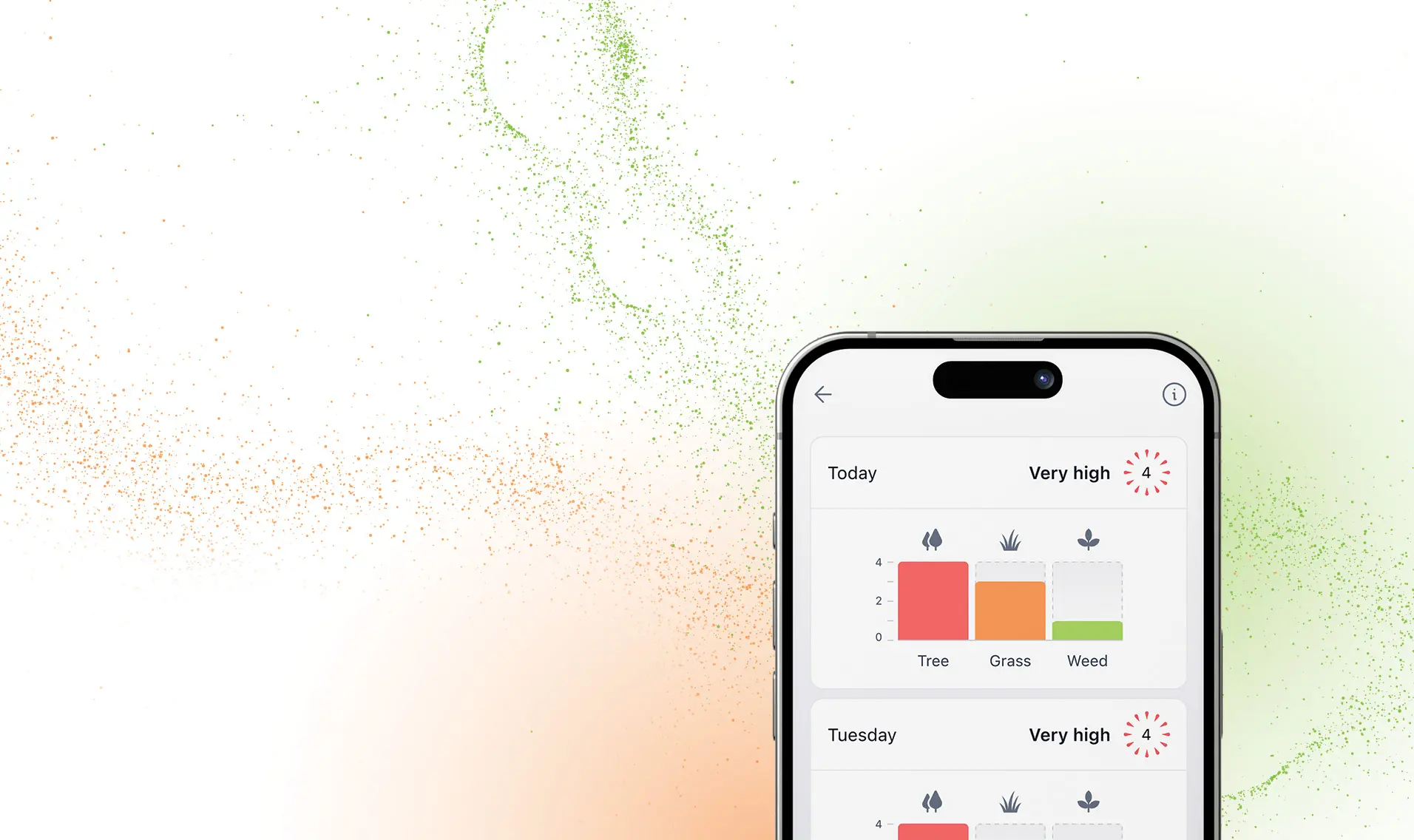
توقعات تعداد حبوب اللقاح في Phoenix
اليوم  22 km/h 37°27° 32% | السبت 21 km/h 33°25° 42% | الأحد 37 km/h29°23° 52% |

ملوثات الهواء
جودة الهواء في Phoenix اليوم
تعرف على المزيد حول حبوب اللقاح في Phoenix


احمِ نفسك من تلوث الهواء في Phoenix

راقب الهواء الذي تتنفسه
احصل على قراءات دقيقة لجودة الهواء من AirVisual ورؤى في الوقت الفعلي للحصول على هواء أنظف. شاشات تكشف عن مصادر التلوث، وتسلط الضوء على وقت الحاجة إلى استخدام جهاز تنقية الهواء.

أجهزة تنقية هواء من الدرجة الطبية
تستخدم سلسلة HealthPro Series الموثوق بها في جميع أنحاء العالم تقنية HyperHEPA. تقوم بتصفية الجسيمات متناهية الصغر التي لا تلتقطها أجهزة تنقية الهواء الأخرى، مما يوفر حماية طبية من الدرجة الأولى.

أجهزة تنقية هواء قوية وأنيقة
تجمع سلسلة Atem Series، المدمجة والقوية، بين الهندسة السويسرية والأداء العالي لتنقية الهواء، وتصفية الجسيمات متناهية الصغر باستخدام تقنية HyperHEPA.
قم بتنزيل تطبيق جودة الهواء الخاص بنا


How is the pollen count measured in Phoenix?
The pollen count in Phoenix is usually measured by different sources using different methods and instruments. But, one of the most common ways to measure the pollen count is to use a device called a rotorod sampler, which is a type of air sampler that collects airborne particles on a sticky rod that revolves at a constant speed. The core is then examined under a microscope and the number and types of pollen grains are counted and identified. The pollen count is usually expressed as the number of grains per cubic meter of air.
Another way to measure the pollen count is to use a device called a Burkard spore trap, which is a type of air sampler that draws in air through a small slit and deposits the particles on sticky tape that moves at a constant speed. The tape is then cut into segments and examined under a microscope to count and identify the pollen grains.
You can also check the current and forecasted air quality index (AQI) for Phoenix on IQAir, which shows the levels of PM2.5 and other pollutants in the air.
Is it allergy season in Phoenix now?
In Phoenix, there is always something in the air that can trigger allergies, such as pollen, dust, or mould. However, some seasons are worse than others, depending on the type of pollen and the weather conditions.
Spring is the peak season for tree pollen, which can cause symptoms such as sneezing, runny nose, itchy eyes, and coughing. Some of the common trees that produce pollen in spring are oak, ash, elm, pecan, olive, and mulberry. Spring is also when grass pollen starts to increase, especially in April and May.
Summer is the peak season for grass pollen, which can cause similar symptoms as tree pollen. Some of the common grasses that produce pollen in summer are Bermuda, Johnson, and Timothy.
Autumn is thought of as the peak season for weed pollen, which can cause severe symptoms such as sneezing, congestion, itchy eyes and fatigue. Some of the common weeds that produce pollen in autumn are ragweed, sagebrush, pigweed, and tumbleweed. This is also the time of year when mould spores start to become a problem again.
Winter can be the mildest season for pollen allergies, but it does not mean there is no pollen at all. Some trees, such as cedar and juniper, can produce pollen in winter and cause cedar fever allergies. Winter is also when dust mites and indoor allergens can cause symptoms due to more time spent indoors.
How does the pollen count in Phoenix affect people with allergies?
The pollen count in Phoenix affects people with allergies by causing them to have allergic reactions when they inhale or come into contact with the pollen. Allergic reactions are the result of the immune system overreacting to harmless substances and producing antibodies that trigger inflammation and other symptoms. The symptoms of pollen allergies can vary from person to person.
The severity of the symptoms can depend on the type and amount of pollen, the sensitivity of the person, and the length of exposure. Some people only have mild symptoms that can be managed with over-the-counter medications, while others have severe symptoms that require prescription drugs or emergency care. Some people may also develop complications from pollen allergies, such as asthma, sinus infections, ear infections or anaphylaxis. Anaphylaxis is a life-threatening allergic reaction that can cause difficulty breathing, swelling of the throat, low blood pressure, and loss of consciousness. It requires immediate medical attention and treatment with epinephrine.
How can the effects of the high pollen count in Phoenix be mitigated?
Checking the pollen forecast on IQAir.com will be beneficial as will avoiding outdoor activities when the pollen count is high. Wearing a mask, sunglasses, or a hat when going outside to protect yourself from pollen could also help reduce the effects.
Showering and changing clothes after being outdoors will help to remove any pollen that may have stuck to the clothing and hair.
Keeping windows and doors closed and using HEPA air filters or air conditioners to keep the indoor air as clean as possible.
By taking allergy medications as prescribed by your doctor or allergist before the pollen count in Phoenix gets really high, and seeking medical help if your symptoms are severe or do not improve with the treatment already prescribed.
When is the pollen count in Phoenix considered to be high?
The pollen count is considered to be high when it is above a certain threshold, which can vary depending on the source. However, a common range for a high pollen count is between 9.7 and 12.0 grams of pollen per cubic metre.
A high pollen count can also affect the air quality index (AQI), which measures the level of pollutants in the air. Pollen can be considered a particulate matter (PM) pollutant, which can affect the respiratory system and the cardiovascular system. Therefore, a high pollen count can also have negative effects on people who do not have allergies but have other health conditions, such as asthma or heart disease.
A high pollen count can be influenced by various factors, such as the weather, the season, the location, and the type of plants in the local area. Generally, warm, dry, and windy days tend to increase the pollen count, while cold, wet, and calm days often decrease it. The season also affects the pollen count, as different plants release pollen at different times of the year. For example, spring is usually the peak season for tree pollen, summer for grass pollen, and autumn for weed pollen. The location also matters as some areas may have more or fewer plants that produce pollen than others. For example, urban areas may have less pollen than rural areas due to fewer plants and more pollution. However, some urban areas may also have more non-native plants that produce more allergenic pollen than native plants. The type of plants also affects the pollen count, as some plants produce more or less pollen than others, and some plants produce more allergenic pollen than others. For example, ragweed is one of the most common and allergenic weeds that produce large amounts of pollen in late summer and autumn.
أين توجد أعلى نسبة حبوب اللقاح في Arizona؟
- Cameron3
- Canyon Day3
- Cedar Creek3
- Centennial Park3
- Colorado City3
- Cordes Lakes3
- East Fork3
- Fort Apache3
- Greenlee3
- Mayer3
- Patagonia3
- Prescott3
- Sonoita3
- Spring Valley3
- Tombstone3
- Tuba City3
- Whiteriver3
- Apache2
- Chinle2
- Chino Valley2
- Cibecue2
- Coconino2
- Dilkon2
- Douglas2
- First Mesa2
- Fort Defiance2
- Fort Valley2
- Fredonia2
- Ganado2
- Grand Canyon Village2
- Heber-Overgaard2
- Hondah2
- Houck2
- Joseph City2
- Kachina Village2
- Kaibito2
- Kayenta2
- Klagetoh2
- LeChee2
- Linden2
- Lukachukai2
- Many Farms2
- Mohave2
- Mountainaire2
- Munds Park2
- Navajo2
- North Fork2
- Page2
- Parks2
- Paulden2
- Peach Springs2
- Pine2
- Pinetop-Lakeside2
- Pirtleville2
- Prescott Valley2
- Scenic2
- Show Low2
- Snowflake2
- Springerville2
- St. Michaels2
- Sun Valley2
- Taylor2
- Tsaile2
- White Mountain Lake2
- Williams2
- Williamson2
- Window Rock2
- Young2
- Ajo1
- Alamo Lake1
- Arivaca Junction1
- Bagdad1
- Beaver Dam1
- Benson1
- Bisbee1
- Bylas1
- Cactus Flats1
- Camp Verde1
- Casas Adobes1
- Catalina Foothills1
- Central Heights-Midland City1
- Clarkdale1
- Claypool1
- Clifton1
- Cochise1
- Congress1
- Cornville1
- Corona de Tucson1
- Cottonwood, Yavapai County1
- Dewey-Humboldt1
- Doney Park1
- Drexel Heights1
- Flagstaff1
- Flowing Wells1
- Gila1
- Gila Bend1
- Globe1
- Golden Valley1
- Grand Canyon West1
- Green Valley1
- Hayden1
- Holbrook1
- Huachuca City1
- Kingman1
- Lake Montezuma1
- Lake of the Woods1
- Littlefield1
- Mammoth1
- Marana1
- Meadview1
- Mescal1
- Miami1
- Naco1
- New Kingman-Butler1
- Nogales1
- Oracle1
- Payson1
- Peridot1
- Pima1
- Rillito1
- Rio Rico1
- Roosevelt1
- Saddlebrooke1
- Safford1
- Sahuarita1
- San Carlos1
- San Manuel1
- Santa Cruz County1
- Sells1
- Sierra Vista1
- Sierra Vista Southeast1
- Six Shooter Canyon1
- Somerton1
- South Tucson1
- St. David1
- St. Johns, Apache County1
- Star Valley1
- Summit1
- Superior1
- Swift Trail Junction1
- Tanque Verde1
- Thatcher1
- Three Points1
- Timberline-Fernwood1
- Tonto Basin1
- Tonto Village1
- Tubac1
- Tucson1
- Tucson Estates1
- Vail1
- Valencia West1
- Valle Vista1
- Verde Village1
- Village of Oak Creek1
- Washington Park1
- Whetstone1
- Winslow1
- Yavapai1
- Anthem0
- Apache Junction0
- Arizona City0
- Arizona Village0
- Avenue B and C0
- Avondale0
- Avra Valley0
- Black Canyon City0
- Blackwater0
- Buckeye0
- Bullhead City0
- Carefree0
- Casa Blanca0
- Casa Grande0
- Catalina0
- Cave Creek0
- Chandler0
- Cienega Springs0
- Citrus Park0
- Coolidge0
- Desert Hills0
- Dolan Springs0
- Donovan Estates0
- Ehrenberg0
- El Mirage0
- Eloy0
- Florence0
- Fortuna Foothills0
- Fountain Hills0
- Gilbert0
- Glendale0
- Gold Canyon0
- Golden Shores0
- Goodyear0
- Goodyear Village0
- Guadalupe0
- Kearny0
- Komatke0
- Lake Havasu City0
- Litchfield Park0
- Maricopa0
- Maricopa County0
- Mesa0
- Mohave Valley0
- New River0
- Oro Valley0
- Paradise Valley0
- Parker0
- Peoria0
- Phoenix0
- Picture Rocks0
- Pima County0
- Pinal County0
- Quartzsite0
- Queen Creek0
- Queen Valley0
- Rio Verde0
- Sacaton0
- Salome0
- San Luis0
- San Tan Valley0
- Scottsdale0
- Sedona0
- Stanfield0
- Sun City0
- Sun City West0
- Sun Lakes0
- Surprise0
- Tempe0
- Tolleson0
- Wellton0
- Wenden0
- Wickenburg0
- Willow Valley0
- Youngtown0
- Yuma0