


جودة الهواء في Kochi
مؤشر جودة الهواء (AQI⁺) وتلوث الهواء بـ PM2.5 في Kochi • 17:44, أغسطس 16

ترتيب المدن الأكثر تلوثاً حالياً
ترتيب المدن الأكثر تلوثًا في الوقت الحقيقي لـ Kochi

حرائق الغابات في Kochi
معلومات فورية

Active fires
--
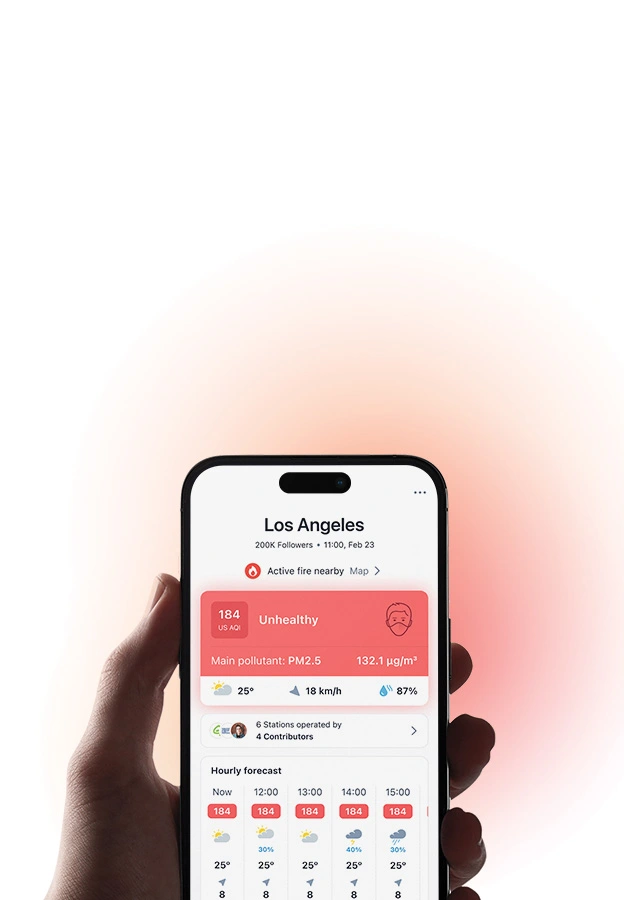


تعرف على المزيد حول جودة الهواء العالمية


تعرّف على المزيد حول تلوث الهواء في Kochi
What is the air quality like in Kochi?
Kochi is a state, or prefecture located on Shikoku island in the southern region of Japan. It is home to some 757 thousand residents, and borders on other prefectures such as Ehime and Tokushima, as well as being located adjacent to the pacific coast. It was previously known by other names such as Tosa province, with a long history of being controlled by multiple clans over different periods of time.
Nowadays, Kochi sees itself as a popular tourist destination, being home to one of 12 original Japanese castles left in the entire country, as well as hosting popular festivals and culinary events. Regarding the quality of air that Kochi sees itself subject to, overall, it is quite clean when compared to many other prefectures in Japan, with its capital city coming in with a PM2.5 reading of 11.2 μg/m³, a reading that placed it into the ‘good’ ratings category, which requires a PM2.5 reading of anywhere between 10 to 12 μg/m³ to be classified as such.
As the most polluted city in the prefecture, Kochi city still came in with a respectable reading of air quality, and whilst there were months where the PM2.5 count went up significantly, overall, it was low enough to earn its ‘good’ rating of air quality, as well as being placed in 279th place out of all cities ranked in Japan, coming in just behind other cities such as Nanao and Takamatsu.
What are some causes of air pollution in Kochi?
With many tourists both local and international coming to visit the various cities across Kochi prefecture, in the pre Covid-19 era this would have been a driving factor in elevated levels of air pollution, with large amounts of buses, cars and other vehicles being used to ferry tourists back and forth to the various sites and attractions seen across the different cities. Cars are a constant source of pollution present in Kochi and indeed many cities or states across the globe, and can release large amounts of noxious gases and dangerous particulate matter into the air. This holds particularly true for larger, or heavy duty vehicles, such as the aforementioned buses, as well as trucks and lorries giving out significantly more fumes and exhaust emissions, often running on unclean or unsustainable fuel sources such as diesel.
Other sources of air pollution would arise from the formation of ozone (O3), or smog as it is known when it accumulates in large quantities on the ground level. This can occur when the various oxides of nitrogen (NOx) that are often left behind by car exhaust become exposed to solar radiation, or excessive sunlight. This would be in abundance in the Kochi prefecture during the summer months, due to its southern location in Japan, and can have a number of adverse health effects on people exposed to it, despite it being a vital part of the upper atmosphere.
Other prominent sources that contribute to the PM2.5, PM10 and other pollutants used to calculate the AQI or air quality index, would be ones such as power plants or factories that are coal powered. The large scale burning of coal can lead to many environmental issues as well as further release of chemical compounds and fine particulate matter, some of which will be discussed in following. In closing, the two most prominent causes of pollution throughout Kochi are from vehicles and factories, as well as coal fueled power plants during the winter months due to the increased demand for energy to provide heating.
When is the air in Kochi at its most polluted?
With 7 cities on record in Kochi as of 2019 (with eleven cities in total), they all showed distinct patterns as to when the pollution levels hit their peaks, and when they were at their lowest. To use the capital city as a prime example, Kochi city showed considerable declines in its air quality from the month of January following on to February. January came in with a PM2.5 reading of 9.5 μg/m³, still within the WHO's target bracket and a respectable reading despite being on the higher end of the grouping. This was followed by a fairly significant rise to 13.5 μg/m³ in February, a reading which took it out of the WHO's target bracket and placed it into the ‘moderate’ one, which requires a PM2.5 reading between 12.1 to 35.4 μg/m³ to be classified as such.
From here on out is when the pollution levels stayed at elevated numbers, fluctuating between good and moderate readings, with February being the most polluted month of the year for Kochi city, and the period of time between February and August being when the PM2.5 count was at its highest. A similar story played out for the city of Shimanto, which had a reading of 10 μg/m³ in January followed by a jump up to 13.2 μg/m³ in February, with the pollution levels staying elevated till the month of June, which also came in with a moderate rating of pollution at 13.1 μg/m³, before dropping back down into the WHO's target bracket.
This was a reoccurring theme throughout all cities on record in Kochi prefecture, with 6 out of the 7 cities on record all having elevated pollution levels in June that then dropped to more appreciable levels in July. This is indicative that the air quality is at its worst between the months of February and June.
When is the air quality cleanest in Kochi?
After the highs seen in PM2.5 readings between the months of February through to June, almost all cities with the exception of the capital dropped back down into the 10 μg/m³ or below bracket, with 5 out of the 7 cities on record all meeting the WHO's target requirement between the months of July and December, making it the cleanest period of time throughout the entire year.
To use some examples, the city of Shimanto went from 13.1 μg/m³ in June down to 9.7 μg/m³ in July, staying around this number for the rest of the year, with an all time low of the year for the city taken in September with a reading of 7.7 μg/m³. The city of Yusuhara also told a similar story, with a moderate reading of 12.9 μg/m³ taken in June dropping down to 9.1 μg/m³ in July, and with the cleanest month of the year also coming in over September with a reading of 6.2 μg/m³.
September consistently came in as the cleanest month of the year for Kochi, with reasons such as changes in weather such as humidity levels as well as strong winds having a part to play in this. The cleanest reading throughout the state was taken in the city of Aki with a reading of 6 μg/m³. As mentioned previously, the months of July through to December (as well as January of the following year) all came in with the best readings, and it is during this time that the air throughout Kochi would be the most free from harmful particulate matter, smog, haze or any other dangerous contaminants that can cause adverse health effects to any who are exposed, particularly those who belong to vulnerable demographics amongst the population, such as the young, the elderly and those with preexisting health conditions or compromised immune systems.
What are some of the main pollutants that would be found in the air in Kochi?
With the main causes of pollution in Kochi prefecture arising from sources such as automobile use, factory and power station emissions, as well as general coal and diesel use, there would be a significant amount of related pollutants in the air. These would include ones such as the main component of soot, black carbon, which alongside other materials such as volatile organic compounds (VOC's), hydrocarbons and ammonia (NH3), find their release from the incomplete combustion of both fossil fuels and organic material.
There are two different categories of pollutants, namely primary and secondary ones. More primary ones that are released from combustion sources such as vehicle engines, heavy machinery in factories as well as power plants would include one such as carbon monoxide (CO), carbon dioxide (CO2), sulfur dioxide (SO2), nitrogen dioxide (NO2) as well as toxic metals such as lead or mercury.
Nitrogen and sulfur dioxide are both responsible for cases of acid rain, which can have severe consequences on the environment as well as man made structures. Nitrogen dioxide also finds significant release from vehicles, so much so that large quantities of it are almost always consistently found over areas that have a high volume of traffic, such as rush hour zones or busy highways. The previously mentioned black carbon has potent carcinogenic effects when inhaled, and besides being unappealing visually when allowed to accumulate, also has climate changing properties due to its ability to absorb solar radiation and convert it directly into heat. Some of the examples of VOC's that are the most prominent would be ones such as benzene, toluene, xylene, methylene chloride, formaldehyde and ethylene glycol. Not only are these harmful to human health, but due to their volatile nature, they are able to remain in a gaseous state during colder periods, making them easier to respire and thus a significant pollutive health risk to those exposed.


