Pollen count and allergy info for Fayetteville
Fayetteville pollen and allergy report • 18:00, Oct 22 Local time
Index

Low

Tree
None

Grass
None

Weed
Low
 18°
18° 9 km/h
 56%
56%Daily allergy forecast
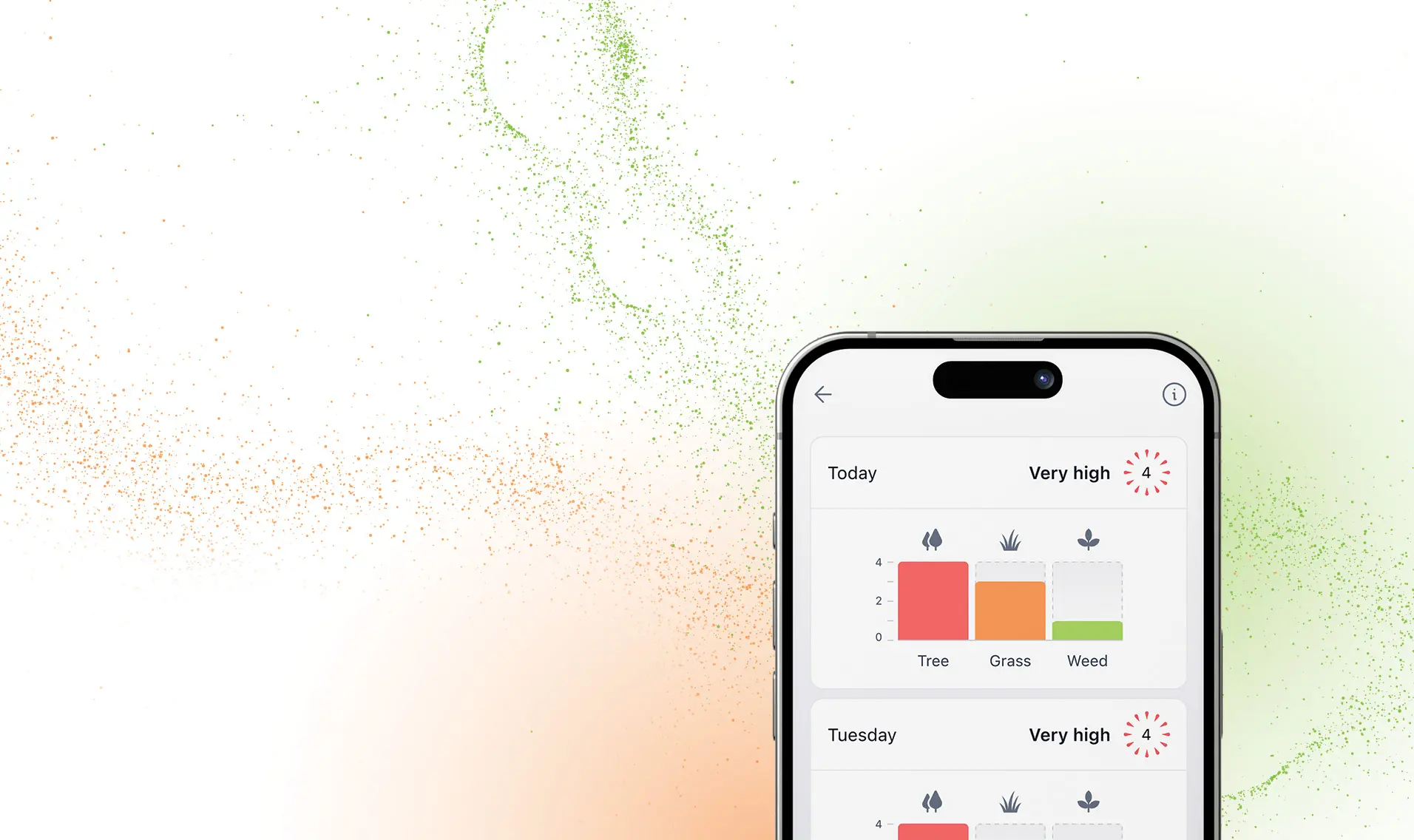
Fayetteville pollen count forecast
Today  21 km/h 20°11° 58% | Friday 22 km/h 17°11° 73% | Saturday 22 km/h22°12° 52% |

Air pollutants
Air quality in Fayetteville today
Learn more about pollen in Fayetteville


Protect yourself from air pollution in Fayetteville

Monitor the air you breathe
Get accurate AirVisual air quality readings and real-time insights for cleaner air. Monitors that reveal pollution sources, highlight when air purifier use is needed.

Medical grade air purifiers
Trusted worldwide, the HealthPro Series uses HyperHEPA technology. Filters ultrafine particles other air purifiers miss, delivering medical-grade protection.

Powerful, stylish air purifiers
Compact and powerful, the Atem Series combines Swiss engineering with high-performance air purification, filtering ultrafine particles with HyperHEPA technology.
Download our Air Quality App


What time of day is pollen worst in Fayetteville, North Carolina?
In Fayetteville, North Carolina, the patterns of pollen release and distribution are influenced by both biological rhythms of plants and local weather conditions. Plants have evolved to release pollen primarily during the early hours of the day. This release often begins at dawn and can continue until mid-morning. During these times, the pollen levels are typically at their highest.
The process of pollen release is not arbitrary; it coincides with the patterns of pollinator activity and the diurnal rhythms of the plants themselves. Insects that pollinate are most active during the warmer and brighter parts of the day, which usually fall in the morning hours. By releasing pollen in the early morning, plants increase the chances of pollen being carried by pollinators or the wind to ensure successful reproduction.
As the day progresses, pollen counts can remain elevated. However, by late afternoon, there is often a decline. This decline is partly due to the decrease in temperature. Cooler air can cause pollen to settle, as it is less buoyant in cooler temperatures. Furthermore, as the sun sets, many plants begin to prepare for the night and are less active in releasing pollen.
Weather plays a significant role in the distribution of pollen. Under calm, dry, and sunny conditions, pollen can be carried more easily by the wind, leading to a wider distribution. On the other hand, wet weather can have the opposite effect. Rain can be beneficial in reducing pollen counts as it washes pollen particles out of the air and onto the ground, which can bring temporary relief to those affected by pollen allergies.
Individuals with sensitivities to pollen should be aware of these patterns. It may be advisable for them to limit outdoor activities during peak pollen release times and to monitor local weather forecasts for conditions that may exacerbate or alleviate pollen counts. Pollen forecasts can be particularly helpful; they provide estimates of pollen levels in the air, which can help individuals plan their activities to minimise exposure to pollen.
Understanding the temporal dynamics of pollen release can be critical for managing allergies and planning outdoor activities. By recognising that early morning hours are when pollen levels are likely to peak, and that weather conditions can significantly influence these levels, individuals can take proactive steps to reduce their exposure to pollen.
What are the seasonal differences in the pollen count in Fayetteville, North Carolina?
In Fayetteville, North Carolina, the levels of pollen in the air undergo significant changes throughout the year, impacting residents with seasonal allergies. During the late winter months leading into spring, which typically spans from late February until May, there is a marked increase in pollen released by a variety of tree species. This period is when individuals sensitive to tree pollens may experience more pronounced allergic symptoms.
As spring progresses into early summer, the pollen types in the environment shift. Grass pollens become the dominant allergen, reaching peak levels during this time. This usually occurs from late spring and continues into the early part of summer. Individuals who are allergic to grass pollens may notice an increase in their allergy symptoms during this phase.
By late summer, there is often a decrease in the overall pollen count. However, this respite is usually temporary, as the latter part of the season sees a rise in weed pollens. From August through to November, weeds such as ragweed begin to release their pollens into the air, potentially causing discomfort to those with sensitivities to these types of pollens.
With the arrival of winter, there is a significant reduction in pollen counts across the area. This decrease is attributed to the dormancy of most plants during the colder months. The low temperatures and frost that characterise the winter season in Fayetteville contribute to this dormancy, thereby reducing the amount of pollen in the air. For individuals with pollen allergies, this is often a period of relief, as the cold weather limits the growth and pollen production of many plant species.
It is important for residents and visitors to be aware of these seasonal variations in pollen counts, as they can significantly affect daily life for those with allergies. Local weather forecasts often provide updates on pollen levels, which can help individuals manage their exposure and alleviate symptoms. Additionally, understanding these patterns can assist healthcare professionals in preparing for the seasonal influx of allergy-related consultations and in advising their patients accordingly.
Does the pollen count in Fayetteville, North Carolina impact the overall air quality index?
Pollen count refers to the concentration of pollen in the air over a specific period, usually measured in grains per cubic metre. In Fayetteville, North Carolina, this count can influence the AQI, a standardised indicator used to communicate how polluted the air is, or could become. The AQI considers various pollutants, including particulate matter, which is where pollen comes into play.
Particulate matter is a complex mixture of extremely small particles and liquid droplets. Particulate matter is categorised based on the size of the particles. For example, PM10 refers to particles with diameters that are 10 micrometres and smaller. These particles include dust, dirt, soot, and smoke. However, pollen grains, which can range from less than a micrometre to up to 100 micrometres in size, predominantly fall within the PM10 category. Thus, during periods of high pollen, the PM10 component of the AQI can increase, reflecting a decrease in air quality.
The relevance of pollen to air quality is particularly significant for individuals with respiratory conditions such as asthma or chronic obstructive pulmonary disease (COPD). For these individuals, the presence of pollen in the air can exacerbate their symptoms. It is not just the allergic reactions that are of concern; the mere physical presence of these particles in the airways can be irritating and can cause adverse health effects.
It is important to note that while pollen can affect the PM10 levels, it is not a year-round pollutant. Its impact is seasonal, with peaks typically occurring during spring and early summer when plants release pollen into the air as part of their reproductive cycle. The types of pollen that predominate in the atmosphere depend on the vegetation in the area and can include tree, grass, and weed pollens.
Monitoring the pollen count can provide valuable information for individuals who may be sensitive to these particles. The National Allergy Bureau provides regular reports on pollen and mould spores, which can help individuals plan their activities to minimise exposure on days when the count is particularly high.
Moreover, air quality alerts issued by local health departments or environmental agencies often include information about pollen counts, especially when these counts are expected to contribute significantly to reduced air quality. These alerts can inform the public about the potential for increased health risks and suggest precautions, such as staying indoors, using air purifiers, or wearing masks to reduce inhalation of particulate matter, including pollen.
While pollen is a natural and seasonal component of the atmosphere, its presence and concentration can be a contributing factor to the levels of particulate matter as measured by the AQI. Therefore, monitoring the pollen count in conjunction with other pollutants is essential for a comprehensive understanding of air quality and its potential impacts on health, particularly for those with existing respiratory conditions.
Is there a forecast available for the pollen count in Fayetteville, North Carolina?
For those seeking information on pollen counts in Fayetteville, North Carolina, there are resources available that provide this specific data. These resources include a variety of online platforms, such as weather forecasting websites and those dedicated to tracking allergens. These sites are designed to assist individuals who suffer from allergies by offering predictions on daily pollen levels.
The data on these websites are typically updated on a regular basis to reflect the most current conditions. Users can expect to find not only the present day's pollen levels but also forecasts that extend a few days into the future, usually covering a span of three to five days. This forward-looking information proves useful for individuals who need to plan their outdoor activities around the times when pollen release is at its peak. It also allows them to take any necessary precautions, like adjusting medication or scheduling time indoors, to manage allergy symptoms more effectively.
Additionally, these forecasts often include details about the types of pollen that are prevalent, such as tree, grass, or weed pollen. Each type affects allergy sufferers differently, and knowing which type is in higher concentration can be crucial for those with specific sensitivities.
These forecasts are generated using a combination of methods. Scientific instruments measure the number of pollen grains in the air, and this data is then analysed alongside local plant phenology, historical trends, and current weather conditions to predict future pollen counts. Weather factors, such as wind, rain, and temperature, have significant impacts on pollen distribution and concentration, and thus are integral to the forecasting model.
It is also important to note that while these forecasts aim to be as accurate as possible, they are predictions and subject to change. Pollen levels can fluctuate rapidly with changes in weather conditions, and unforeseen weather events can lead to higher or lower levels than predicted.
For the most accurate and current information, individuals are advised to check these forecasts regularly, as updates may occur throughout the day to reflect any changes in the predicted pollen levels. Additionally, local news outlets and health departments sometimes provide updates on air quality and pollen counts, which can complement the information found online.
In Fayetteville, as in many regions, the pollen count can have a considerable impact on the quality of life for those with allergies. The availability of this information and regular updates are therefore crucial for allowing individuals to manage their health and activities effectively.
Does anything reduce the pollen count in Fayetteville, North Carolina?
Pollen is a common cause of allergies and can be a significant concern for those living in areas with high levels of plant growth, such as Fayetteville, North Carolina. Various factors, both natural and human-influenced, can affect the pollen count in the environment.
One of the primary natural factors that contribute to the reduction of pollen count is rain. Rainfall can effectively remove pollen particles from the air, causing them to settle to the ground. This is particularly relevant in the spring and early summer when pollen counts are typically at their highest. During these periods, a heavy downpour can temporarily clear the air of pollen, offering respite to those who suffer from allergies.
Urban planning can also play a role in managing pollen levels in the environment. By selecting low-pollen-producing plants for public spaces and private gardens, local councils can contribute to lower pollen counts in the area. These plants are chosen based on their lower tendency to release pollen into the air and are often female plants, as they do not produce pollen. This type of planting strategy requires cooperation from both public and private sectors and can lead to a significant improvement in local air quality.
Air purifiers represent another method to control pollen, particularly indoors. These devices can filter pollen from the indoor environment, which is beneficial as people spend a considerable amount of time inside their homes or workplaces. High-efficiency particulate air (HEPA) filters are especially effective at trapping pollen and other allergens, thereby reducing the concentration of these particles in the air inside buildings.
On a broader scale, air quality regulations and environmental policies can indirectly influence pollen production. Policies aimed at reducing pollution can lead to healthier plant growth, which in turn may affect the volume and type of pollen produced. While this relationship is complex and influenced by many factors, including climate change and agricultural practices, it is clear that a cleaner environment can have multiple benefits for the ecosystem and for human health.
The factors mentioned interact in various ways to influence the pollen count. It is important to consider a combination of approaches for managing pollen levels, including natural solutions like rain, human-led interventions such as urban planning and the use of air purifiers, and broader environmental policies aimed at reducing pollution. Each of these can contribute to making places like Fayetteville more comfortable for those affected by pollen.
Where is the highest pollen level in North Carolina?
- Banner Elk2
- Burnsville2
- Yancey County2
- Aberdeen1
- Advance1
- Ahoskie1
- Alamance County1
- Albemarle1
- Alleghany County1
- Andrews1
- Angier1
- Apex1
- Archdale1
- Archer Lodge1
- Asheboro1
- Asheville1
- Atlantic Beach1
- Avery County1
- Avery Creek1
- Ayden1
- Badin1
- Bakersville1
- Bald Head Island1
- Balfour1
- Barker Heights1
- Barnardsville1
- Bath1
- Bayboro1
- Bayshore1
- Beaufort1
- Belhaven1
- Belmont1
- Belville1
- Benson1
- Bent Creek1
- Bermuda Run1
- Bessemer City1
- Bethel1
- Bethlehem1
- Beulaville1
- Biltmore Forest1
- Biscoe1
- Black Mountain1
- Bladen County1
- Bladenboro1
- Blowing Rock1
- Boiling Spring Lakes1
- Boiling Springs1
- Bolivia1
- Boone1
- Boonville1
- Bostic1
- Brevard1
- Brices Creek1
- Broad Creek1
- Broadway1
- Brogden1
- Brunswick1
- Bryson City1
- Buies Creek1
- Buncombe1
- Burgaw1
- Burke County1
- Burlington1
- Butner1
- Buxton1
- Cabarrus County1
- Cajah's Mountain1
- Calabash1
- Calypso1
- Camden1
- Candor1
- Canton1
- Cape Carteret1
- Carolina Beach1
- Carolina Shores1
- Carrboro1
- Carteret County1
- Carthage1
- Cary1
- Castle Hayne1
- Caswell1
- Caswell Beach1
- Catawba County1
- Cedar Point1
- Chadbourn1
- Chapel Hill1
- Charlotte1
- Chatham County1
- Cherokee1
- Cherryville1
- China Grove1
- Claremont1
- Clay County1
- Clayton1
- Clemmons1
- Clinton1
- Clyde1
- Coats1
- Columbia1
- Columbus1
- Concord1
- Connelly Springs1
- Conover1
- Cordova1
- Cornelius1
- Cove Creek1
- Cramerton1
- Creedmoor1
- Cricket1
- Cullowhee1
- Cumberland County1
- Currituck1
- Dallas1
- Dana1
- Danbury1
- Davidson1
- Davie County1
- Denton1
- Denver1
- Dobson1
- Drexel1
- Dunn1
- Durham1
- East Flat Rock1
- East Rockingham1
- East Spencer1
- Eastover1
- Eden1
- Edenton1
- Edneyville1
- Elizabeth City1
- Elizabethtown1
- Elkin1
- Ellerbe1
- Elm City1
- Elon1
- Elroy1
- Emerald Isle1
- Enfield1
- Enochville1
- Erwin1
- Etowah1
- Fairfield Harbour1
- Fairmont1
- Fairplains1
- Fairview, Buncombe County1
- Faison1
- Farmville1
- Fayetteville1
- Fearrington Village1
- Flat Rock, Henderson County1
- Flat Rock, Surry County1
- Fletcher1
- Forest City1
- Forest Oaks1
- Forsyth County1
- Foscoe1
- Four Oaks1
- Franklin1
- Franklinton1
- Franklinville1
- Fremont1
- Fruitland1
- Fuquay-Varina1
- Gamewell1
- Garner1
- Garysburg1
- Gaston1
- Gaston County1
- Gastonia1
- Gatesville1
- Gibsonville1
- Glen Alpine1
- Glen Raven1
- Goldsboro1
- Gorman1
- Graham1
- Graham County1
- Granite Falls1
- Granite Quarry1
- Granville County1
- Green Level1
- Greensboro1
- Greenville1
- Grifton1
- Grimesland1
- Guilford County1
- Half Moon1
- Halifax1
- Hallsboro1
- Hamlet1
- Hampstead1
- Harkers Island1
- Harnett County1
- Harrisburg1
- Havelock1
- Haw River1
- Hayesville1
- Hays1
- Haywood County1
- Hemby Bridge1
- Henderson1
- Hendersonville1
- Hertford1
- Hickory1
- Hiddenite1
- High Point1
- Highlands1
- Hildebran1
- Hillsborough1
- Hoke County1
- Holly Ridge1
- Holly Springs1
- Hoopers Creek1
- Hope Mills1
- Horse Shoe1
- Hudson1
- Huntersville1
- Icard1
- Indian Trail1
- Jackson1
- Jacksonville1
- James City1
- Jamestown1
- Jamesville1
- Jefferson1
- Johnston County1
- Jones County1
- Jonesville1
- Kannapolis1
- Kenansville1
- Kenly1
- Kernersville1
- Kill Devil Hills1
- King1
- Kings Grant1
- Kings Mountain1
- Kinston1
- Kitty Hawk1
- Knightdale1
- Kure Beach1
- La Grange1
- Lake Junaluska1
- Lake Lure1
- Lake Norman of Catawba1
- Lake Norman of Iredell1
- Lake Park1
- Lake Waccamaw1
- Landis1
- Laurel Hill1
- Laurel Park1
- Laurinburg1
- Leggett1
- Leland1
- Lenoir1
- Lenoir County1
- Lewisville1
- Lexington1
- Liberty1
- Lillington1
- Lincoln County1
- Lincolnton1
- Locust1
- Long View1
- Louisburg1
- Lowell1
- Lowesville1
- Lucama1
- Lumberton1
- Macon County1
- Madison1
- Maggie Valley1
- Maiden1
- Manteo1
- Mar-Mac1
- Marion1
- Mars Hill1
- Marshall1
- Marshville1
- Marvin1
- Matthews1
- Maury1
- Maxton1
- Mayodan1
- Maysville1
- McDowell County1
- McLeansville1
- Mebane1
- Mecklenburg1
- Midland1
- Midway1
- Millers Creek1
- Mills River1
- Mineral Springs1
- Mint Hill1
- Mocksville1
- Moncure1
- Monroe1
- Montgomery County1
- Mooresville1
- Moravian Falls1
- Morehead City1
- Morganton1
- Morrisville1
- Mount Airy1
- Mount Gilead1
- Mount Holly1
- Mount Olive1
- Mount Pleasant1
- Mountain Home1
- Mountain View1
- Moyock1
- Mulberry1
- Murfreesboro1
- Murphy1
- Murraysville1
- Myrtle Grove1
- Nags Head1
- Nashville1
- Navassa1
- Neuse Forest1
- New Bern1
- New Hanover1
- Newland1
- Newport1
- Newton1
- Norlina1
- North Wilkesboro1
- Northampton County1
- Northchase1
- Northlakes1
- Norwood1
- Oak Island1
- Oak Ridge1
- Oakboro1
- Ogden1
- Onslow County1
- Orange County1
- Oxford1
- Pasquotank County1
- Pembroke1
- Perquimans County1
- Person1
- Pilot Mountain1
- Pine Knoll Shores1
- Pine Level1
- Pinebluff1
- Pinehurst1
- Pinetops1
- Pineville1
- Piney Green1
- Pitt County1
- Pittsboro1
- Plain View1
- Pleasant Garden1
- Pleasant Hill1
- Plymouth1
- Polkton1
- Princeton1
- Princeville1
- Pumpkin Center1
- Raeford1
- Raleigh1
- Ramseur1
- Randleman1
- Ranlo1
- Red Oak1
- Red Springs1
- Reidsville1
- Rhodhiss1
- Richlands1
- Richmond County1
- River Bend1
- River Road1
- Roanoke Rapids1
- Robbins1
- Robbinsville1
- Robersonville1
- Rockfish1
- Rockingham1
- Rockingham County1
- Rockwell1
- Rocky Mount1
- Rocky Point1
- Rolesville1
- Rose Hill1
- Roseboro1
- Rougemont1
- Rowan County1
- Rowland1
- Roxboro1
- Royal Pines1
- Rural Hall1
- Rutherford College1
- Rutherford County1
- Rutherfordton1
- Salem1
- Salisbury1
- Sampson County1
- Sanford1
- Sawmills1
- Saxapahaw1
- Scotland Neck1
- Sea Breeze1
- Selma1
- Seven Lakes1
- Shallotte1
- Sharpsburg1
- Shelby1
- Siler City1
- Silver Lake1
- Skippers Corner1
- Smithfield1
- Sneads Ferry1
- Snow Hill1
- South Henderson1
- South Mills1
- South Rosemary1
- Southern Pines1
- Southern Shores1
- Southmont1
- Southport1
- Sparta1
- Spencer1
- Spindale1
- Spring Hope1
- Spring Lake1
- Springdale1
- Spruce Pine1
- St. James1
- St. Pauls1
- St. Stephens1
- Stallings1
- Stanfield1
- Stanley1
- Statesville1
- Stedman1
- Stokesdale1
- Stoneville1
- Stony Point1
- Summerfield1
- Sunset Beach1
- Surf City1
- Surry1
- Swain County1
- Swan Quarter1
- Swannanoa1
- Swansboro1
- Swepsonville1
- Sylva1
- Tabor City1
- Tar Heel1
- Tarboro1
- Taylorsville1
- Thomasville1
- Toast1
- Tobaccoville1
- Transylvania1
- Trent Woods1
- Trenton1
- Trinity1
- Troutman1
- Troy1
- Tryon1
- Tyro1
- Union County1
- Unionville1
- Valdese1
- Valle Crucis1
- Valley Hill1
- Vander1
- Wadesboro1
- Wake1
- Wake Forest1
- Walkertown1
- Wallace1
- Wallburg1
- Walnut Cove1
- Wanchese1
- Warrenton1
- Warsaw1
- Washington1
- Waxhaw1
- Waynesville1
- Weaverville1
- Weddington1
- Welcome1
- Weldon1
- Wendell1
- Wentworth1
- Wesley Chapel1
- West Canton1
- West Jefferson1
- West Marion1
- Westport1
- Whispering Pines1
- White Plains1
- Whiteville1
- Whittier1
- Wilkes County1
- Wilkesboro1
- Williamston1
- Wilmington1
- Wilson1
- Wilson's Mills1
- Windsor1
- Wingate1
- Winston-Salem1
- Winterville1
- Winton1
- Woodfin1
- Wrightsboro1
- Wrightsville Beach1
- Yadkinville1
- Yanceyville1
- Youngsville1
- Zebulon1