Pollen count and allergy info for Jersey City
Jersey City pollen and allergy report • 03:00, Oct 21 Local time
Index

None

Tree
None

Grass
None

Weed
None
 8°
8° 18 km/h
 79%
79%Daily allergy forecast
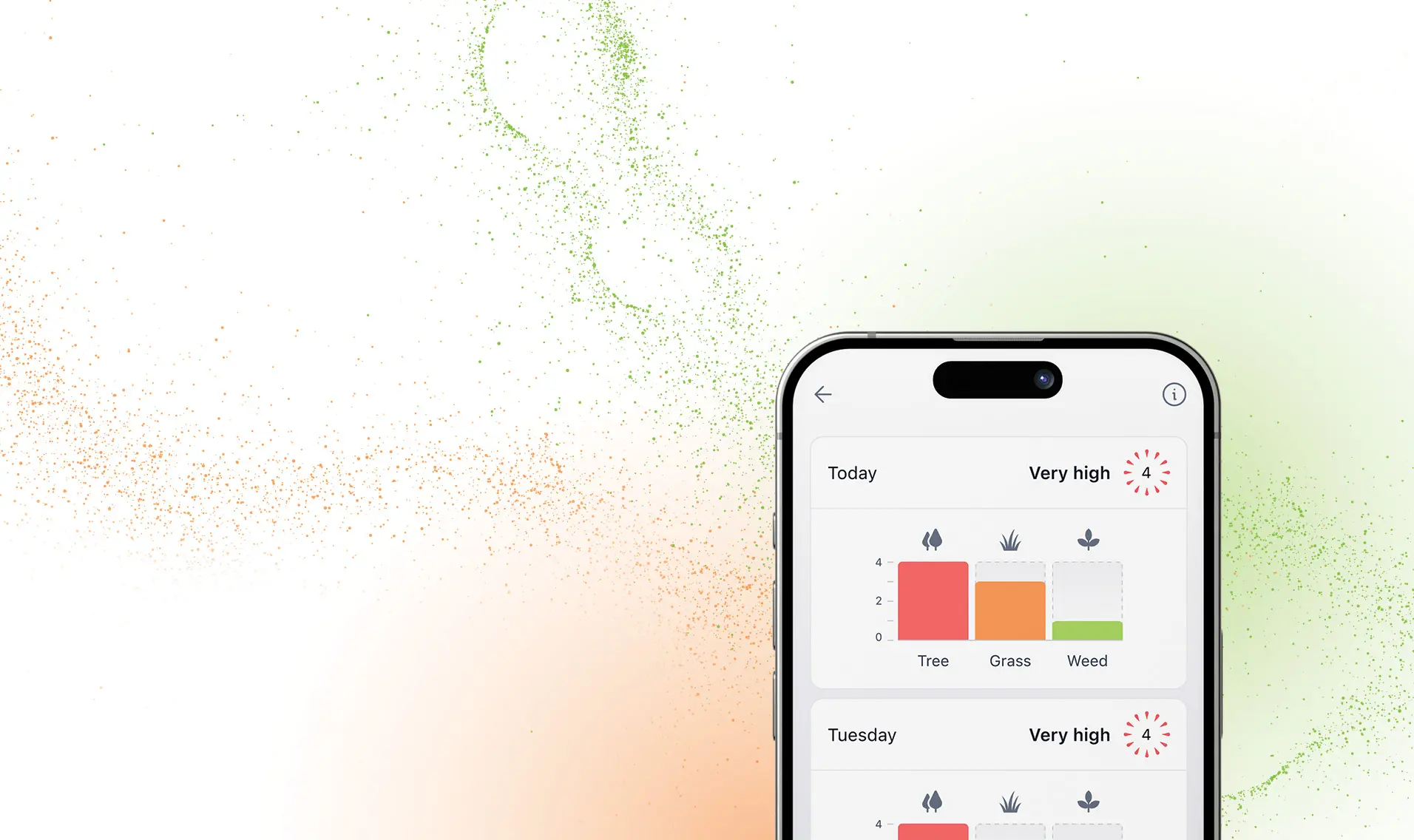
Jersey City pollen count forecast
Today  24 km/h 16°7° 67% | Thursday  27 km/h 17°8° 61% | Friday  23 km/h16°5° 38% |

Air pollutants
Air quality in Jersey City today
Learn more about pollen in Jersey City


Protect yourself from air pollution in Jersey City

Monitor the air you breathe
Get accurate AirVisual air quality readings and real-time insights for cleaner air. Monitors that reveal pollution sources, highlight when air purifier use is needed.

Medical grade air purifiers
Trusted worldwide, the HealthPro Series uses HyperHEPA technology. Filters ultrafine particles other air purifiers miss, delivering medical-grade protection.

Powerful, stylish air purifiers
Compact and powerful, the Atem Series combines Swiss engineering with high-performance air purification, filtering ultrafine particles with HyperHEPA technology.
Download our Air Quality App


Is the pollen count in Jersey City higher during specific seasons?
The pollen count in Jersey City fluctuates throughout the year, influenced mainly by the changing seasons. Spring is one of the most notable periods for high pollen counts. Several types of trees contribute to this increase. Oak, birch, and maple trees release pollen that can travel far and wide. This is significant because many people in Jersey City and the surrounding areas suffer from tree pollen allergies during this time. Even those who haven't previously experienced symptoms may find themselves sneezing or with watery eyes as the pollen count rises.
Following the tree pollen season, grasses become the next significant contributor to pollen counts as the late spring transitions into early summer. During this time, people sensitive to grass pollen may experience symptoms. The types of grasses that commonly grow in the Jersey City area include Bermuda, Timothy, and Kentucky bluegrass, each releasing their pollen at different times, thereby prolonging the grass pollen season. While not as impactful as tree pollen, grass pollen still warrants attention, especially for those who spend time outdoors.
Autumn is another season that witnesses a surge in pollen counts, though the contributors differ from those in spring and summer. During this season, weeds are mainly responsible for elevated levels of pollen in the air. Ragweed is one of the most common sources of autumn pollen, with a single plant capable of producing up to a billion pollen grains. Other weeds, such as nettle and sorrel, also add to the pollen count. In Jersey City, areas with open fields and less developed spaces tend to report higher levels of weed pollen during autumn.
Winter usually provides a respite from high pollen counts. Most plants and trees enter a dormant phase during these colder months. Pollen production drops, leading to cleaner air from the perspective of pollen counts. This is particularly beneficial for people who suffer from allergies as it offers a break from the often-relentless symptoms experienced in the other seasons. However, it's worth noting that indoor allergens like dust and pet dander may become more problematic during winter, as people spend more time indoors.
The cyclical nature of pollen count corresponding with the seasons is an essential factor for residents of Jersey City to consider, especially those who are sensitive to different types of pollen. Understanding the primary sources of pollen in each season can inform strategies for minimizing exposure and managing symptoms effectively.
Does the pollen count in Jersey City compare between different times of the day?
The phenomenon of varying pollen counts throughout the day is influenced by multiple factors, such as the types of plants in the area, meteorological conditions, and the local landscape. In Jersey City, like many other places, the early morning hours tend to be the period of the highest pollen release. This is largely because many plants have adapted to release their pollen at this time to maximise the chance of pollination. Pollen grains are lighter than air, so they rely on external forces for distribution, such as wind. Early mornings often bring the sort of calm, dew-laden air that allows pollen grains to disperse with ease.
Wind is another crucial variable in this equation. Wind patterns can affect the distribution of pollen at different hours. Typically, wind speed and direction change with the time of day. Early morning winds may disperse pollen to wider areas, leading to a more uniform distribution across Jersey City. This wide dispersion means that even those who live some distance from major sources of pollen—like parks, gardens, or open fields—may still experience higher pollen exposure during these early hours.
While the early morning hours are the peak time for pollen release, the afternoon and evening see a decline in pollen counts. During this time, air pressure and temperatures rise, causing the pollen to settle. Lower counts in the afternoon and evening can offer respite to those who suffer from pollen allergies, providing an opportunity to open windows or spend more time outdoors without severe symptoms. However, it's important to note that this general pattern can be disrupted on warm and windy days. On such days, the pollen grains can remain airborne for longer periods, keeping counts high throughout the day.
Finally, human activities can also influence pollen counts at different times. For example, morning and evening commutes can stir up pollen settled on roadways, leading to localised spikes. This is something that those who are particularly sensitive to pollen might wish to bear in mind when planning their day.
By understanding how the pollen count varies at different times, residents of Jersey City can make informed decisions about when to venture outdoors and when to take preventive measures to manage their symptoms. This understanding is critical for people with allergies or respiratory issues, but can also be valuable for the general population seeking to maintain a good quality of life during high-pollen seasons.
Does the pollen count in Jersey City impact the overall air quality index?
Pollen count and the Air Quality Index (AQI) are two distinct metrics that provide different types of information. The AQI primarily focuses on levels of pollutants such as particulate matter, ozone, sulphur dioxide, and nitrogen dioxide. Pollen count, meanwhile, quantifies the concentration of pollen particles in the air per cubic metre. It's crucial to note that pollen doesn't directly influence the AQI values, which are calculated based on the aforementioned pollutants.
However, it's essential to acknowledge the broader implications of pollen count for air quality, particularly for those sensitive to pollen. People with allergies or respiratory conditions might find that high pollen counts exacerbate their symptoms. In this context, air quality becomes a matter of personal health, not just an environmental metric. It isn't uncommon during peak pollen seasons for allergy sufferers to experience respiratory distress, which could range from mild breathing difficulties to severe complications that might require medical intervention.
Moreover, high pollen counts can contribute to secondary air quality issues. For example, particulate matter can bind with pollen particles, potentially making the particulates more irritating to the respiratory system. This interaction, although not typically accounted for in AQI calculations, can contribute to an overall decline in air quality, particularly for vulnerable populations.
It's also worth noting the influence of meteorological factors on both pollen count and air quality. Weather conditions like wind, temperature, and humidity can impact how pollen behaves. Wind can carry pollen over long distances, sometimes even from rural to urban areas. On the other hand, rainfall often lowers pollen counts temporarily, providing temporary relief but possibly leading to an uptick in fungal spores, another potential allergen.
It's crucial to note that while the AQI is a widely-recognised measure of air quality, its scope is limited to specific pollutants. Pollen count serves as an additional layer of information that, although not incorporated into AQI, undeniably impacts air quality from a health perspective, especially for those with pollen sensitivities.
Therefore, while pollen counts in Jersey City do not directly affect the AQI, they do play a role in influencing the overall air quality, particularly for sensitive individuals and during certain weather conditions.
How does the pollen count in Jersey City vary between urban and suburban areas?
Pollen counts exhibit significant variations when comparing urban to suburban areas of Jersey City. These disparities are due to several factors that contribute to the concentration and types of pollen present in each setting.
Urban AreasUrban zones generally have lower pollen counts for a variety of reasons. First, the density of buildings and paved surfaces limits the availability of soil where vegetation, especially plants that produce high amounts of pollen, can grow. Second, pollution from cars and industry can inhibit the release of pollen and may even neutralise some of it. Third, the "heat island" effect, a phenomenon where urban regions are warmer than their surrounding areas, can also discourage pollen release.
However, it is crucial to mention that lower pollen counts in urban zones don't necessarily mean zero pollen. Parks, gardens, and even small green spaces can be sources of localized spikes in pollen counts. These green spaces can host trees like oak or birch, grasses, and weeds that produce pollen grains, leading to elevated levels in specific locations. Urban planning decisions, such as the choice of allergy-friendly trees in public spaces, can also play a role.
Suburban AreasOn the other hand, suburban areas typically present a different scenario. There are fewer buildings and more open spaces, gardens, and wooded areas. These environments are conducive to a wide range of vegetation, including trees, grasses, and weeds that release pollen. Consequently, pollen counts are usually higher and more diverse in suburban settings.
Factors like wind patterns and proximity to water bodies can also impact pollen levels. Wind can carry pollen from plants situated in suburban zones to adjacent areas, increasing the geographical reach of pollen dispersal. Water bodies like rivers or lakes can have a moderating influence on the local climate, which in turn can affect the types and amounts of vegetation in the vicinity, thereby influencing pollen counts.
MicroclimatesBoth urban and suburban areas can have microclimates that further influence pollen counts. A microclimate is a local atmospheric zone where the climate differs from the surrounding areas. For example, a sun-facing slope in a suburban area might support vegetation that thrives in dry conditions, leading to a different pollen profile than a shaded or damp location.
By understanding these variations in pollen counts between urban and suburban areas, individuals can make informed decisions about outdoor activities, particularly if they are sensitive to pollen. This knowledge is essential for managing exposure and for healthcare providers advising on respiratory health.
How does the pollen count in Jersey City affect people with allergies?
The pollen count in Jersey City holds a significant influence on individuals with allergies. Those who are prone to allergies experience notable impacts when the pollen count is high. Common allergic reactions consist of sneezing, a runny or congested nose, as well as itching and watering of the eyes. Fatigue can also set in due to the body's response to allergens. Notably, individuals with heightened sensitivity may even encounter more pronounced symptoms, such as aggravated asthma or skin irritations. Therefore, it becomes evident that the pollen count plays a crucial role in the well-being of allergy sufferers.
During periods when the pollen count reaches its peak, people who are allergic often resort to adopting measures that alleviate their discomfort. Remaining indoors serves as a practical solution, allowing them to minimize their exposure to the pollen-filled outdoor air. Employing air purifiers within their living spaces aids in cleansing the indoor environment, thus mitigating the entry of pollen particles. Additionally, many individuals seek relief through the use of antihistamines, which work to counteract the body's reaction to allergens. These strategies are essential for managing the symptoms and enhancing the quality of life for those affected by allergies.
Given the diverse range of responses to allergens, it is crucial for individuals to consider seeking medical advice. Professional guidance ensures effective symptom management and tailored treatment approaches. Medical professionals possess the expertise required to provide personalized recommendations that cater to an individual's specific needs. By consulting medical experts, allergy sufferers can ascertain the most suitable interventions that align with their health requirements.
In conclusion, the pollen count in Jersey City exerts a considerable impact on individuals grappling with allergies. The repercussions range from common symptoms like sneezing and a runny nose to more severe reactions such as aggravated asthma or skin irritations. Taking measures such as remaining indoors, utilizing air purifiers, and employing antihistamines contributes significantly to alleviating discomfort during high pollen count periods. However, it remains imperative for those afflicted by allergies to seek medical advice for tailored guidance in managing symptoms and enhancing overall well-being.
Where is the highest pollen level in New Jersey?
- Absecon1
- Allendale1
- Allentown1
- Alloway1
- Alpha1
- Alpine1
- Annandale1
- Asbury Park1
- Ashland1
- Atco1
- Atlantic1
- Atlantic City1
- Atlantic Highlands1
- Audubon1
- Audubon Park1
- Avalon1
- Avenel1
- Avon-by-the-Sea1
- Barclay1
- Barnegat1
- Barrington1
- Beach Haven1
- Beach Haven West1
- Beachwood1
- Beattystown1
- Beckett1
- Bedminster1
- Belford1
- Bellmawr1
- Belmar1
- Belvidere1
- Bergen County1
- Bergenfield1
- Berlin1
- Bernardsville1
- Beverly1
- Blackwells Mills1
- Blackwood1
- Bloomingdale1
- Bogota1
- Boonton1
- Bordentown1
- Bound Brook1
- Bradley Beach1
- Bradley Gardens1
- Brass Castle1
- Bridgeton1
- Bridgewater Center1
- Brielle1
- Brigantine1
- Brookdale1
- Brooklawn1
- Brookside1
- Browns Mills1
- Brownville1
- Budd Lake1
- Buena1
- Burleigh1
- Burlington1
- Burlington County1
- Butler1
- Byram Center1
- Caldwell1
- Califon1
- Camden1
- Camden County1
- Cape May1
- Cape May Court House1
- Carlstadt1
- Carneys Point1
- Carteret1
- Cedar Glen Lakes1
- Cedar Glen West1
- Chatham1
- Cherry Hill Mall1
- Chesilhurst1
- Chester1
- Clayton1
- Clearbrook1
- Clementon1
- Cliffside Park1
- Cliffwood Beach1
- Clifton1
- Clinton1
- Closter1
- Collings Lakes1
- Collingswood1
- Colonia1
- Columbia1
- Concordia1
- Connecticut Farms1
- Country Lake Estates1
- Cranbury1
- Crandon Lakes1
- Cranford1
- Cresskill1
- Crestwood Village1
- Dayton1
- Demarest1
- Dover1
- Dover Beaches North1
- Dover Beaches South1
- Dumont1
- Dunellen1
- East Franklin1
- East Freehold1
- East Millstone1
- East Newark1
- East Orange1
- East Rutherford1
- Eatontown1
- Echelon1
- Edgewater1
- Egg Harbor City1
- Elizabeth1
- Ellisburg1
- Elmer1
- Elmwood Park1
- Elwood1
- Emerson1
- Englewood1
- Englewood Cliffs1
- Englishtown1
- Erma1
- Essex County1
- Essex Fells1
- Estell Manor1
- Fair Haven1
- Fair Lawn1
- Fairton1
- Fairview, Monmouth County1
- Fanwood1
- Far Hills1
- Farmingdale1
- Finderne1
- Flemington1
- Florence1
- Florham Park1
- Folsom1
- Fords1
- Forked River1
- Fort Dix1
- Fort Lee1
- Franklin1
- Franklin Center1
- Franklin Lakes1
- Franklin Park1
- Franklinville1
- Freehold1
- Frenchtown1
- Garfield1
- Garwood1
- Gibbsboro1
- Gibbstown1
- Gillette1
- Glassboro1
- Glen Gardner1
- Glen Ridge1
- Glen Rock1
- Glendora1
- Gloucester1
- Gloucester City1
- Golden Triangle1
- Great Notch1
- Green Knoll1
- Greentree1
- Groveville1
- Guttenberg1
- Hackensack1
- Hackettstown1
- Haddon Heights1
- Haddonfield1
- Haledon1
- Hamburg1
- Hamilton Square1
- Hammonton1
- Hampton1
- Harrington Park1
- Harrison1
- Hasbrouck Heights1
- Haworth1
- Hawthorne1
- Heathcote1
- Helmetta1
- High Bridge1
- Highland Lakes1
- Highland Park1
- Highlands1
- Hightstown1
- Hillsdale1
- Ho-Ho-Kus1
- Hoboken1
- Holiday City-Berkeley1
- Holiday City South1
- Holiday Heights1
- Hopatcong1
- Hopelawn1
- Hopewell1
- Hunterdon1
- Interlaken1
- Iselin1
- Island Heights1
- Jamesburg1
- Jobstown1
- Juliustown1
- Kean University1
- Keansburg1
- Kearny1
- Keasbey1
- Kendall Park1
- Kenilworth1
- Kenvil1
- Keyport1
- Kingston1
- Kingston Estates1
- Kinnelon1
- Lake Como1
- Lake Mohawk1
- Lake Telemark1
- Lakehurst1
- Lakewood1
- Lambertville1
- Laurel Lake1
- Laurel Springs1
- Laurence Harbor1
- Lavallette1
- Lawnside1
- Lebanon1
- Leisure Knoll1
- Leisure Village1
- Leisure Village East1
- Leisure Village West1
- Leisuretowne1
- Leonardo1
- Leonia1
- Lincoln Park1
- Lincroft1
- Linden1
- Lindenwold1
- Linwood1
- Little Ferry1
- Little Silver1
- Llewellyn Park1
- Lodi1
- Long Branch1
- Long Valley1
- Madison1
- Madison Park1
- Magnolia1
- Manahawkin1
- Manasquan1
- Manville1
- Margate City1
- Marlboro1
- Marlton1
- Martinsville1
- Matawan1
- Mays Landing1
- Maywood1
- McGuire AFB1
- Medford Lakes1
- Mendham1
- Mercer County1
- Mercerville1
- Merchantville1
- Metuchen1
- Middlebush1
- Middlesex1
- Middlesex County1
- Midland Park1
- Milford1
- Millington1
- Milltown1
- Millville1
- Monmouth1
- Monmouth Beach1
- Monmouth Junction1
- Montclair State University1
- Montvale1
- Moonachie1
- Moorestown-Lenola1
- Morganville1
- Morris1
- Morris Plains1
- Morristown1
- Mount Arlington1
- Mount Ephraim1
- Mountain Lakes1
- Mountainside1
- Mullica Hill1
- Mystic Island1
- National Park1
- Navesink1
- Neptune City1
- Netcong1
- New Brunswick1
- New Egypt1
- New Milford1
- New Providence1
- New Vernon1
- Newark1
- Newfield1
- Newfoundland1
- Newton1
- North Arlington1
- North Beach Haven1
- North Caldwell1
- North Cape May1
- North Haledon1
- North Middletown1
- North Plainfield1
- North Wildwood1
- Northfield1
- Northvale1
- Norwood1
- Oak Valley1
- Oakhurst1
- Oakland1
- Oaklyn1
- Ocean Acres1
- Ocean City1
- Ocean County1
- Ocean Gate1
- Ocean Grove1
- Oceanport1
- Oceanville1
- Ogdensburg1
- Old Bridge1
- Old Tappan1
- Olivet1
- Oradell1
- Oxford1
- Packanack Lake1
- Palermo1
- Palisades Park1
- Palmyra1
- Paramus1
- Park Ridge1
- Parsippany1
- Passaic1
- Paterson1
- Paulsboro1
- Peapack and Gladstone1
- Pemberton1
- Pemberton Heights1
- Pennington1
- Penns Grove1
- Pennsville1
- Perth Amboy1
- Phillipsburg1
- Pine Beach1
- Pine Brook1
- Pine Hill1
- Pine Lake Park1
- Pine Ridge at Crestwood1
- Pitman1
- Plainfield1
- Plainsboro Center1
- Pleasantdale1
- Pleasantville1
- Point Pleasant1
- Point Pleasant Beach1
- Pomona1
- Pompton Lakes1
- Port Monmouth1
- Port Norris1
- Port Reading1
- Port Republic1
- Preakness1
- Presidential Lakes Estates1
- Princeton1
- Princeton Junction1
- Princeton Meadows1
- Prospect Park1
- Rahway1
- Ramapo College of New Jersey1
- Ramblewood1
- Ramsey1
- Ramtown1
- Raritan1
- Red Bank1
- Richwood1
- Ridgefield1
- Ridgefield Park1
- Ridgewood1
- Ringwood1
- Rio Grande1
- River Edge1
- Riverdale1
- Riverton1
- Robbinsville Center1
- Robertsville1
- Rockaway1
- Rockleigh1
- Roebling1
- Roseland1
- Roselle1
- Roselle Park1
- Rosenhayn1
- Rossmoor1
- Rumson1
- Runnemede1
- Rutgers University-Busch Campus1
- Rutgers University-Livingston Campus1
- Rutherford1
- Saddle River1
- Salem1
- Sayreville1
- Sea Bright1
- Sea Girt1
- Sea Isle City1
- Seabrook Farms1
- Seaside Heights1
- Seaside Park1
- Secaucus1
- Sewaren1
- Shark River Hills1
- Ship Bottom1
- Short Hills1
- Shrewsbury1
- Sicklerville1
- Silver Lake, Essex County1
- Silver Ridge1
- Singac1
- Six Mile Run1
- Smithville1
- Somerdale1
- Somers Point1
- Somerset1
- Somerset County1
- Somerville1
- South Amboy1
- South Bound Brook1
- South Plainfield1
- South River1
- South Toms River1
- Spotswood1
- Spring Lake1
- Spring Lake Heights1
- Springdale1
- Springfield1
- Stanhope1
- Stone Harbor1
- Stratford1
- Strathmore1
- Succasunna1
- Summit1
- Surf City1
- Sussex1
- Sussex County1
- Swedesboro1
- Ten Mile Run1
- Tenafly1
- Teterboro1
- The College of New Jersey1
- Thorofare1
- Tinton Falls1
- Titusville1
- Toms River1
- Totowa1
- Trenton1
- Tuckerton1
- Turnersville1
- Twin Rivers1
- Union1
- Union Beach1
- Union City1
- Union County1
- Upper Montclair1
- Upper Pohatcong1
- Upper Saddle River1
- Vauxhall1
- Ventnor City1
- Vernon Center1
- Vernon Valley1
- Victory Gardens1
- Victory Lakes1
- Villas1
- Vincentown1
- Vineland1
- Vista Center1
- Voorhees1
- Waldwick1
- Wallington1
- Wanamassa1
- Wanaque1
- Waretown1
- Warren1
- Washington1
- Watchung1
- Watsessing1
- Wenonah1
- West Belmar1
- West Cape May1
- West Freehold1
- West Long Branch1
- West New York1
- Westfield1
- Westmont1
- Weston1
- Westville1
- Westwood1
- Wharton1
- Whippany1
- White Horse1
- White House Station1
- White Meadow Lake1
- Whitesboro1
- Whittingham1
- Wildwood1
- Wildwood Crest1
- William Paterson University of New Jersey1
- Williamstown1
- Wood-Ridge1
- Woodbine1
- Woodbridge1
- Woodbury1
- Woodbury Heights1
- Woodcliff Lake1
- Woodland Park1
- Woodlynne1
- Woodstown1
- Yardville1
- Yorketown1
- Bayonne0
- Hudson County0
- Jersey City0