Ajouter
Qualité de l’air à Targu-Mures
Indice de qualité de l’air (IQA⁺) et pollution de l’air (PM2.5) à Targu-Mures • 15.7K Abonnés • 09:00, juin 15 Heure locale
56
IQA⁺ USMoyen

Polluant principal:
PM2.5
12 µg/m³

16°

4 km/h

70 %
Prévisions horaires
Prévision de l’indice de qualité de l’air (IQA⁺) à Targu-Mures


Prévisions quotidiennes
Prévision de l’indice de qualité de l’air (IQA⁺) à Targu-Mures
| Aujourd’hui | 30 | | 19° 14° |  14 km/h | 61% |
| mar. | 20 |  | 23° 8° | 13 km/h | 61% |
| mer. | 32 |  | 23° 10° | 9 km/h | 74% |
Polluants atmosphériques
Quelle est la qualité de l’air actuellement à Targu-Mures?

La concentration de PM2,5 est actuellement 2.4 fois la valeur seuil annuelle de l'OMS pour les particules PM2,5.
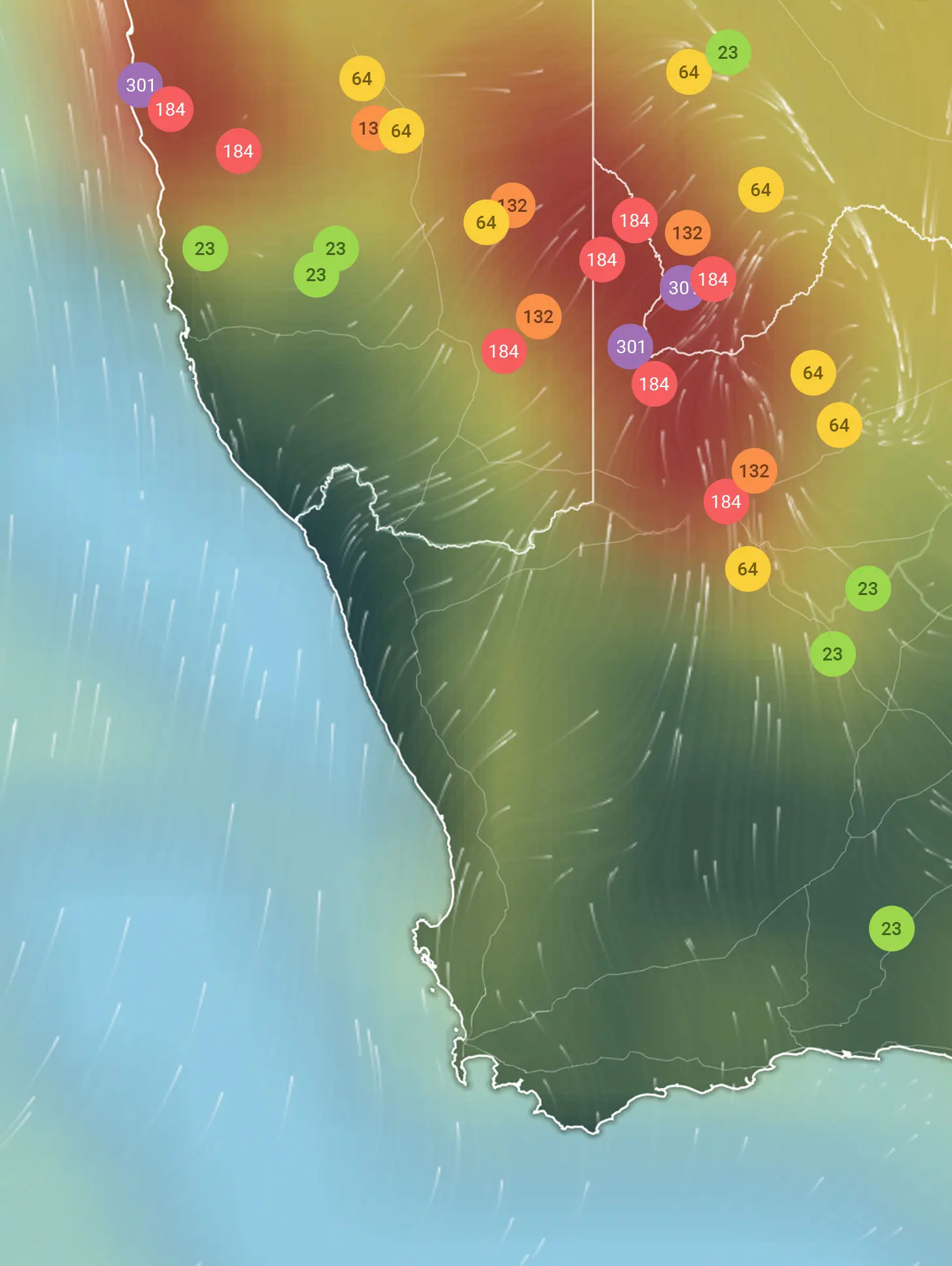
Recommandations de santé
 Sensitive groups should reduce outdoor exercise |
 Close your windows to avoid dirty outdoor air Get a monitor |
 Sensitive groups should wear a mask outdoors Get a mask |
 Sensitive groups should run an air purifier Get an air purifier |
Protégez-vous de la pollution de l’air à Targu-Mures

Surveillez l'air que vous respirez
Obtenez des relevés précis de la qualité de l'air AirVisual et des informations en temps réel pour un air plus pur. Les moniteurs révèlent les sources de pollution et indiquent quand il est nécessaire d'utiliser un purificateur d'air.

Purificateurs d'air de qualité médicale
Reconnue dans le monde entier, la série HealthPro Series utilise la technologie HyperHEPA. Elle filtre les particules ultrafines que les autres purificateurs d'air ne parviennent pas à détecter, offrant ainsi une protection de qualité médicale.

Des purificateurs d'air puissants et élégants
Compacte et puissante, la série Atem associe l'ingénierie suisse à une purification de l'air haute performance, filtrant les particules ultrafines grâce à la technologie HyperHEPA.
Pollen
Quelle est la densité de pollen à Targu-Mures aujourd'hui ?
Indice

Faible
 Arbre Aucun | 0% |
 Graminées Faible | 25% |
 Mauvaise herbe Aucun | 0% |
Source:
Open-Meteo.comRecommandations de santé
Sensitive groups should reduce outdoor exercise |
Close your windows to avoid dirty outdoor air Get a monitor |
Sensitive groups should wear a mask outdoors Get a mask |
Sensitive groups should run an air purifier Get an air purifier |
Pollen
Quelle est la densité de pollen à Targu-Mures aujourd'hui ?
Indice
Faible
Arbre Aucun | 0% |
Graminées Faible | 25% |
Mauvaise herbe Aucun | 0% |
Source:
Open-Meteo.comProtégez-vous de la pollution de l’air à Targu-Mures
Surveillez l'air que vous respirez
Obtenez des relevés précis de la qualité de l'air AirVisual et des informations en temps réel pour un air plus pur. Les moniteurs révèlent les sources de pollution et indiquent quand il est nécessaire d'utiliser un purificateur d'air.
Purificateurs d'air de qualité médicale
Reconnue dans le monde entier, la série HealthPro Series utilise la technologie HyperHEPA. Elle filtre les particules ultrafines que les autres purificateurs d'air ne parviennent pas à détecter, offrant ainsi une protection de qualité médicale.
Des purificateurs d'air puissants et élégants
Compacte et puissante, la série Atem associe l'ingénierie suisse à une purification de l'air haute performance, filtrant les particules ultrafines grâce à la technologie HyperHEPA.
Endroits les plus pollués près de Targu-Mures
Classement IQA⁺ mondial
Classement des stations
Classement IQA⁺ des stations en direct pour les stations à Targu-Mures

Historique de la qualité de l’air près de Targu-Mures
Historique
Graphique de l’historique de la qualité de l’air à Targu-Mures
Historique de la qualité de l’air près de Targu-Mures
Historique
Graphique de l’historique de la qualité de l’air à Targu-Mures
Endroits les plus pollués près de Targu-Mures
Classement IQA⁺ mondialClassement des stations
Classement IQA⁺ des stations en direct pour les stations à Targu-Mures


Measure your own air quality
Get a monitor and contribute air quality data in your city.
En savoir plus sur la qualité de l’air mondiale


En savoir plus sur la pollution de l'air à Targu-Mures
Quelle est la qualité de l'air actuelle à Targu-Mures ?
La qualité de l'air actuelle à Targu-Mures est considérée comme modérée. Elle est acceptable pour la plupart des personnes, bien que certaines individus très sensibles puissent ressentir de légères gênes.
What is the current level of air pollution in Targu-Mures?
Târgu Mureș is the seat of Mureș County in the historical region of Transylvania, Romania. It sits on the banks of the Mures River which is the second longest river in Romania after the Danube. According to a census conducted in 2011, Targu-Mures had an estimated population of 135,000 inhabitants.
At the beginning of the fourth quarter of 2021, Târgu Mureș was experiencing a period of air which was classified as being “Unhealthy for sensitive groups” with a US AQI reading of 126. This reading can be used as a reference point when comparing air quality in other cities around the world. Data is collected about the six most prolific air pollutants commonly found and this figure is calculated from there. If information is not available for all six, then a figure can be deduced using the information that is available. In the case of Târgu Mureș there were three pollutants that were recorded. These were PM2.5 - 45.5 µg/m³, ozone (O3) - 11.7 µg/m³ and nitrogen dioxide (NO2) - 47.5 µg/m³. The PM2.5 reading is four and a half times above the target figure of 10 µg/m³ as recommended by the World Health Organisation (WHO). Although no level of air pollution is considered to be safe.
With a level such as this, the advice would be to stay indoors and close the doors and windows so as to prevent more polluted air from entering the rooms. The use of an air purifier would be beneficial but make sure it recirculates the air without importing more dirty air from outside. Those who are more sensitive to poor air quality should try to avoid venturing outside until the air improves. If this is unavoidable, then a good quality mask should be worn at all times. All groups are dissuaded from partaking in vigorous outdoor exercise.
There is an app available from AirVisual.com for most mobile devices which gives information regarding air quality in real-time. This information will assist in your decision as to whether or not to go outside.
Does air quality vary much throughout the year in Târgu Mureș?
Looking back at the figure for 2020, released by IQAir.com, it can readily be seen that the month of January provided the worst air quality with a reading from the “Unhealthy for sensitive groups” category with a figure of 36.6 µg/m³. The months of February, March and April, together with October, November and December returned readings from the “Moderate” category with figures between 12.1 and 35.4 µg/m³. The remaining five months from May until September achieved the target figure of less than 10 µg/m³ which is the suggested maximum level by the World Health Organisation (WHO). The best air quality was had in June with a low reading of 5.2 µg/m³.
There were no records kept about air quality before 2020 when the recorded figure was 15.1 µg/m³ or “Moderate” quality. This figure, however, may not be a true reflection of reality because of the COVOD-19 situation. Many cars were unused as their drivers worked from home and therefore had no need to commute to the office on a daily basis. Many small factories and production units were also temporarily closed so their emissions ceased too.
Is there a main source of air pollution in Târgu Mureș?
Air pollution is not the same everywhere. Various pollutants are released into the atmosphere from a variety of sources, including industry, transport, agriculture, waste management and households. Certain air pollutants are also released from natural sources.
The major conclusion of the authorities is that, in Târgu Mureș, the main source of pollution would be traffic.
Suspended dust, nitrogen dioxide and ground-level ozone are currently recognized as the three pollutants that most severely affect human health. About 90 per cent of Europe's city dwellers are exposed to pollutants in concentrations above levels of air quality that are considered harmful to health. For example, fine powders in suspension (PM2.5) from the air reduce life expectancy in the EU by more than eight months. Benzopyrene is an increasingly worrying carcinogen that, in several urban areas, especially in Central and Eastern Europe, is present in concentrations that exceed the threshold set for the protection of human health.
The promotion of the burning of renewable wood has unfortunately led to high levels of particulate matter in the air locally. The burning of wet wood is even worse.
Can anything be done to improve the air quality in Târgu Mureș?
Measures taken to reduce emissions of short-lived climate pollutants with a detrimental effect on the climate, such as carbon black, methane, ozone or ozone precursors, bring benefits to both human health and the climate. Greenhouse gases and air pollutants come from the same sources of emissions. As a result, potential benefits, including cost reductions, can be achieved by limiting greenhouse gas emissions or air pollutants.
Given the diversity of sources in terms of geographical spread and economic activity, action needs to be taken at different levels, from local to international. International conventions may aim to reduce the number of pollutants released into the atmosphere, but in the absence of local measures - such as information campaigns, the removal of high-pollution vehicles from cities and urban planning decisions - we will not be able to reap the full benefits of our efforts. This diversity also means that there is no universal solution for air pollution. In order to reduce exposure and subsequent adverse effects, authorities need to adapt their measures to reflect local factors such as sources, demographics, transport infrastructure and the local economy.
What are the detrimental effects breathing polluted air has on the human body?
A recent study by the World Health Organisation (WHO) shows that fine particulate pollution PM2.5 could be a bigger health problem than previously thought. According to the WHO Review of Evidence on Health Aspects of Air Pollution, long-term exposure to fine particles can cause atherosclerosis, adverse effects on pregnancy and respiratory disease in childhood. The study also suggests the possible link between neurological development, cognitive function and diabetes and strengthens the causal link between PM2.5 and deaths caused by cardiovascular and respiratory diseases.