Add
AddAir quality in Sandpoint
Air quality index (AQI⁺) and PM2.5 air pollution in Sandpoint • 22.7K Followers • 13:00, Aug 03 Local time

77
US AQI⁺Moderate

Main pollutant:
PM2.5
22.9 µg/m³

22°

4 km/h

37 %
Hourly forecast
Sandpoint air quality index (AQI⁺) forecast


Daily forecast
Sandpoint air quality index (AQI⁺) forecast
| Today | 87 | | 23° 12° |  14 km/h | 40% |
| Tue | 158 | | 26° 16° | 11 km/h | 35% |
| Wed | 164 | | 32° 16° | 10 km/h | 32% |
Air pollutants
What is the current air quality in Sandpoint?

PM2.5 concentration is currently 4.6 times the World Health Organization annual PM2.5 guideline value.
Health recommendations
 Sensitive groups should reduce outdoor exercise |
 Close your windows to avoid dirty outdoor air Get a monitor |
 Sensitive groups should wear a mask outdoors Get a mask |
 Sensitive groups should run an air purifier Get an air purifier |
Protect yourself from air pollution in Sandpoint

Monitor the air you breathe
Get accurate AirVisual air quality readings and real-time insights for cleaner air. Monitors that reveal pollution sources, highlight when air purifier use is needed.

Medical grade air purifiers
Trusted worldwide, the HealthPro Series uses HyperHEPA technology. Filters ultrafine particles other air purifiers miss, delivering medical-grade protection.

Powerful, stylish air purifiers
Compact and powerful, the Atem Series combines Swiss engineering with high-performance air purification, filtering ultrafine particles with HyperHEPA technology.
Pollen
What is the pollen count in Sandpoint today?
Index

High
 Tree None | 0% |
 Grass None | 0% |
 Weed High | 75% |
Source:
wetter.comHealth recommendations
Sensitive groups should reduce outdoor exercise |
Close your windows to avoid dirty outdoor air Get a monitor |
Sensitive groups should wear a mask outdoors Get a mask |
Sensitive groups should run an air purifier Get an air purifier |
Pollen
What is the pollen count in Sandpoint today?
Index
High
Tree None | 0% |
Grass None | 0% |
Weed High | 75% |
Source:
wetter.comProtect yourself from air pollution in Sandpoint
Monitor the air you breathe
Get accurate AirVisual air quality readings and real-time insights for cleaner air. Monitors that reveal pollution sources, highlight when air purifier use is needed.
Medical grade air purifiers
Trusted worldwide, the HealthPro Series uses HyperHEPA technology. Filters ultrafine particles other air purifiers miss, delivering medical-grade protection.
Powerful, stylish air purifiers
Compact and powerful, the Atem Series combines Swiss engineering with high-performance air purification, filtering ultrafine particles with HyperHEPA technology.
Most polluted locations near Sandpoint
Worldwide AQI⁺ ranking
Station ranking
Real-time AQI⁺ station ranking for stations in Sandpoint

City ranking
Real-time USA AQI⁺ city ranking
Historic air quality near Sandpoint
History
Historic air quality graph for Sandpoint
Historic air quality near Sandpoint
History
Historic air quality graph for Sandpoint
Most polluted locations near Sandpoint
Worldwide AQI⁺ rankingStation ranking
Real-time AQI⁺ station ranking for stations in Sandpoint
City ranking
Real-time USA AQI⁺ city ranking
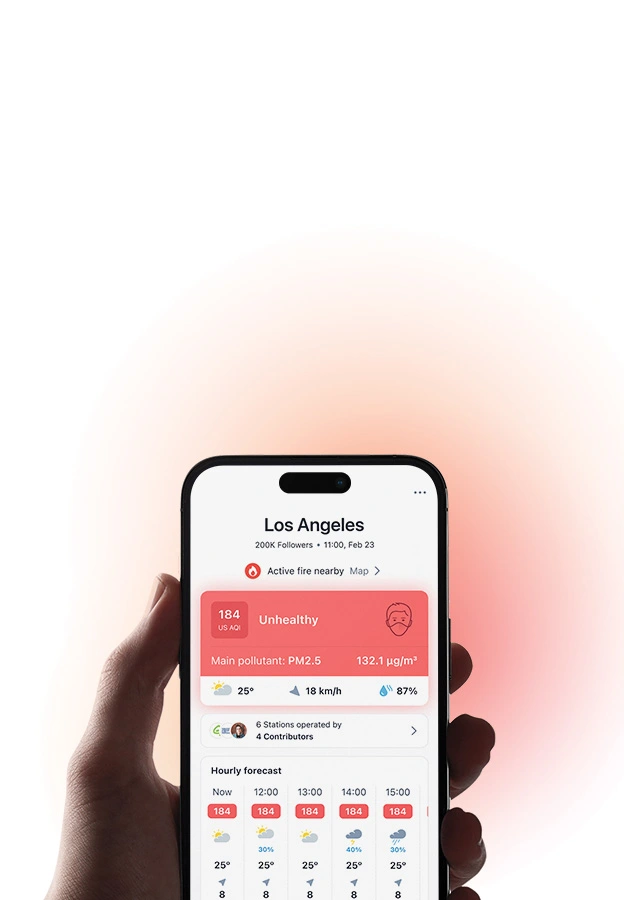


Measure your own air quality
Get a monitor and contribute air quality data in your city.


Learn more about air pollution in Sandpoint
What is the current air quality in Sandpoint?
The current air quality in Sandpoint is considered moderate. Air quality is acceptable for most people, though sensitive individuals may experience mild symptoms such as coughing or shortness of breath.
Does Sandpoint suffer from high levels of air pollution?
Sandpoint is the largest city in, and the county seat of, Bonner County, Idaho, USA. According to a census conducted in 2010, the estimated population was approximately 7,400 inhabitants. Sandpoint is located on the shore of Lake Pend Oreille, a 43 mile-long stretch of water. There are three mountains on the other three sides of the city.
In July 2021, Sandpoint was experiencing a period of “Moderate” air quality with a US AQI reading of 52. This United States Air Quality Index number is an internationally used set of metrics supported by the World Health Organization (WHO) and is used to compare the air quality in different cities throughout the world using comparable standards. It is calculated by using the levels of the six most commonly found pollutants. If figures are not all available, the figure is calculated using what information is available. In the case of Sandpoint, the only figure was for PM2.5 which was 12.6 µg/m³. This puts it slightly over the target figure of 10 µg/m³ or less as recommended by the WHO.
With levels such as these, the advice is to close doors and windows to prevent more dirty air from entering the room. Those of a sensitive disposition are advised to remain indoors or if travel outside is unavoidable, then a good quality mask is recommended. The table at the top of this page will help with that decision.
Is the level of air pollution constant throughout the year in Sandpoint?
Air pollution can be very volatile and, as such, can change very quickly depending on many variables, such as wind speed and direction and the strength of sunlight.
Observing the figures published by IQAir.com for 2020, it can easily be seen that the worst month for air quality was during September when the figure recorded pushed it into the “Unhealthy for sensitive groups” category with a figure of 36.8 µg/m³. The next month with poorer quality air was in November when that figure was seen to be 14.1 µg/m³ which would be classed as “Moderate”. Any figure between 12.1 and 35.4 µg/m³ is thus classed. The previous month of October showed reasonable air quality with a “Good” reading of 11.6 µg/m³. Figures must fall between 10 and 12 µg/m³ to be so classified. The remaining 9 months of the year achieved the target level as suggested by the World Health Organization (WHO) which is 10 µg/m³ or less. The month of June was the best with a small figure of just 4.4 µg/m³, which saw a slight improvement in May when that figure was 4.8 µg/m³.
Historically, records concerning air pollution have been kept since 2017 for Sandpoint, when the records showed a figure of 11.1 µg/m³. A slight improvement was seen the following year in 2018 when the record was 10.7 µg/m³. In 2019 the target figure was achieved when the record showed a level of 6.4 µg/m³, but unfortunately, it slipped back in 2020 to 10.2 µg/m³. However, this may not be a true reflection of reality because of the restrictions imposed due to the COVID-19 pandemic. Many vehicles were no longer used as the drivers were furloughed and not required to commute to and from work. There were also many factories and other non-essential production units which were temporarily closed in an attempt to prevent the spread of the virus.
Where does the air pollution come from in Sandpoint?
Air pollution can come from transportation, coal-fired power plants, industrial activity, and other human-maintained activity as well as natural events such as dust storms and wildfires.
The report tracked short-term spikes in particle pollution, as these can be extremely dangerous and even lethal in some extenuating circumstances. Several areas in Idaho experienced more days on average of spikes in particle pollution and many of these spikes could be directly linked to events such as wildfires, which are increasing in frequency and intensity in many areas due to climate change.
Particle pollution consists of soot or tiny particles that come from coal-fired power stations, diesel emissions, wildfires and wood-burning devices. These particles are so small that they can lodge deep in the lungs and trigger asthma attacks, heart attacks and strokes, and worse can be a cause of premature death.
What can be done to improve air quality in Sandpoint?
Idaho air quality is getting worse, and the state now has several of the top 25 most polluted areas in the country, as reported in the American Lung Association’s 2019 “State of the Air”. Much of the drop in air quality is caused by wildfires, which are increasing as a result of climate change. No Idaho county in the report received higher than a “D” grade for particle pollution. The ‘State of the Air’ report highlights that more than four in 10 Americans are living with unhealthy air, and something has to be done to protect public health.
Every year, the “State of the Air” prepares a report card with regards to the two main pollutants which can have the most devastating effects on public health; ozone pollution, also known as smog, and particle pollution, also called soot. Particle pollution is made of soot or tiny particles that come from coal-fired power plants, diesel emissions, wildfires and wood-burning devices, amongst other things. These particles are so small that they can lodge deep in the lungs and trigger asthma attacks, heart attacks and strokes and worse. These invisible pollutants in the air can create smog and acid rain and can lead to serious health problems and also damage the environment. Air pollution causes about 1 in 8 deaths worldwide and accounts for many instances of chronic respiratory disease, lung cancer, strokes and heart attacks. Ozone, which is the main ingredient in smog, also increases the risk of asthma.
Since the United States enacted the Clean Air Act in 1970, aggregate emissions of the six most common pollutants have dropped by 73 percent. Between 2000 and 2015, concentrations of contaminants in the United States have fallen 40 percent for fine particle concentrations over 24 hours and 34 percent for coarse particle concentrations, so things are improving. The Act also set new emission standards for cars, trucks and other vehicles improving the carbon monoxide levels in the air.
Several cities in Idaho have introduced a raft of measures intended to help clean the air. These range from the encouragement of drivers not to leave their engines idling whilst in parking lots or waiting at the lights. A VPN has been installed so that workers can access files from anywhere so they are encouraged to do some work from home. Flexi-hours are being phased in that reduce the number of days to work a 40 hour week (working 4 x 10 hours days), or allows the hours to be worked during non-traditional hours (7:00 a.m. to 4::00 p.m.). This allows commute times to change, easing congestion on the roadway during peak hours.
Some cities have implemented an Alternative Transportation Program to encourage employees to reduce the number of single-occupancy vehicles on the road. The program includes employees who carpool, vanpool, take the bus, cycle or walk to work. All of these provide opportunities to reduce overall vehicle emissions by having fewer cars on the road.
Legislation has been introduced that requires vehicles to cover their load of materials. By preventing materials from blowing out of a vehicle, this decreases the amount of dust or other material that may become airborne.
The City of Meridian Police Department will be purchasing the city’s first electric vehicles for use in the Meridian city center. These vehicles do not emit any emissions.
Can anything be done to stop the wildfires in Idaho?
In 2020 and the spring of 2021, in preparation for severe fire conditions like Idaho now faces, the IDL provided wildland firefighter training to National Guard personnel, a phenomenal collaboration between agencies.
Due to extreme drought, excessive heat, multiple fire starts and dwindling firefighting resources the local governor issued an emergency declaration and mobilized the National Guard and aircraft to assist in the suppression of wildfires. If allowed to burn out of control, there is a huge risk to life, property, and the environment.
Fire managers are expected to announce in the coming days that parts of Idaho will enter Stage 1 and Stage 2 fire restrictions. More than 80 percent of the nation’s fires are started by people, not lightning. These restrictions are meant to prevent human-caused wildfires and can be declared very locally if required. Fire restrictions can be implemented on state, federal, Tribal Trust and private lands under applicable federal and state laws. There are two stages of fire restrictions with Stage 2 being the strictest. Under Stage 2 fire restrictions, land would be banned for the use of campfires and stove fires, the use of chainsaws or other small engine machines, and using motorized vehicles off roads and trails. Smoking is prohibited unless very strict procedures are followed exactly.
Another suggestion would be to reduce the risk of fire by removing vegetation that can fuel fires. Those tree parts and plants can be turned into a renewable energy source and various products, such as paper and furniture. This scrub would not be left as dry tinder at the base of mature trees. Without this material, young seedlings would have a better chance of germinating without being choked by the undergrowth.
Very often the wildfire are not in Idaho but in California or even British Colombia and the smoke is carried on the wind over Oregon and into Idaho. It is noted that most wildfires start around 4th July when the vegetation is at its driest.
What are the detrimental effects on human health caused by Sandpoint’s poor air quality?
Health studies have shown a significant link between exposure to particle pollution and health risks, including premature death. Health effects may include cardiovascular effects such as cardiac arrhythmias and heart attacks, as well as respiratory effects such as asthma attacks and bronchitis. Exposure to particle pollution can result in increased hospital admissions, visits to the doctor, absences from school or work, and restricted activity days, especially for those with pre-existing heart or lung disease, older people and children. Particles of concern include “fine particles” (such as those found in smoke and haze), which are 2.5 micrometers in diameter or less; and “coarse particles” (such as those found in wind-blown dust), which have diameters between 2.5 and 10 micrometers. As an example of this size of 2.5 micrometers, the thickness of a human hair is about 75 micrometers.
The size of particles is directly linked to their potential for causing health problems. Fine particles PM2.5 pose the greatest health risk because they can get deep into the lungs and some may even get into the bloodstream where they can travel around the body. Particle pollution is a mixture of microscopic solids and liquid droplets suspended in the air. This pollution, also known as particulate matter, is made up of several components, including acids (such as nitrates and sulfates), organic chemicals, metals, soil or dust particles, and allergens (such as fragments of pollen or mold spores).
People with pre-existing heart or lung disease, older adults, and children are considered at greater risk from particles than other people, especially when they are physically active. Exercise and physical activity cause people to breathe faster and more deeply—and to take more particles into their lungs.
Children are likely to be at an increased risk for several reasons. Their lungs are still developing; they spend more time at high activity levels; and they are more likely to have asthma or acute respiratory diseases, which can be aggravated when particle levels are high. Due to their smaller height, they are closer to the source of air pollution created by vehicles and delivered through their exhaust systems.
Long-term exposures, experienced by people living for many years in areas with high particle levels, have been associated with problems such as reduced lung function and the development of chronic bronchitis, and even premature death.
Short-term exposures to particles (hours or days) can aggravate lung disease, causing asthma attacks and acute bronchitis, and may also increase susceptibility to respiratory infections. In people with heart disease, short-term exposures have been linked to heart attacks.