Add
AddAir quality in Chongqing
Air quality index (AQI⁺) and PM2.5 air pollution in Chongqing • 495.2K Followers • 08:00, Jun 06 Local time
68
US AQI⁺Moderate

Main pollutant:
PM2.5
18 µg/m³

26°

6 km/h

79 %
Hourly forecast
Chongqing air quality index (AQI⁺) forecast


Daily forecast
Chongqing air quality index (AQI⁺) forecast
| Today | 92 | | 34° 25° |  6 km/h | 61% |
| Sun | 106 |  90% | 25° 19° | 11 km/h | 94% |
| Mon | 98 | 90% | 19° 17° | 6 km/h | 96% |
Air pollutants
What is the current air quality in Chongqing?

PM2.5 concentration is currently 3.6 times the World Health Organization annual PM2.5 guideline value.
Health recommendations
 Sensitive groups should reduce outdoor exercise |
 Close your windows to avoid dirty outdoor air Get a monitor |
 Sensitive groups should wear a mask outdoors Get a mask |
 Sensitive groups should run an air purifier Get an air purifier |
Protect yourself from air pollution in Chongqing

Monitor the air you breathe
Get accurate AirVisual air quality readings and real-time insights for cleaner air. Monitors that reveal pollution sources, highlight when air purifier use is needed.

Medical grade air purifiers
Trusted worldwide, the HealthPro Series uses HyperHEPA technology. Filters ultrafine particles other air purifiers miss, delivering medical-grade protection.

Powerful, stylish air purifiers
Compact and powerful, the Atem Series combines Swiss engineering with high-performance air purification, filtering ultrafine particles with HyperHEPA technology.
Clean Air Facilities

Health recommendations
Sensitive groups should reduce outdoor exercise |
Close your windows to avoid dirty outdoor air Get a monitor |
Sensitive groups should wear a mask outdoors Get a mask |
Sensitive groups should run an air purifier Get an air purifier |
Protect yourself from air pollution in Chongqing
Monitor the air you breathe
Get accurate AirVisual air quality readings and real-time insights for cleaner air. Monitors that reveal pollution sources, highlight when air purifier use is needed.
Medical grade air purifiers
Trusted worldwide, the HealthPro Series uses HyperHEPA technology. Filters ultrafine particles other air purifiers miss, delivering medical-grade protection.
Powerful, stylish air purifiers
Compact and powerful, the Atem Series combines Swiss engineering with high-performance air purification, filtering ultrafine particles with HyperHEPA technology.
Most polluted locations near Chongqing
Worldwide AQI⁺ ranking
Station ranking
Real-time AQI⁺ station ranking for stations in Chongqing

Historic air quality near Chongqing
History
Historic air quality graph for Chongqing
Historic air quality near Chongqing
History
Historic air quality graph for Chongqing
Clean Air Facilities
Most polluted locations near Chongqing
Worldwide AQI⁺ rankingStation ranking
Real-time AQI⁺ station ranking for stations in Chongqing
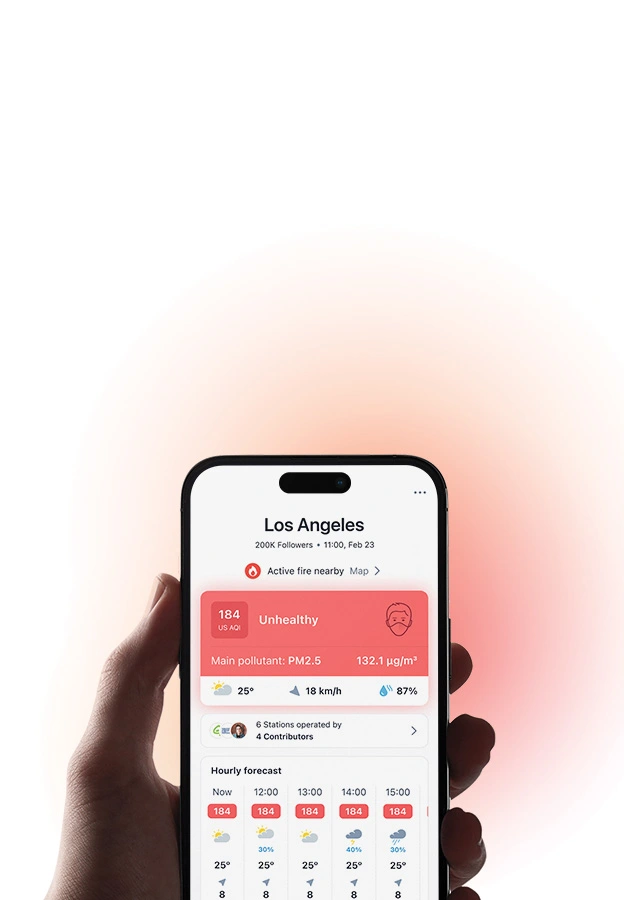


Measure your own air quality
Get a monitor and contribute air quality data in your city.


Learn more about air pollution in Chongqing
What is the current air quality in Chongqing?
The current air quality in Chongqing is considered moderate. Air quality is acceptable for most people, though sensitive individuals may experience mild symptoms such as coughing or shortness of breath.
What is the air quality index of Chongqing?
Chongqing is a megacity in southwest China. The population was estimated to be approximately 31 million in 2018. It is one of the four municipalities which fall under the direct control of the central Chinese government. The other three being Beijing, Shanghai and Tianjin.
At the end of 2020, the quality of air in Chongqing was “Unhealthy for Sensitive groups” with a US AQI reading of 103. These are based on the recommended figures as suggested by the World Health Organisation (WHO). The recorded levels of the pollutants that cased the poor air were as follows: - PM2.5 - 36.5 µg/m³, PM10 - 57 µg/m³, ozone (O3) - 14.5 µg/m³, nitrogen dioxide (NO2) - 40 µg/m³ and sulphur dioxide (SO2) - 8 µg/m³. With levels such as these, the advice for sensitive groups of people is to wear a mask when leaving the house. Closing doors and windows will help stop the ingress of dirty air into the home and consider running an air purifier if one is available. Outdoor exercise should be avoided by all until the air quality gets better.
In 2019, Chongqing recorded an average annual figure of 37.1 µg/m³, which falls into the “Unhealthy for sensitive groups” category. For 7 months of the year though the figure was “Moderate” with levels between 12.1 and 35.4 µg/m³. For February and November, it was “Unhealthy for sensitive groups” with figures between 35.5 and 55.4 µg/m³. December and January put it into the “Unhealthy” group with readings of 55.5 to 150.4 µg/m³. Looking back at previous years the air quality is getting slightly better. In 2017 it was 43.9 µg/m³ and in 2018 it was 37.3 µg/m³.
Why Chongqing is polluted?
Since the 80s, Chongqing has experienced rapid development in industrialisation. As these practices expanded, so too did the need for energy. This energy was supplied through the use of cheap coal bought in from northern China, but known to be of poor quality. This sharp increase in coal consumption led to a rise in the concentrations of sulphur dioxide (SO2) and consequently to the formation of acid rain. Following this period of growth, acid rain occurred at a 50 per cent higher frequency than previously had been experienced in rural areas of Chongqing. The pH was low at about a 4.5, (7 is the average figure). Due to this development, the population of Chongqing was more exposed to respiratory diseases, forest density declined, and buildings became corroded. In order to protect the local population and to improve air quality and protect the city infrastructure, the government and environmental agencies began to make desperate efforts to control industrial emissions.
This situation is exacerbated by the topography of the area. Recently only levels of the common air pollutants had been measured such as sulphur dioxide (SO2), oxides of nitrogen (NOx), smoke and suspended particulate matter PM 2.5 and PM10, with little attention paid to photochemical oxidants such as ozone (O3). Ozone is known to have a detrimental effect on plants and trees. Many crops locally grown in and around Chongqing were found to be affected by ozone.
Is air pollution in Chongqing getting worse?
In 2019, China published a work report stating its intentions to reduce levels of sulphur dioxide (SO2), nitrogen oxides (NOx) and the fine particulate matter of PM2.5 and PM10 by 3 per cent in key density areas. In 2018, the number of days that attained a good level air quality reached 316, with a year-on-year increase of 13 days. The annual mean density of PM2.5 decreased by 11.1 per cent on the year-on-year basis.
Chongqing will continue to focus on the “blue sky” ideal and rigorously control pollution from traffic, industry, dust, and daily living. It will also strengthen the regulations and research capabilities and fully implement the new European-style standards for vehicle exhaust emissions.
What can be done to improve the air quality in Chongqing?
Chongqing aims to guarantee that the number of days with good air quality is more than 300 and the annual average PM2.5 concentration falls below the 40 µg/m³ figure. It plans to strengthen air quality forecasting and give early warnings to the public in order that they can prepare themselves. It will also carry out regional joint prevention and control measures, as well as cross-regional law enforcement inspection and cross-checks.
Two of the major sources of sulphur dioxide recently were retrofitted with flue gas desulphurisation units. Measurements taken after they were used revealed levels had dropped by 95 per cent which equates to approximately 167,000 tons of sulphur dioxide annually.
All newly built users of coal as their main source are compelled to have desulphurisation facilities installed. Most coal used in Chongqing has a high sulphur content of around 3.5 per cent.
The Chinese government provided a substantial amount of money in order to assist smaller users to comply. RMB 120 million Yuan was spent on pollution prevention alone. In order to make more noticeable changes, the government plans to borrow 4.4 million Japanese Yen to fund the construction of a natural gas pipeline, thus eliminating the dependency on dirty coal.
What are the effects on health through breathing in Chongqing’s polluted air?
Young, strong healthy people can suffer from the effects of polluted air but not as quickly as other, more sensitive groups. And it is dependent on several factors such as their current health status, the concentration of the pollutant and the type of pollutant itself and the length of exposure to the unhealthy air
Long-term exposure can cause permanent damage such as the acceleration of the ageing of the lungs which, in turn, cause them to lose capacity and impair their function. It also irrevocably damaged cells in the respiratory organs.
High levels of air pollution can cause immediate health problems such as aggravated cardiovascular and respiratory illnesses. The heart becomes more stressed as it has to work harder in order to supply the required amount of oxygen to the lungs. It can also lead to a shorter lifespan.
People who are more susceptible to air-related problems should take extra care when exposed to such dangers.
Where is the cleanest air quality in Chongqing?
- Chongqing City Yunshi Kindergarten56
- North Street56
- West Mountain58
- People's Street62
- Chongqing City Longhe Road68
- Chongqing City Zhuzhi Road No. 268
- Zhonglou Street68
- Jinyun Mountain69
- Zhou Bai69
- Furong Middle Road71
- Wenchang Road71
- Baianba73
- Longhe Road73
- Ankang75
- Chongqing City Public Security Bureau75
- No. 32, Zhonglou Street75
- Public Security Bureau77
- Zhoujiaba77
- Liangjiang New District79
- No. 309, Renmin South Road79
- Huxi81
- Jianshan Road81
- Chongqing City Taohuayuan Middle Road82
- Jingtan Second Road82
- Chongqing City Zhongxian Middle School84
- Lijia84
- Linzhuang84
- Wanshou Avenue84
- White market84
- Chengnan86
- Lianglu86
- Liujiayuan86
- Zhonglou Street, Chongqing City88
- Chongqing City Hebao Street90
- Nanquan90
- Cai Jia92
- Jin feng92
- Nantong General Hospital92
- Tea Garden92
- Shuanglong West Road94
- Wan Sheng School94
- Yingbin Avenue94
- Guanyinqiao96
- Wandongbeilu96
- Taiyuan Road97
- Tanzikou97
- Dazu District - Musk99
- Huang Wei99
- Jiro99
- Tang Jiaxuan99
- Tangjiatuo105
- Ruishan West Road107
- West Taoyuan Road107
- Breaking table112
- Shangqing Temple112
- Beibei District115
- Buddha Gate115
- Longzhou Bay115
- Panjiaping117
- Yuxin Street119
- Longjing Bay122
- Nanping122
- Beishan Road124
- No. 24 Taoyuan Road124
- Tiger peak127
- Shuangshan129
- No. 147 Shuangshan Road132
- Changyuan137
- College Road149
- Longmen Street153
- Jiangjin Yizhong157
- government centre164
- Sipaifang Primary School165